

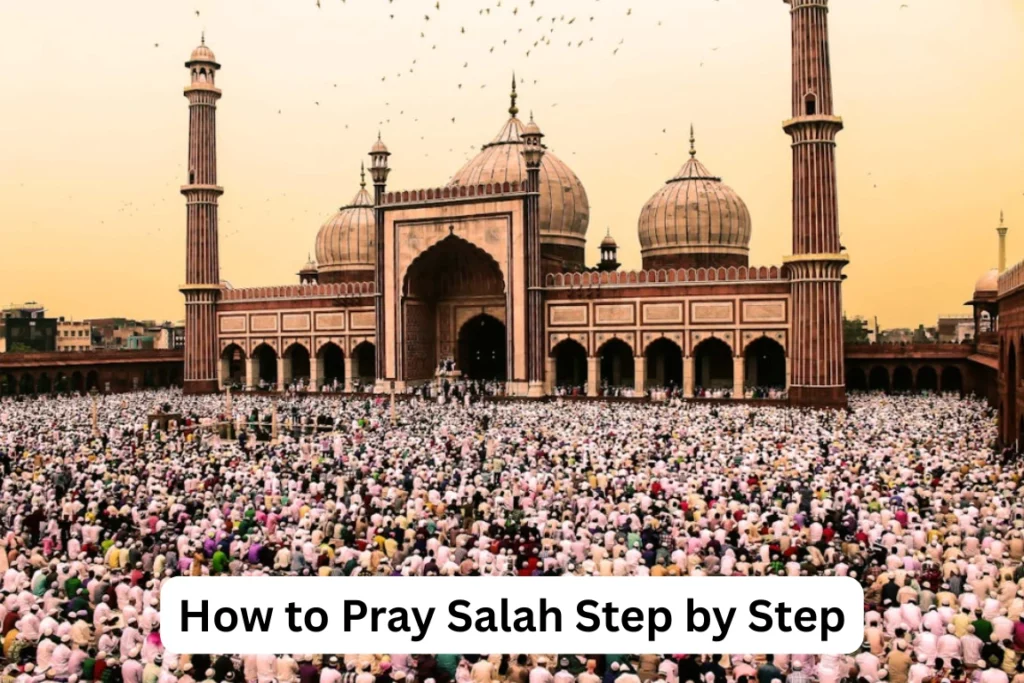
How to Pray Salah Step by Step is a complete beginner-friendly guide to performing the five daily prayers in Islam correctly according to the Qur’an and Sunnah. Salah (also known as namaz) is the second pillar of Islam and the central act of worship commanded by Allah ﷻ and demonstrated by Prophet Muhammad ﷺ.
Performed five times each day, Salah structures a Muslim’s life around remembrance (dhikr), humility, and devotion. While learning how to pray namaz may seem overwhelming at first — with standing (qiyam), bowing (rukuʿ), prostration (sujood), and recitation — the prayer follows a clear and repeatable sequence rooted in prophetic guidance.
This step-by-step Salah guide explains every part of the prayer, from niyyah (intention) and takbir to tashahhud and tasleem, helping you understand how to perform Salah with confidence, sincerity, and alignment to the Sunnah.
Step-by-Step Guide to Pray Salah
Salah is a disciplined act of worship taught by the Prophet Muhammad ﷺ and anchored in the Qur’an and Sunnah. Every step carries meaning, and following them in the right order keeps the prayer valid before Allah ﷻ.
1. Niyyah (Intention):
Every prayer begins with niyyah—the intention you carry in your heart. The Prophet Muhammad ﷺ reminded us: “Actions are judged by intentions” (Bukhari, Muslim), teaching that the value of prayer lies in the sincerity behind it.
Your niyyah simply means knowing in your heart which prayer you are about to offer—whether it is Fajr, Dhuhr, Asr, Maghrib, or Isha—and whether it is farḍ (obligatory), sunnah (Prophetic practice), or nafl (voluntary).
You don’t need to say it aloud, but some people softly express it to help themselves focus. For example:
“I intend to pray 4 rakʿahs farḍ of Isha.”
“I intend to pray 2 rakʿahs sunnah of Fajr.”
Making niyyah before Salah protects you from distraction (ghaflah) and reminds you that your prayer is for Allah ﷻ alone, offered with sincerity (ikhlāṣ).

2. Takbir al-Ihram (Opening Takbir):
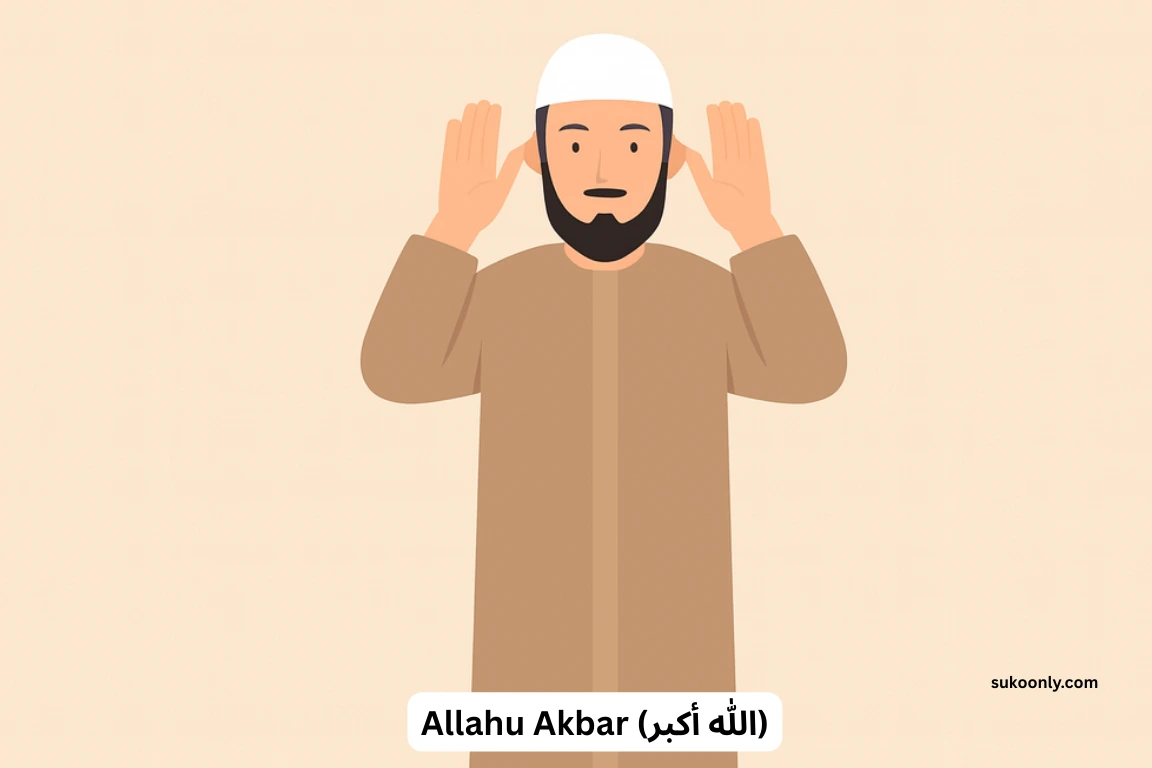
Once you have made your niyyah, begin your Salah with Takbir al-Ihram. Stand calmly, facing the Qiblah toward the Kaʿbah in Makkah. Keep your feet steady and let your eyes rest on the place of sujūd.
Raise your hands with humility—men up to the ears and women up to the shoulders—palms open, and say with focus:
“Allāhu Akbar” — meaning Allah is the Greatest.
With this simple but powerful declaration, you enter the sacred state of Salah. From this moment, your attention turns fully to Allah, and all worldly actions are left behind. The Prophet ﷺ said: “The key to prayer is purification, its opening is Takbir, and its closing is Taslīm” (Abu Dawud, Tirmidhi).
3. Qiyam (Standing):
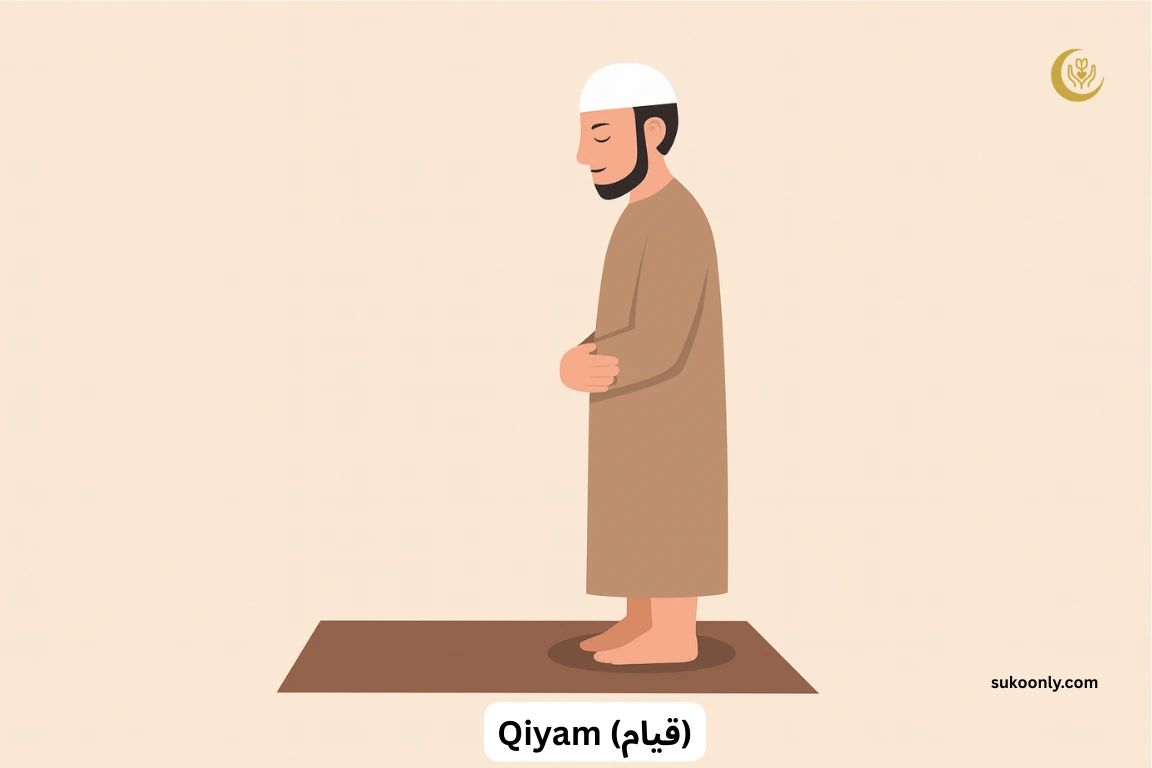
After saying the opening Takbir, stand in Qiyam, the upright position of prayer. Place your right hand over the left at chest level and stand with humility, keeping your attention on Allah ﷻ.
Begin your recitation with Surah al-Fātiḥah, which must be read in every rakʿah. In it, you praise Allah, acknowledge His mercy, and ask Him for guidance on the Straight Path. The Prophet ﷺ said: “There is no prayer for the one who does not recite al-Fātiḥah” (Bukhari, Muslim).
After finishing al-Fātiḥah, recite another part of the Qur’an. Many choose short chapters like Surah al-Ikhlāṣ, al-Falaq, or an-Nās, but you may recite any verses. Allah reminds us: “So recite what is easy [for you] of the Qur’an” (73:20).
Qiyam is the moment where you stand before Allah, speaking His words, filling your heart with reflection before moving into rukūʿ (bowing).
4. Recitation of Surah al-Fātiḥah:
While standing in Qiyam, begin with Surah al-Fātiḥah. It is required in every rakʿah, so take your time and recite with presence. The Prophet ﷺ said: “There is no prayer for the one who does not recite the Opening of the Book.”
Al-ḥamdu lillāhi rabbil-ʿālamīn, ar-raḥmānir-raḥīm, māliki yawmid-dīn. iyyāka naʿbudu wa-iyyāka nastaʿīn. ihdinaṣ-ṣirāṭal-mustaqīm. ṣirāṭallaḏīna anʿamta ʿalayhim ġayril-maġḍūbi ʿalayhim wa laḍ-ḍāllīn.
Meaning (brief): We praise Allah, the Most Merciful, Master of the Day of Judgment; we worship Him alone and ask His help; we ask for guidance on the Straight Path—the path of those He has favoured, not those who earned anger or went astray.
When you finish, say “Āmīn”—softly or aloud according to your madhhab—as a sincere plea for acceptance.
5. Additional Recitation After al-Fātiḥah
After completing Surah al-Fātiḥah and saying Āmīn, continue with another part of the Qur’an in the first two rakʿahs. This extra recitation brings depth and variety to your prayer.
Many people choose Surah al-Ikhlāṣ because it is short, easy to memorize, and full of meaning. The Prophet ﷺ said that its reward equals one-third of the Qur’an (Muslim).
Qul huwallāhu aḥad. Allāhuṣ-ṣamad. Lam yalid wa lam yūlad. Wa lam yakun lahu kufuwan aḥad.
Say: He is Allah, the One. Allah, the Eternal Refuge. He does not beget, nor is He begotten. And none is comparable to Him.
In longer prayers such as Dhuhr, Asr, Maghrib, and Isha, this extra recitation is only required in the first two rakʿahs. The later rakʿahs are completed with al-Fātiḥah alone.
After reciting Sūrah al-Fātiḥah in the first two rakʿahs, the Sunnah is to follow it with another portion of the Qur’an. The Prophet ﷺ himself showed us a beautiful pattern in the Sunnah of Fajr prayer: In the first rakʿah, he ﷺ recited Sūrah al-Kāfirūn, a chapter that openly rejects shirk and false worship. In the second rakʿah, he ﷺ recited Sūrah al-Ikhlāṣ, affirming the oneness of Allah (tawḥīd). This order carries deep wisdom. First comes negation — declaring freedom from every form of false worship. Then comes affirmation — confirming Allah’s perfect oneness. Together, they form the complete foundation of faith. In other farḍ, sunnah, or nafl prayers, you may recite any short surah after al-Fātiḥah — like al-Falaq or an-Nās. Scholars also encourage keeping the Qur’anic order when joining surahs, as it shows respect for how Allah revealed His Book. So, while it’s permissible to recite Sūrah al-Ikhlāṣ in the first rakʿah, the Prophetic Sunnah places it in the second rakʿah. Following this sequence not only reflects the practice of the Prophet ﷺ but also preserves the spiritual rhythm of worship — rejecting shirk first, then affirming tawḥīd.
(Narrated in Ṣaḥīḥ Muslim, Abū Dāwūd, and al-Nasā’ī).
6. Rukuʿ (Bowing):
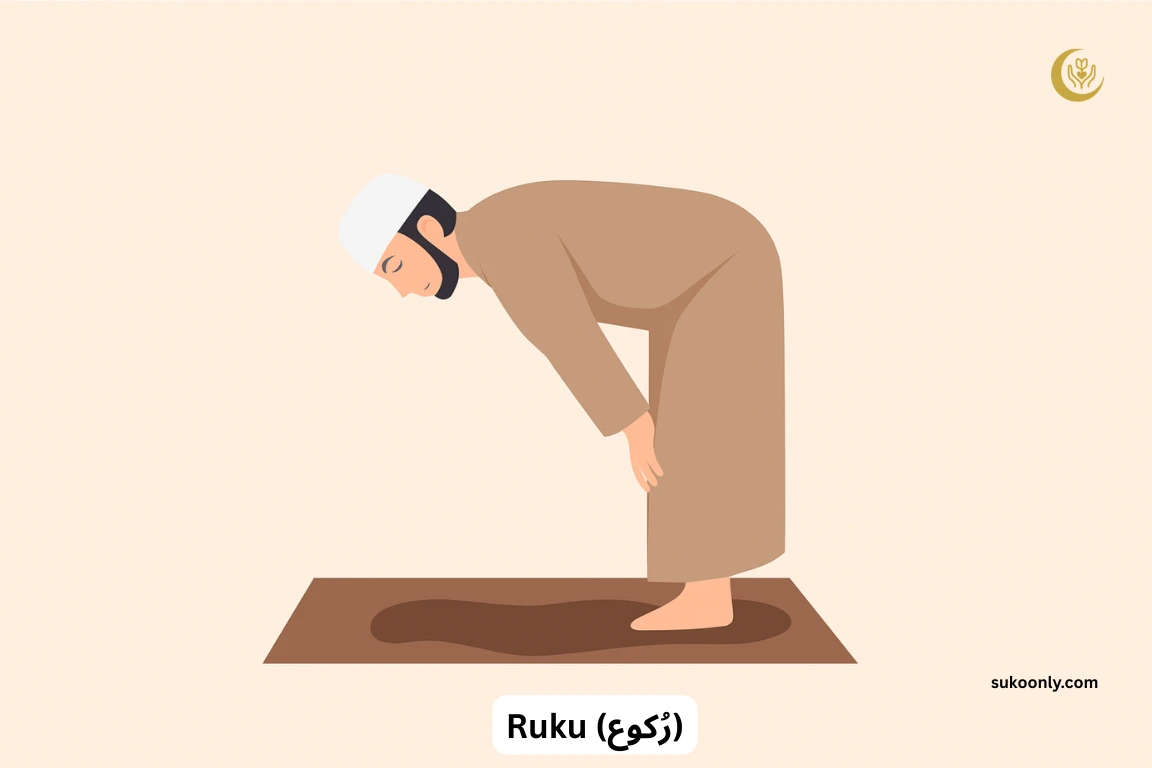
After finishing your recitation, say “Allāhu Akbar” and bow into rukūʿ. Keep your back straight, placing your hands firmly on your knees with fingers spread, and let your gaze remain fixed on the place of sujūd.
In this posture of humility, glorify Allah by saying:
Subḥāna Rabbiyal-ʿAẓīm (سُبْحَانَ رَبِّيَ الْعَظِيم)
Glory be to my Lord, the Almighty.
Repeat it three times, or more in odd numbers, allowing your heart to feel awe and reverence as you acknowledge Allah’s majesty.
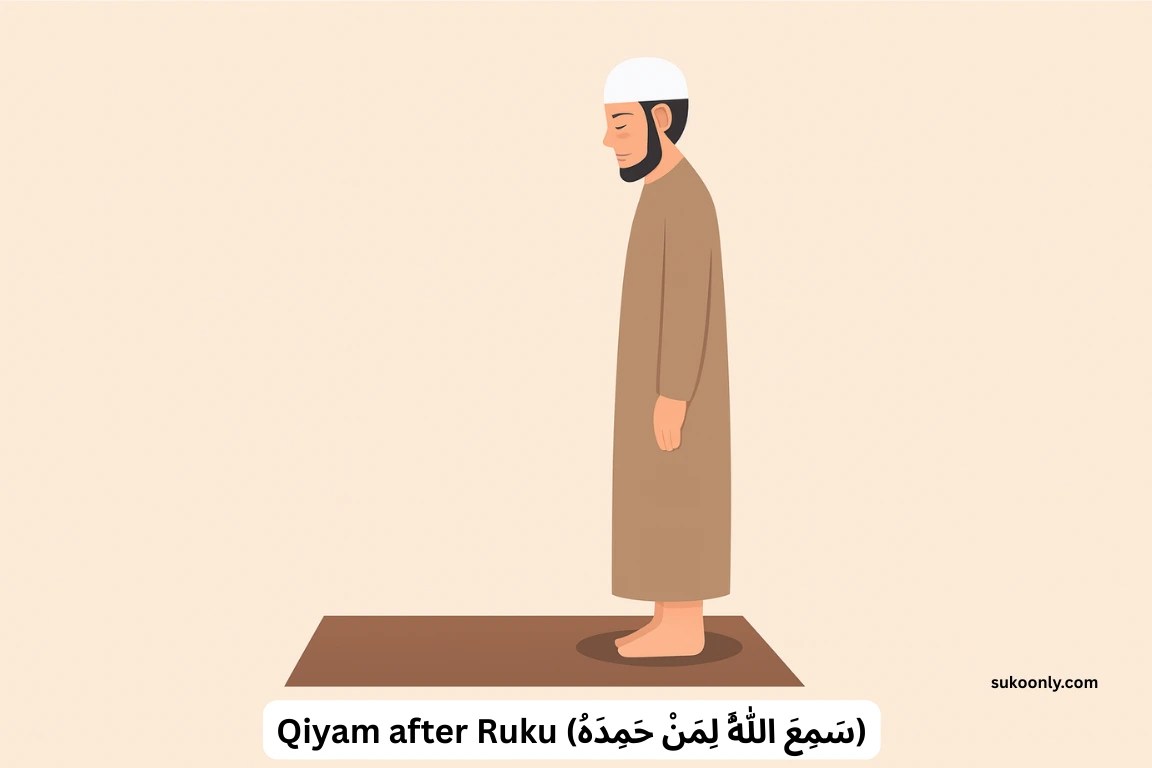
7. Qiyam after Rukuʿ
After bowing, rise back to a standing position with calmness and balance. As you stand, say with reverence:
SamiʿAllāhu liman ḥamidah (سَمِعَ اللّٰهُ لِمَنْ حَمِدَهُ)
Allah hears those who praise Him.
Then, in gratitude, respond:
Rabbana lakal-ḥamd (رَبَّنَا لَكَ الْحَمْدُ)
Our Lord, all praise belongs to You.
This pause between bowing and prostration is a moment of shukr (thankfulness), where the believer acknowledges Allah’s majesty and expresses heartfelt gratitude for His countless blessings.
8. Sujood (Prostration):
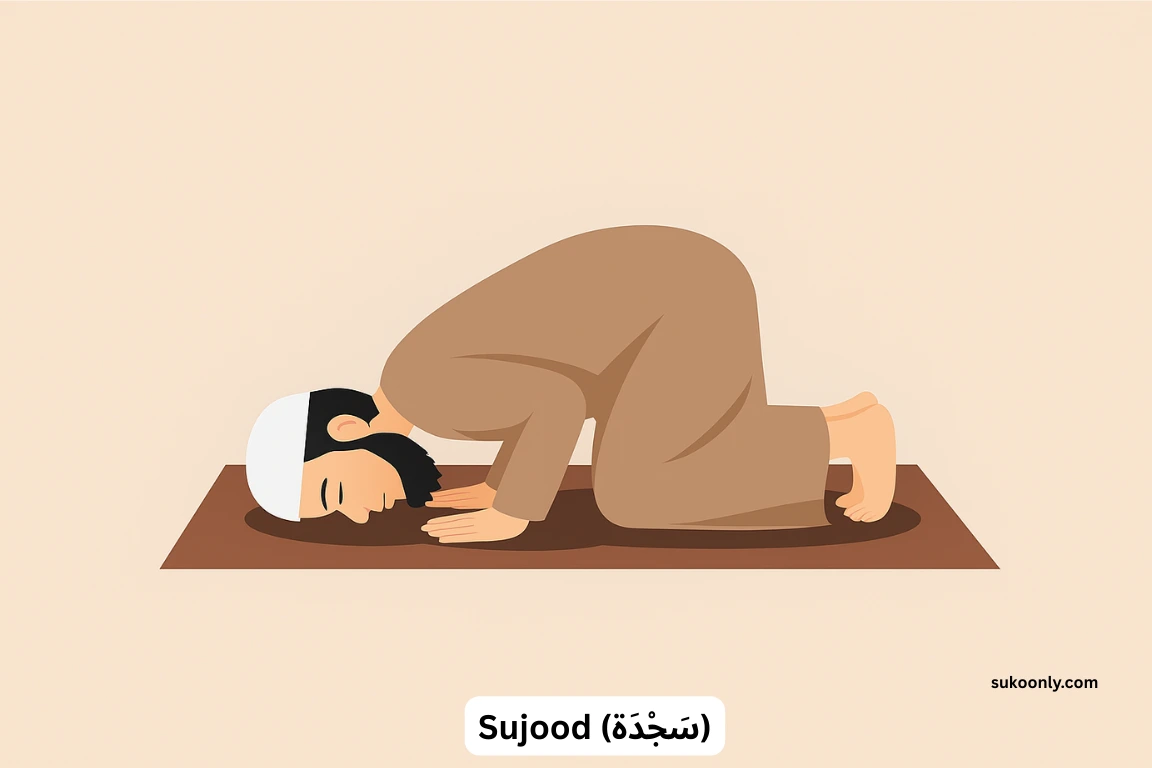
After saying “Allāhu Akbar,” lower yourself into sujood, the most humbling position of prayer. Place your forehead and nose on the ground, along with your palms, knees, and toes, keeping the elbows raised and the head gently set between the hands.
In this moment of closeness to Allah, glorify Him by saying:
Subḥāna Rabbiyal-Aʿlā (سُبْحَانَ رَبِّيَ الْأَعْلَى)
Glory be to my Lord, the Most High.
Repeat it three times or more, letting your heart feel humility and nearness, for in sujood the servant is closest to their Lord.
9. Jalsa (Sitting Between Sujood):
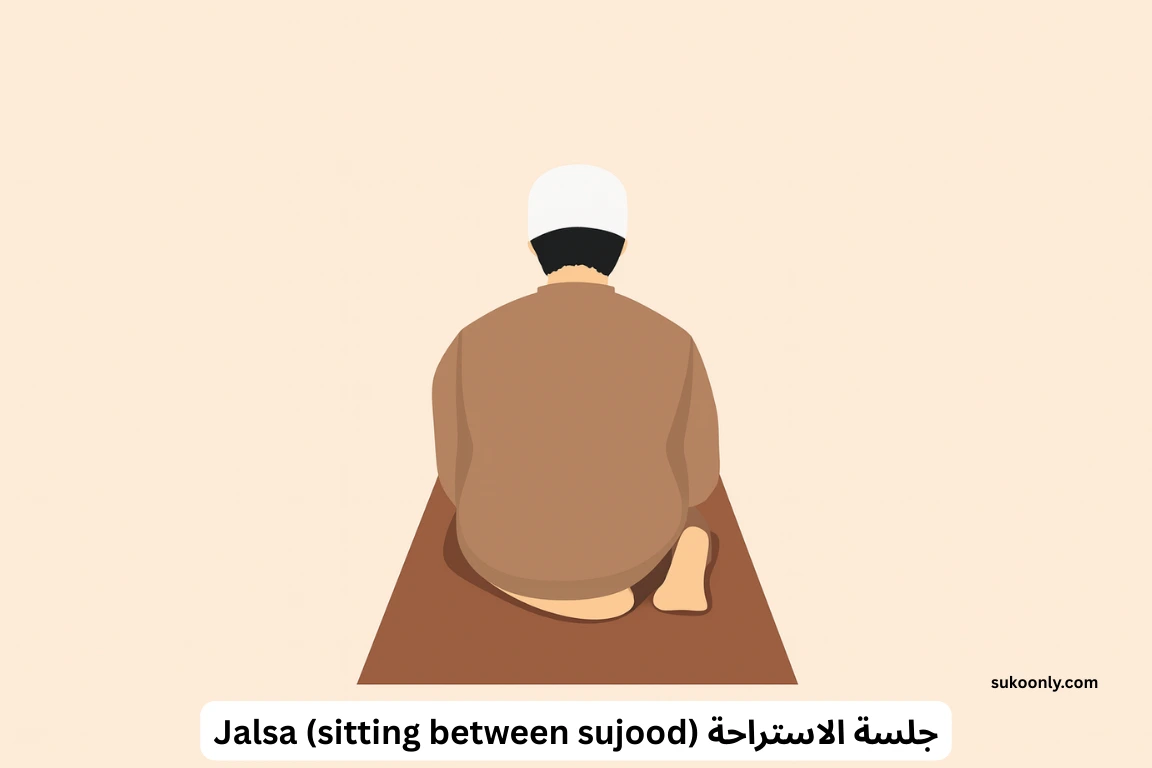
After your first sujood, say “Allāhu Akbar” and sit up gently into jalsa. Rest your hands on your thighs; keep the right foot upright and the left foot flat. Sit calm and composed.
Now ask for mercy:
Rabbighfir lī (رَبِّ اغْفِرْ لِي)
My Lord, forgive me.
Pause briefly in this dua-filled moment, then go down for the second sujood and repeat Subḥāna Rabbiyal-Aʿlā as before.
10. Tashahhud (Final Sitting):
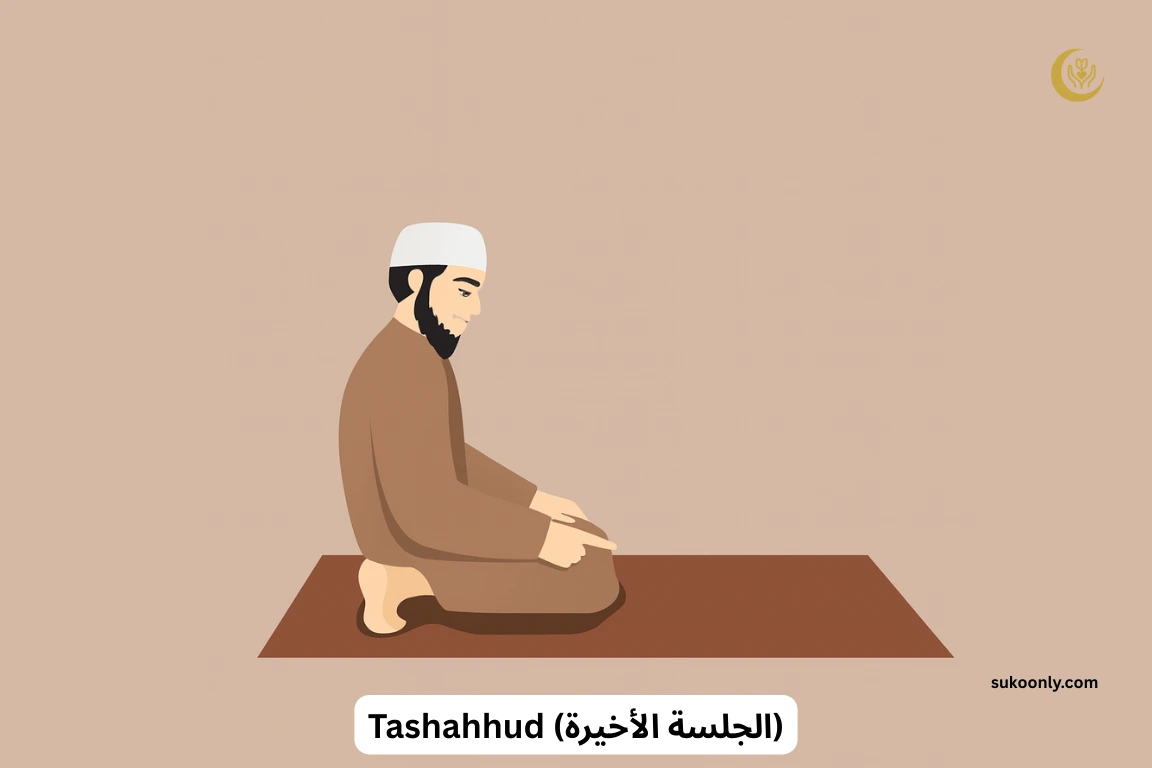
In the last rakʿah, sit calmly for the tashahhud, placing your hands on your thighs and gently raising your right index finger as you affirm faith.
Recite:
At-tahiyyaatu Lillaahi, az-zaakiyaatu Lillaahi, al-tayyibaatu Lillaahi, al-salawaatu Lillaahi. As-salaamu ‘alayka ayyuha’n-Nabiyyu wa rahmat-Allaahi wa barakaatuhu. As-salaamu ‘alayna wa ‘alaa ‘ibaad-Illaah is-saaliheen. Ash-hadu an laa ilaaha ill-Allaah wa ash-hadu anna Muhammadan ‘abduhu wa rasooluhu.
All compliments, prayers, and pure words are for Allah. Peace be upon you, O Prophet, and upon the righteous servants of Allah. I bear witness there is no god but Allah, and I bear witness that Muhammad ﷺ is His servant and messenger.
Then send prayers upon the Prophet ﷺ with the Ṣalāt al-Ibrāhīmiyya:
Allahumma Salli ‘ala Muhammadin wa ‘ala aali Muhammadin, kama sallaita ‘ala Ibrahima wa ‘ala aali Ibrahima innaka Hamidum-Majeed. Allahumma barik ‘ala Muhammadin wa ‘ala aali Muhammadin kama barakta ‘ala Ibrahima wa ‘ala aali Ibrahima innaka Hameedum-Majeed.
O Allah, send Your mercy upon Muhammad and the family of Muhammad, just as You sent it upon Ibrahim and the family of Ibrahim. Truly, You are Praiseworthy and Glorious.
This sitting is a moment of closeness and reflection, where you may also add your own duʿās, asking Allah for forgiveness, guidance, and mercy, before completing the prayer with salām.
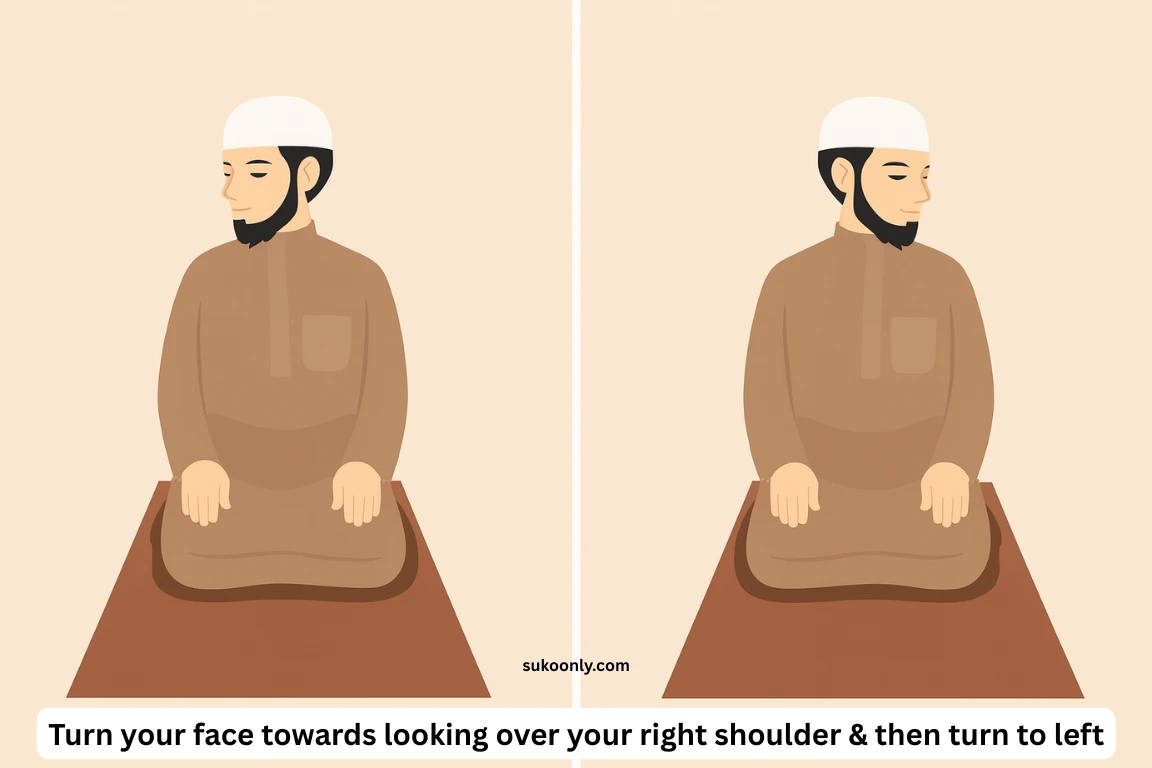
11. Tasleem (Closing Salutation):
To complete your prayer, turn your head gently to the right and then to the left, saying each time:
As-salāmu ʿalaykum wa raḥmatullāh (السَّلَامُ عَلَيْكُمْ وَرَحْمَةُ الله)
Peace and the mercy of Allah be upon you.
With these words, the prayer comes to a close, as you share peace with the angels and those around you. It is a graceful reminder that prayer not only connects you to Allah but also spreads peace to His creation.
After tasleem, take a moment to make duʿāʾ—asking Allah for forgiveness, guidance, and gratitude—especially after the farḍ prayers, when supplications are most accepted.
Salah Rakʿah Counts for Each Prayer
Every daily Salah has a set number of rakʿahs (prayer units), established by the Prophet Muhammad ﷺ and preserved in the Sunnah. Fulfilling these rakʿahs keeps the prayer complete and accepted before Allah ﷻ.
-
Fajr: 2 rakʿahs at dawn, before sunrise
-
Dhuhr: 4 rakʿahs after midday
-
Asr: 4 rakʿahs in the late afternoon
-
Maghrib: 3 rakʿahs right after sunset
-
Isha: 4 rakʿahs at night
These numbers form the heart of the five daily prayers. By following them, a Muslim brings discipline to the day, consistency to worship, and devotion to the bond with Allah.
Common Mistakes to Avoid in Salah
Even sincere Muslims sometimes slip into mistakes during Salah that can affect its validity or lessen its reward. The Prophet Muhammad ﷺ reminded us to pray with serenity, humility, and full attention. Being aware of common errors helps us protect the sanctity of our prayer:
-
Rushing: Moving too fast without pausing in each posture.
-
Improper Rukuʿ or Sujood: Not bowing or prostrating completely, neglecting the essential arkān (pillars).
-
Skipping Recitations: Forgetting Surah al-Fatiha or the required adhkār in a rakʿah.
-
Lack of Khushūʿ: Letting the mind wander instead of focusing on Allah ﷻ.
-
Incorrect Rakʿah Count: Adding or missing rakʿahs, which should be corrected with sujood al-sahw (prostration of forgetfulness).
By avoiding these mistakes, a believer keeps Salah sound and turns it into a moment of true closeness to Allah.
Tips for Beginners Learning Salah
Learning Salah can feel overwhelming at first, but with patience it soon becomes a source of peace and discipline. The Prophet Muhammad ﷺ encouraged teaching prayer step by step, especially to children and new Muslims, so they grow steady in worship.
-
Learn with Guidance: Pray with family, teachers, or imams who can correct mistakes and show the prophetic way.
-
Use Visual or Digital Aids: Prayer mats with markings, trusted apps, or simple video lessons can help you follow the sequence.
-
Practice with Stillness: Take your time in each stage—qiyam, rukuʿ, sujood—until the flow of prayer feels natural.
-
Start with Short Surahs: Begin with Surah al-Ikhlāṣ, al-Falaq, an-Nās, and of course al-Fātiḥa, then build slowly from there.
-
Stay Consistent: Keep a daily rhythm, even if imperfect, to build discipline and nurture khushūʿ (focus) in prayer.
With these simple steps, beginners gain confidence and strengthen their bond with Allah ﷻ, laying the path for lifelong devotion.
See Also: Rabbana duas to recite in Salah
Related Reads:
- Dua After Tashahhud (Salawat on Prophet ﷺ)
- Dua Before Tasleem
- Dua for Sujood (Prostration)
- Dua After Prayer
- Dua Between Tasleem
- Dua After Ruku
FAQs — How to Pray Salah Step by Step
Begin with niyyah (sincere intention), raise your hands for Takbir al-Ihram saying “Allahu Akbar,” recite Surah al-Fātiḥa in Qiyam, bow in Rukuʿ, rise again, perform two Sujood with Jalsa between them, continue for the required rakʿahs, then close with Tashahhud and Tasleem. Fajr is 2 rakʿahs at dawn, Dhuhr 4 at midday, Asr 4 in the afternoon, Maghrib 3 after sunset, and Isha 4 at night—fixed in the Sunnah. Yes. Women follow the same sequence of actions and recitations, with only slight posture adjustments mentioned by scholars. Yes. Wudu (ritual ablution) is a condition for valid Salah. The Prophet Muhammad ﷺ said: “Prayer is not accepted without purification.” (Sahih Muslim). If a step or rakʿah is missed, complete it and perform sujood al-sahw (prostration of forgetfulness) before finishing with Tasleem to uphold the prayer’s integrity.

Mohammed Basheer is the founder of Sukoonly.com, an Islamic blog focused on duas, prophetic healing, and Qur’anic wisdom. He writes with sincerity and spiritual depth for seekers around the world.