

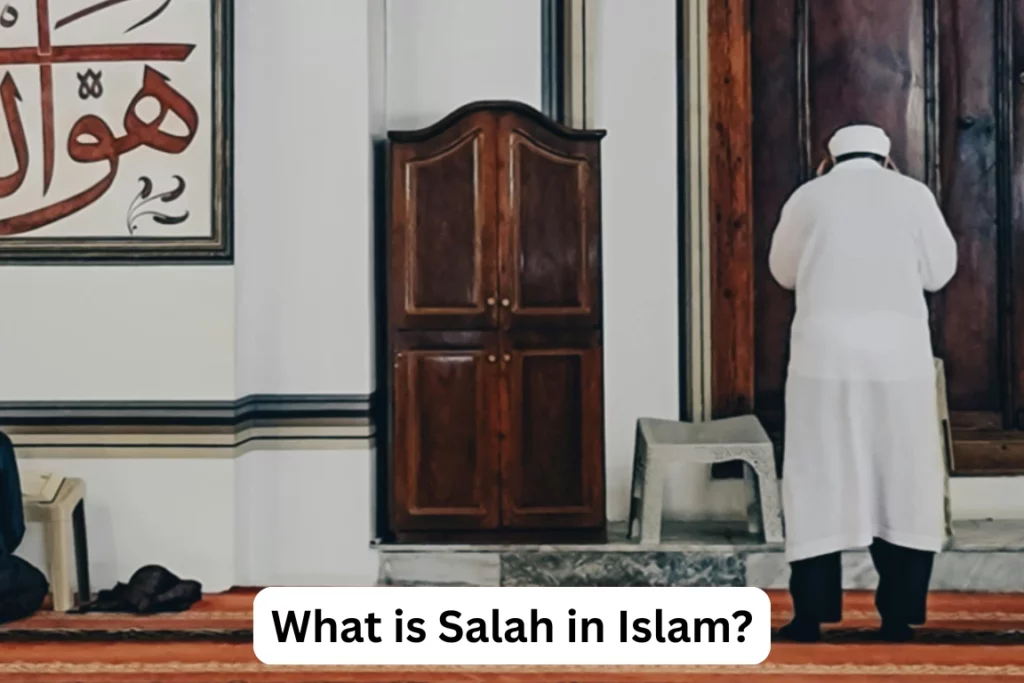
SECOND PILLAR OF ISLAM — 5 DAILY PRAYERS
Salah — The Complete Islamic Prayer Guide
“Indeed, prayer has been decreed upon the believers a decree of specified times.” — Quran 4:103
6 Conditions (Shuroot)
13 Pillars (Arkan)
4-Madhab Comparisons
Salah (Arabic: صلاة, also written Salat or Namaz) is the obligatory ritual prayer performed five times daily by every adult Muslim. It is the Second Pillar of Islam, explicitly commanded in the Quran 17 times, and was made obligatory during the Night of Ascension (Laylat al-Mi‘raj) as the only act of worship given to the Prophet ﷺ directly without an intermediary angel. The Prophet ﷺ said: “The first thing about which the servant will be questioned on the Day of Resurrection is Salah. If it is sound, all his deeds will be sound. If it is corrupt, all his deeds will be corrupt.” — Sunan al-Tirmidhi, Book of Prayer (Kitab al-Salah), Hadith 413, graded Sahih by al-Albani.
The 5 Daily Prayers — Times, Rak‘at, and Status
| Prayer | Arabic | Time Window | Fard Rak‘at | Sunnah | Legal Status |
|---|---|---|---|---|---|
| Fajr | فجر | True dawn → sunrise | 2 | 2 before | Fard Ayn |
| Dhuhr | ظهر | Solar noon → Asr time | 4 | 4 before + 2 after | Fard Ayn |
| Asr | عصر | Shadow = object length → sunset | 4 | 4 before | Fard Ayn |
| Maghrib | مغرب | Sunset → disappearance of red twilight | 3 | 2 after | Fard Ayn |
| Isha | عشاء | Disappearance of red twilight → midnight (preferred) | 4 | 2 after + Witr (3) | Fard Ayn |
The 6 Conditions (Shuroot) for Valid Salah
1. Ritual Purity (Taharah)
Wudu for Hadath Asghar; Ghusl for Hadath Akbar. Salah performed without Wudu is batil (void) by unanimous scholarly consensus — Quran 5:6; Sahih al-Bukhari, Book of Prayer (Kitab al-Salah), Hadith 135, graded Sahih.
2. Removal of Physical Impurity (Najasah)
Body, clothing, and prayer place must be free from Najasah Mughallazah (heavy) and Najasah Mutawassitah (medium). Source: Sahih al-Bukhari, Book of Prayer (Kitab al-Salah), Hadith 227, graded Sahih.
3. Covering the Awrah
Men: navel to knee (all 4 madhabs). Women: entire body except face and hands (majority); Hanbali adds feet to Awrah in Salah. Quran 7:31 — “Take your adornment at every place of worship.”
4. Facing the Qibla
Facing the direction of the Kaʿbah in Makkah. Exception: fear prayer (Salat al-Khawf) and voluntary prayer while travelling on conveyance. Quran 2:144.
5. Entry of Prayer Time (Waqt)
Salah performed before its time begins is invalid and must be repeated. The times were taught by Jibril (AS) to the Prophet ﷺ across two days — Sunan Abi Dawud, Book of Prayer (Kitab al-Salah), Hadith 393, graded Sahih by al-Albani.
6. Intention (Niyyah)
The Niyyah is in the heart — verbal pronouncement is Sunnah (Maliki, Hanbali) or bidʿah according to some scholars (Ibn Taymiyyah). “Actions are by intentions.” — Sahih al-Bukhari, Book of Revelation (Kitab Bad’ al-Wahy), Hadith 1, graded Sahih.
The 13 Pillars (Arkan) of Salah — 4-Madhab Comparison
| Pillar (Rukn) | Hanafi | Maliki | Shafiʿi | Hanbali |
|---|---|---|---|---|
| Standing (Qiyam) | Fard | Fard | Fard | Fard |
| Opening Takbir (Takbirat al-Ihram) | Fard | Fard | Fard | Fard |
| Recitation of Surah al-Fatihah | Wajib | Fard | Fard | Fard |
| Rukuʿ (Bowing) | Fard | Fard | Fard | Fard |
| Rising from Rukuʿ | Fard | Fard | Fard | Fard |
| Sujud (Prostration) — 2 per rakʿah | Fard | Fard | Fard | Fard |
| Final Tashahhud (sitting) | Wajib | Fard | Fard | Fard |
| Closing Salam (Tasleem) | Wajib | Fard | Fard | Fard |
Source: Ibn Qudamah, al-Mughni; al-Nawawi, al-Majmuʿ; al-Sarakhsi, al-Mabsut; al-Dardir, al-Sharh al-Kabir
Key Salah Entity Vocabulary
One unit of Salah comprising standing, bowing, and 2 prostrations
Individual obligation — cannot be discharged by another person
The time window within which each prayer must be performed
Making up a missed prayer — obligatory; must be performed as soon as possible
Congregational prayer — Fard Kifayah (Shafiʿi), Sunnah Mu’akkadah (Hanafi/Maliki), Wajib (Hanbali)
Intention in the heart — specifying which prayer is being performed
Prostration of forgetfulness — compensates for omissions within Salah
Friday prayer — replaces Dhuhr; Fard Ayn on adult free Muslim men; 2 rakʿat with 2 khutbahs
Salah Guides — Complete Series
Rulings of Salah
⚠ Wudu (Prerequisite)
Duas After Prayer
Dua Qunoot
Durood Ibrahim
How to Pray Taraweeh
Qiyam al-Layl

Mohammed Basheer Orsala is the founder of Sukoonly.com - an Islamic resource dedicated to verified Quranic duas and Sunnah-based supplications. A self-taught Islamic researcher, he has studied classical texts and authenticated hadith collections including the works of Imam al-Nawawi, Shaykh al-Albani, Ibn Hajar al-Asqalani, and Ibn al-Qayyim. He writes to make verified Prophetic supplications accessible to English-speaking Muslims worldwide.