

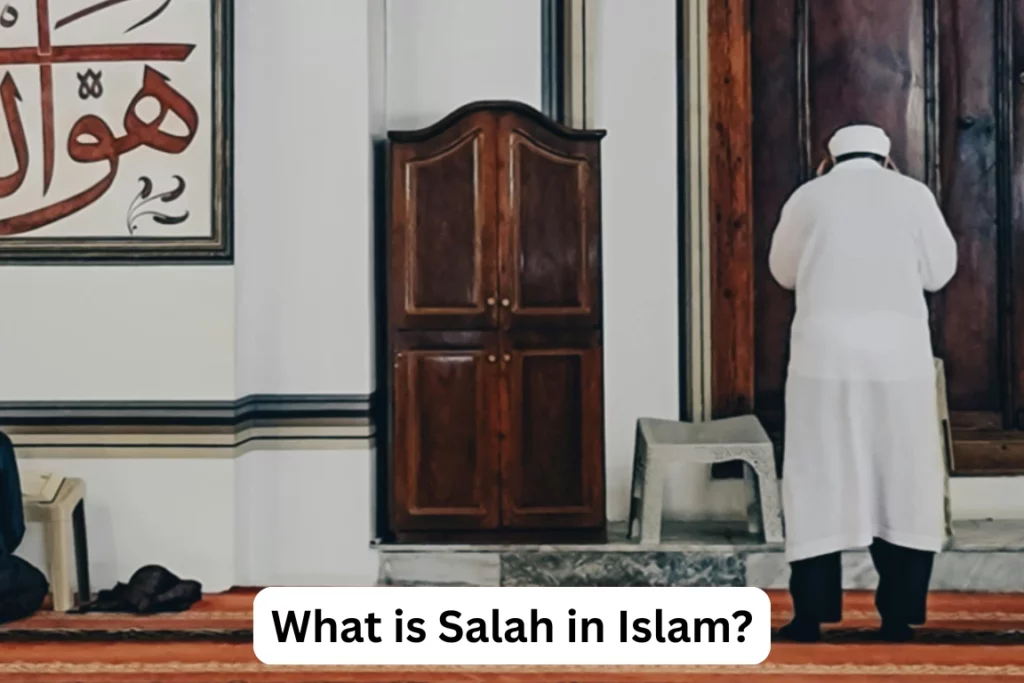
Salah in Islam is the obligatory ritual prayer performed five times a day and is the second pillar of Islam. Commanded in the Qur’an and demonstrated by Prophet Muhammad ﷺ in the Sunnah, Salah is a direct act of ʿibādah (worship) that connects the believer to Allah ﷻ.
The five daily prayers — Fajr, Dhuhr, Asr, Maghrib, and Isha — structure a Muslim’s day around remembrance (dhikr), humility, and submission. Through standing (qiyam), bowing (rukuʿ), and prostrating (sujood), each rakʿah renews tawḥīd (the oneness of Allah) and strengthens faith.
Beyond its physical movements, Salah purifies the heart, disciplines the soul, and anchors daily life in spiritual awareness. It is both a command and a mercy — a source of forgiveness, reward, and closeness to Allah.
In this guide, you will learn what Salah is, its types, its importance, and the rewards promised to those who establish it sincerely.
Importance and Purpose of Salah?
Salah is the foundation of a Muslim’s faith and spiritual life. The Qur’an commands the believers to “establish prayer” (aqīmū aṣ-ṣalāh), and the Prophet Muhammad ﷺ described it as the line that separates Islam from disbelief.
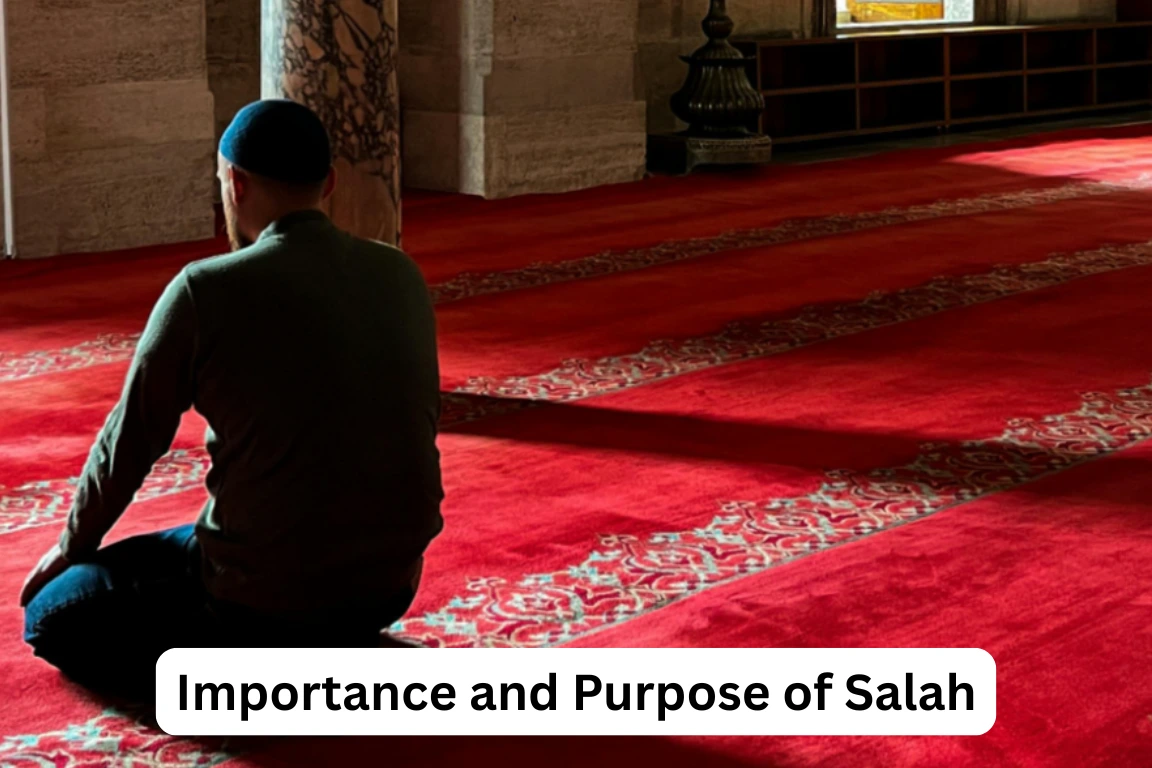
- Through Salah, a believer nurtures a close bond with Allah ﷻ, finding serenity, guidance, and strength in every prayer.
- It humbles the soul, orders the rhythm of the day, and purifies the heart from arrogance and heedlessness.
- On a community level, Salah gathers Muslims together in jamāʿah (congregational prayer), showing unity and equality before their Creator.
In this way, Salah is both a personal act of devotion and a clear sign of the Ummah’s submission to Allah.
Types of Salah
Salah in Islam is divided into several types based on ruling and purpose. These include fard (obligatory), Sunnah (confirmed and non-confirmed), nafl (voluntary), Witr, Eid, and Janazah prayers. Each type has specific timings, rak’ahs, and legal rulings.
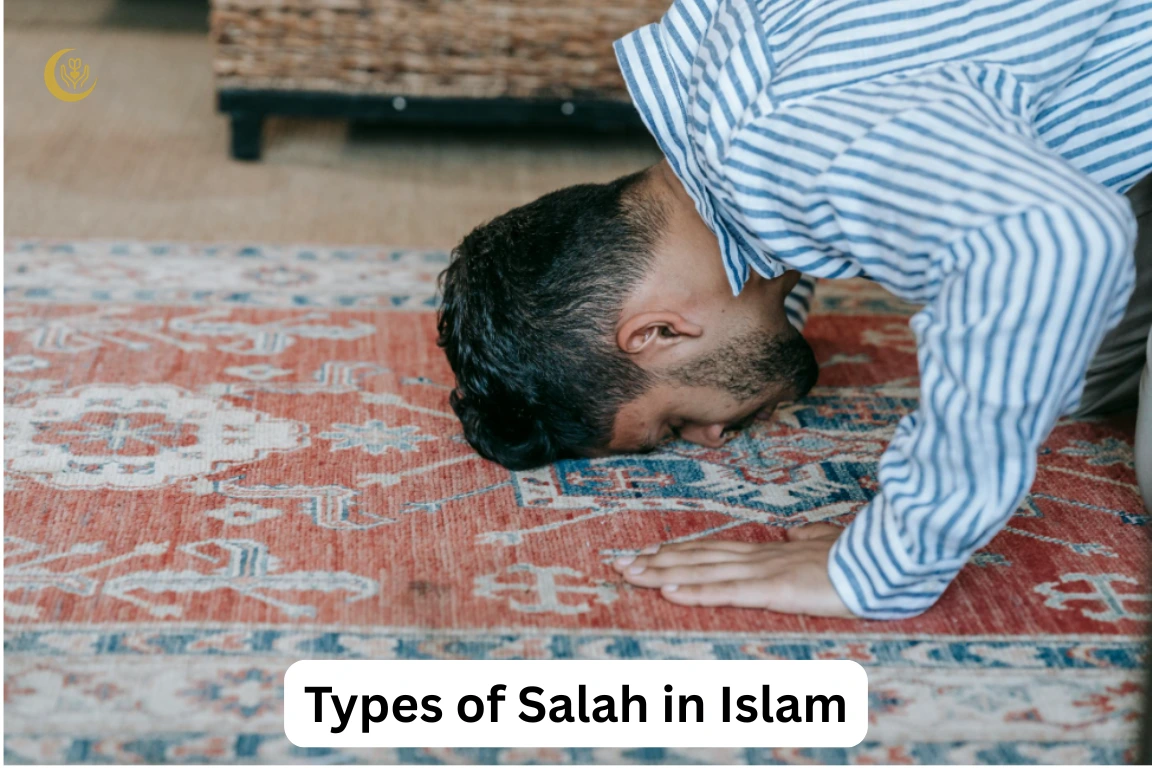
1. Fard Salah (Obligatory Prayers)
These are the five daily prayers that are mandatory for every adult Muslim.
| Prayer | Units (Rakʿahs) | Time |
| Fajr | 2 | Before sunrise |
| Dhuhr | 4 | After midday |
| Asr | 4 | Late afternoon |
| Maghrib | 3 | Just after sunset |
| Isha | 4 | Nighttime |
Missing any fard prayer without valid excuse is classified as a kabīrah (major sin) in Islamic jurisprudence. These prayers are the foundational obligation in Islam and must be performed at their prescribed times.
2. Witr Prayer
Witr is a night prayer that follows the Isha Salah and holds different legal rulings across Islamic schools of thought.
Witr Salah refers to an odd-numbered prayer performed after Isha. It is legislated in the Sunnah and consistently practiced by the Prophet ﷺ.
Recommended time: final third of the night
Ruling by Madhhab:
| Madhhab | Ruling |
| Ḥanafī | Wājib (obligatory) |
| Shāfiʿī, Mālikī, Ḥanbalī | Sunnah Mu’akkadah (confirmed Sunnah) |
Timing:
- Starts after Isha
- Ends before Fajr
Recommended time: final third of the night
Format:
- Must be prayed in odd numbers
- Common forms: 1, 3, or 5 rakʿahs
Prophetic Practice:
- The Prophet ﷺ never abandoned Witr, including while traveling.
- It is recorded consistently in authentic hadith.
Witr is an emphasized night prayer with strong legal backing in all madhāhib. Its odd-numbered format, timing window, and connection to the Sunnah make it a key part of the nightly prayer routine for practicing Muslims.
3. Sunnah Mu’akkadah – The Confirmed Sunnah
These are the prayers the Prophet ﷺ performed regularly and encouraged us to keep:
- 2 before Fajr
- 2 or 4 before Dhuhr, and 2 after
- 2 after Maghrib and Isha
Sunnah Mu’akkadah prayers were performed consistently by the Prophet ﷺ. They are not obligatory, but abandoning them habitually is discouraged.
4. Sunnah Ghair Mu’akkadah (Non-Emphasized Sunnah)
Sunnah Ghair Mu’akkadah refers to optional prayers that were occasionally performed by the Prophet ﷺ but not emphasized as part of his regular practice.
Definition:
These are non-obligatory prayers that carry reward but may be left without sin. They are distinguished from Sunnah Mu’akkadah, which the Prophet ﷺ practiced consistently.
Ruling:
- Not sinful to omit
- Rewardable when performed
- Practicing them shows love for the Sunnah and commitment to extra worship
Examples:
- 4 rakʿahs before Asr
- 4 rakʿahs before Isha
- 2 rakʿahs before Maghrib (in some narrations)
Purpose:
- Enhance personal worship
- Fill spiritual gaps in fard prayers
- Align with occasional prophetic habits
Sunnah Ghair Mu’akkadah prayers offer flexibility in devotion. While not required, they allow believers to draw closer to Allah ﷻ through voluntary action rooted in the Prophet’s ﷺ example.
5. Nafl (Voluntary Prayers)
Nafl prayers are entirely optional but carry great reward. They allow the believer to increase nearness to Allah and show love beyond obligation.
Common Nafl Prayers:
| Name | Timing | Purpose |
| Tahajjud | Last third of the night | Deep connection, duʿa, and forgiveness |
| Ishraq | After sunrise | Early-day blessing |
| Duha | Mid-morning | Equivalent to charity for every joint |
| Salat al-Tawbah | After sin or mistake | Seeking forgiveness |
| Salat al-Hajah | During need or hardship | Asking Allah’s help |
Nafl prayers are voluntary and carry spiritual reward. Their timings and formats vary, and they serve as a means of drawing closer to Allah through additional acts of devotion.
Conditions and Requirements of Salah
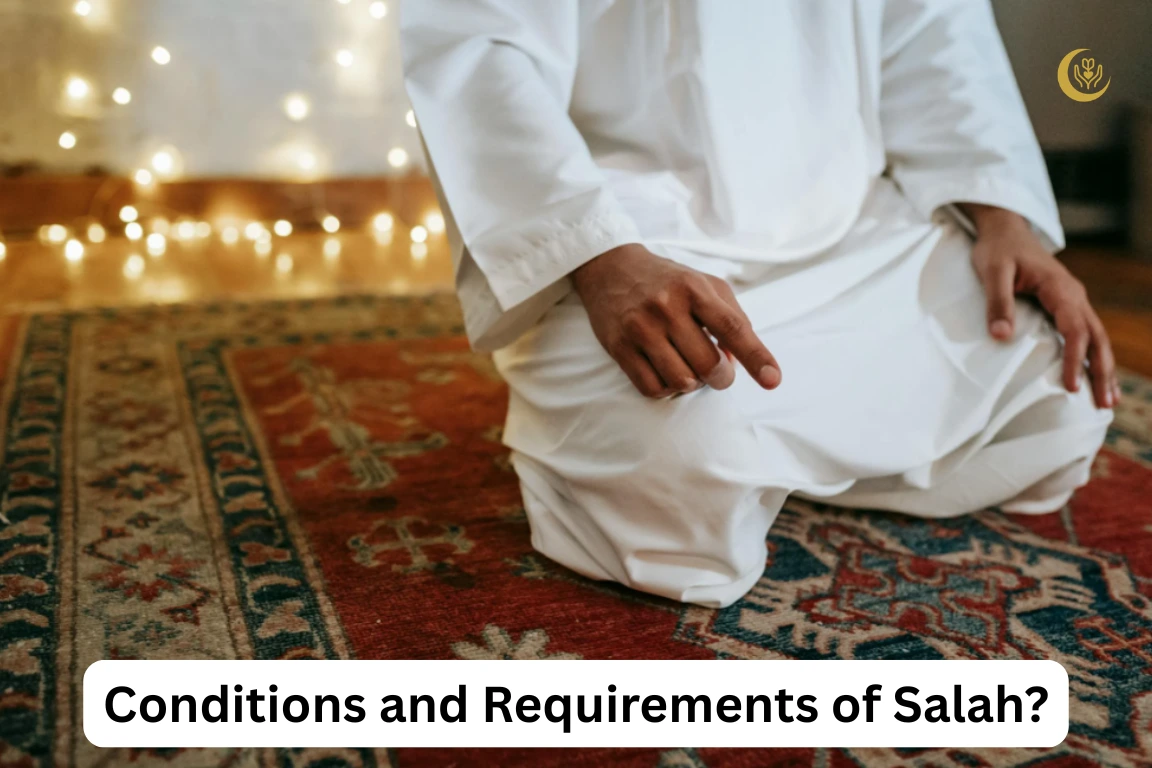
Before a Muslim begins Salah, certain conditions (shurūṭ aṣ-ṣalāh) must be met for the prayer to be valid. These prepare the body, mind, and heart to stand in humility before Allah ﷻ. Without them, Salah is not accepted.
- Purity (Ṭahārah): A believer must be in a state of ritual cleanliness through wuḍūʾ (ablution) or ghusl (full bath) when required. Clothes and the place of prayer must also be free from najāsah (impurities).
- Covering the ʿAwrah: Men cover from the navel to the knees, while women cover the entire body except the face and hands, as taught in the Prophetic Sunnah.
- Facing the Qiblah: The worshipper must face the Kaʿbah in Makkah, in line with the Qur’anic command: “So turn your face toward al-Masjid al-Ḥarām” (2:144).
- Correct Time: Every Salah has its appointed time; praying outside it without a valid reason makes it invalid.
- Intention (Niyyah): A sincere niyyah in the heart is required for each prayer, turning ordinary action into an act of ʿibādah (worship).
These conditions remind us that Salah is not a casual routine but a sacred covenant with Allah, requiring purity, modesty, direction, punctuality, and sincerity.
How Salah is Performed (Brief Overview)?
Salah is performed exactly as the Prophet Muhammad ﷺ taught when he said: “Pray as you have seen me pray” (Bukhari). Each unit (rakʿah) brings together Qur’anic recitation, humble movements, and heartfelt words that keep the believer connected to Allah ﷻ. The prayer begins with the Takbīr al-Iḥrām (“Allāhu Akbar”) and ends with the Taslīm (saying peace at the close).
Basic Steps of a Rakʿah:
- Takbīr al-Iḥrām: Raise the hands and say “Allāhu Akbar.”
- Qiyām (Standing): Recite Sūrat al-Fātiḥah and another Qur’anic passage.
- Rukūʿ (Bowing): Place hands on knees and say “Subḥāna Rabbiyal-ʿAẓīm.”
- Sujūd (Prostration): Lower the forehead, nose, palms, knees, and toes to the ground, saying “Subḥāna Rabbiyal-Aʿlā.”
- Jalsah (Sitting): Sit between two prostrations, asking Allah’s forgiveness.
- Tashahhud (Final Sitting): Testify faith and send blessings on the Prophet ﷺ.
- Taslīm: End by turning the head right and left with “As-salāmu ʿalaykum wa raḥmatullāh.”
The number of rakʿahs varies—Fajr (2), Dhuhr (4), Asr (4), Maghrib (3), Isha (4)—but this pattern never changes. Every prayer renews humility, obedience, and remembrance of Allah.
Spiritual Benefits of Salah
Salah is more than a duty—it is the believer’s miʿrāj (spiritual ascent) and a lifeline to Allah ﷻ. With every prayer, the heart is cleansed, sins are forgiven, and īmān (faith) is renewed. Consistency in Salah trains the nafs (soul), protects from the whispers of Shayṭān, and brings a sense of sakīnah (serenity) that nothing else can give.
The Qur’an reminds us: “Indeed, Salah restrains from immorality and wrongdoing” (29:45). It plants taqwā (God-consciousness), builds ṣabr (patience), and nurtures shukr (gratitude) in the heart.
At a deeper level, Salah softens the heart with khushūʿ (humble focus), keeps it alive with dhikr (remembrance), and becomes a safe haven in times of hardship. For the believer, it is a daily wellspring of peace, guidance, and closeness to Allah.
Consequences of Abandoning Salah?
Neglecting Salah is counted among the kabāʾir (grave sins) in Islam.
The Qur’an warns: “So woe to those who pray, yet are heedless of their prayer” (107:4–5), and speaks of a people who abandoned Salah and chased desires, leading them to destruction (19:59).
The Prophet Muhammad ﷺ said: “The covenant between us and them is Salah; whoever abandons it has committed disbelief” (Tirmidhi, Ibn Majah). This shows that Salah is the dividing line between īmān (faith) and kufr (disbelief).
Leaving Salah weakens faith, hardens the qalb (heart), and leaves the soul exposed to sin. Without prayer, the servant becomes cut off from Allah’s raḥmah (mercy) and slips further from His nearness.
On the Day of Judgment, Salah will be the very first deed examined. If it is sound, the rest of a person’s deeds will follow; if it is neglected, other deeds will crumble. To abandon Salah is not simply missing an act of worship—it is severing the strongest bond between a servant and the Creator.
FAQs – About Salah
Salah is the formal act of worship in Islam, consisting of specific movements and recitations prescribed in the Qur’an and Sunnah. It includes Qur’anic recitation, takbīr, bowing (rukuʿ), prostration (sujūd), and taslim. It is the second pillar of Islam and serves as the primary form of connection between the servant and Allah ﷻ. “Between a person and disbelief is the abandonment of Salah.” (Muslim) Failure to observe Salah consistently, without valid excuse, may be viewed as an act of disbelief (kufr) in some scholarly opinions. Arabic is required because the Qur’an was revealed in that language (Qur’an 12:2), and Salah follows the form taught by the Prophet ﷺ. The timings of the five daily prayers are fixed by divine command in the Qur’an (Surah 4:103) and further detailed in authentic hadith. They are based on the movement of the sun, serving as regular spiritual intervals throughout the day. Angel Jibrīl demonstrated the timing of each Salah to the Prophet ﷺ on two consecutive days (Abu Dawud, Tirmidhi). Salah brings: In hadith, the Prophet ﷺ said: “If there was a river at one’s door and he bathed in it five times a day, would any dirt remain?” On the Day of Judgment, Salah will be the first deed judged. There is no sin on women who pray individually. However, when performed in congregation, the rewards are increased.
“Islam is built on five...” — and Salah is among them (Bukhari, Muslim).
His companions replied no. He said: “That is the example of the five daily prayers.” (Bukhari, Muslim)

Mohammed Basheer is the founder of Sukoonly.com, an Islamic blog focused on duas, prophetic healing, and Qur’anic wisdom. He writes with sincerity and spiritual depth for seekers around the world.