

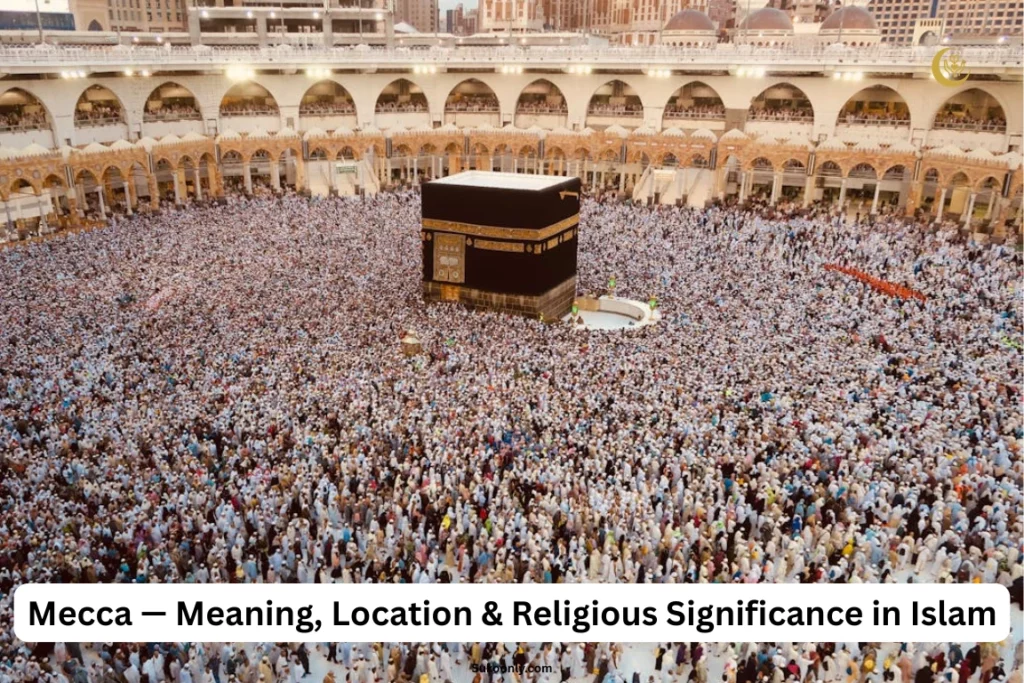
Mecca (Makkah al-Mukarramah) is the holiest city in Islam and the spiritual heart of the Muslim world, home to nearly 2.4 million residents. Every day, more than 1.9 billion Muslims around the globe turn their faces toward this sacred city — the Kaʿbah, nestled within the Masjid al-Ḥarām, forming the spiritual axis of the Ummah.
The very name “Makkah” is derived from an ancient root meaning “to draw and purify”, symbolizing how this blessed city pulls hearts together in faith, unity, and remembrance of Allah ﷻ. Its sanctity was established when Prophet Ibrāhīm (Abraham) and his son Ismāʿīl (Ishmael) built the Kaʿbah under Allah’s divine command, making it the eternal center of tawḥīd (oneness of Allah). Since that moment, Mecca has remained the direction (qibla) of every prayer and the focal point of pilgrimage for all believers.
Each year, the city welcomes over 1.8 million pilgrims during Hajj, with more than 1.6 million arriving from outside Saudi Arabia, representing over 180 nations. During Umrah season, millions more visit throughout the year for spiritual renewal. To serve this growing influx, the Grand Mosque continues to expand — the upcoming King Salman Gate project is expected to add nearly 900,000 additional prayer spaces.
Through the centuries, Mecca has remained a living testimony of faith and revelation, where every stone and pathway echoes the footsteps of Prophets and the mercy of Allah ﷻ. It stands as a unifying sanctuary where the world’s believers gather in humility and equality, reflecting Islam’s timeless message — that before Allah, all hearts are one.
Location and Geography of Mecca
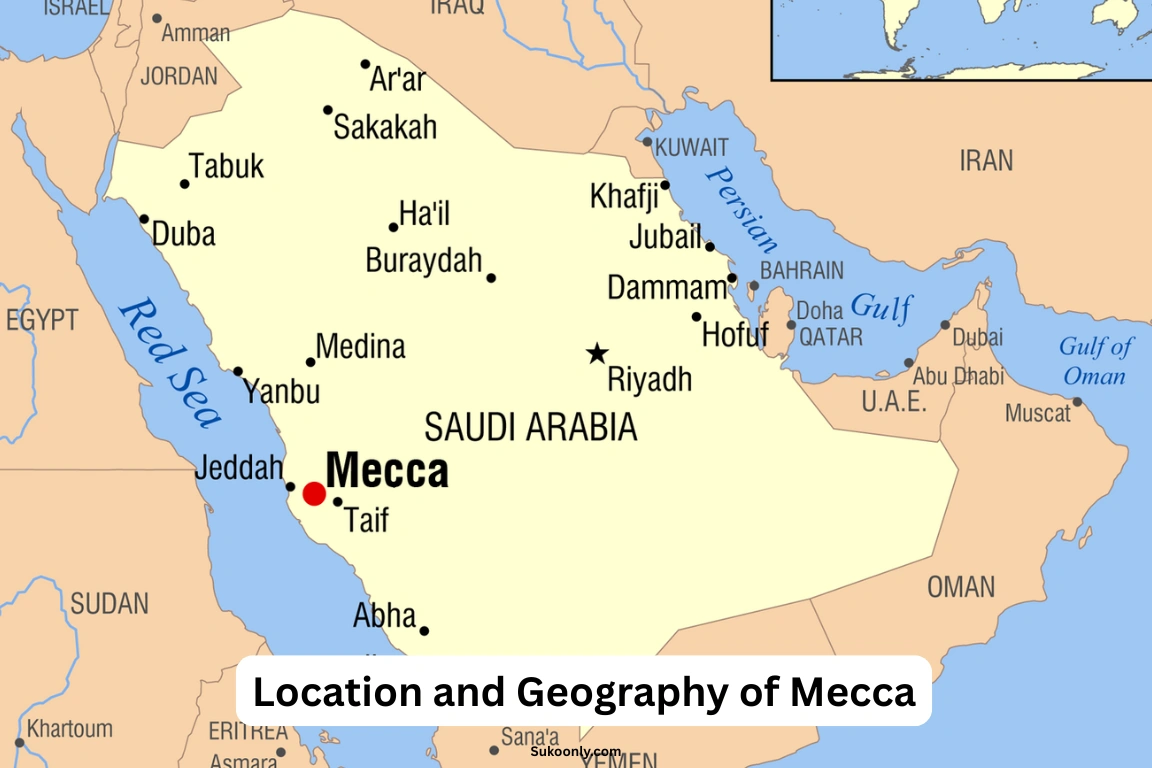
Mecca (Makkah al-Mukarramah) is located in the Hejaz region of western Saudi Arabia, about 70 kilometers inland from the Red Sea. It is surrounded by mountain ranges like Jabal al-Nour, Jabal Thawr, and Jabal Omar, giving the city its distinct valley setting. Mecca stands 277 meters above sea level and stretches across more than 1,200 square kilometers within the Mecca Province. The area, once known as the Valley of Bakkah, offered natural protection but limited space for expansion, shaping the city’s compact, historic character.
The city has a hot desert climate (Köppen BWh) — long, dry summers and mild winters. Temperatures can rise above 45°C (113°F) in summer, while rain falls only occasionally between November and January. Despite the harsh desert conditions, the Zamzam Well continues to flow — a miraculous spring that has sustained life in Mecca for thousands of years and remains a symbol of Allah’s mercy for pilgrims performing Hajj and Umrah.
In modern times, Mecca has grown far beyond its ancient valley. New tunnels, roads, and the Haramain High-Speed Railway now link the city to Jeddah, Medina, and Taif, making travel for pilgrims faster and safer. Its terrain and climate still shape daily life — reminding visitors that even in the heart of the desert, faith continues to flourish where Allah has willed it.
Historical Origins of Mecca
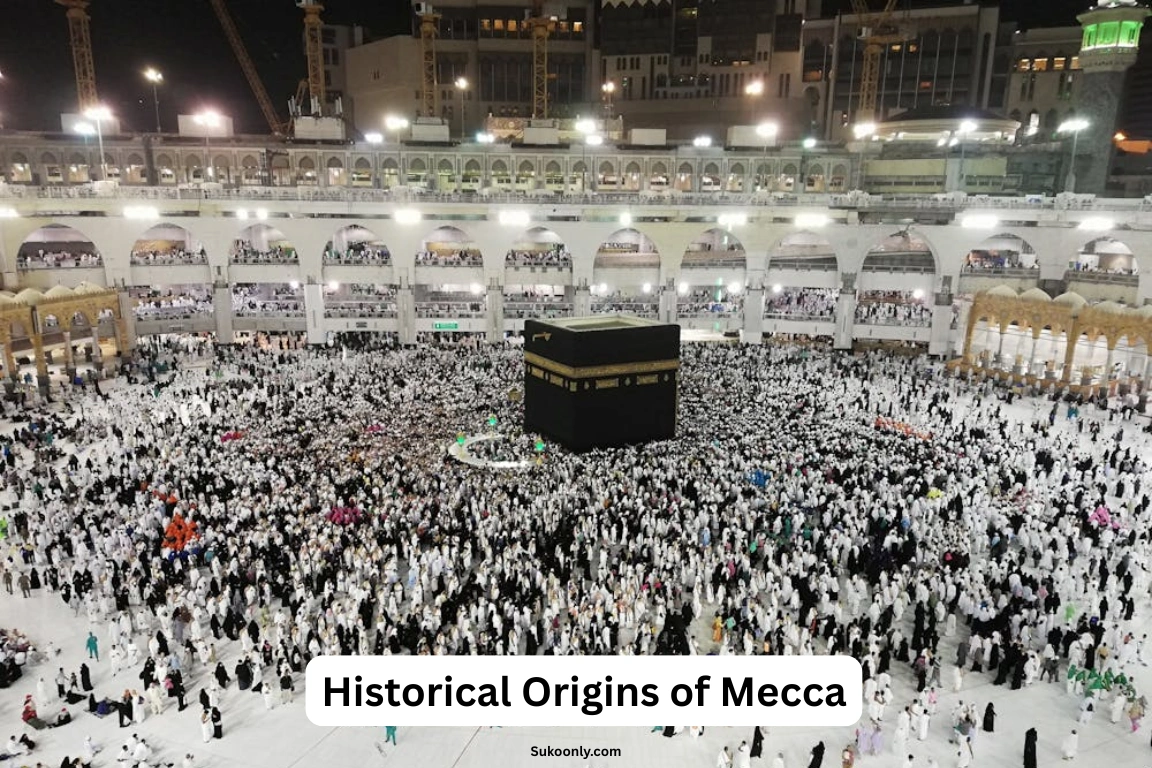
The story of Mecca (Makkah al-Mukarramah) begins with Prophet Ibrahim (Abraham عليه السلام) and his son Prophet Ismail (Ishmael عليه السلام), who built the Kaaba (Baytullah) by Allah’s command as the first house devoted to His worship. At that time, the valley was empty and lifeless. Hajar (Hagar عليها السلام) was left there with her infant son, and through her trust and struggle, Allah ﷻ caused the Zamzam Well to spring forth — turning a barren desert into a place of life and faith.
In time, the Jurhum tribe from Yemen settled near the well, forming the first community around the Kaaba. Mecca soon became known not only for its sacredness but also as a peaceful stop for traders and travelers crossing Arabia. Fighting was forbidden within its boundaries, giving it a reputation as a protected sanctuary (Haram).
Before Islam, the Kaaba had sadly become surrounded by idols, yet it remained a site of reverence for all Arab tribes. When Prophet Muhammad ﷺ appeared in the 7th century CE, he restored the Kaaba to its original purity — cleansing it of false gods and reestablishing tawheed (the oneness of Allah) as its eternal message to mankind.
Religious Significance of Mecca
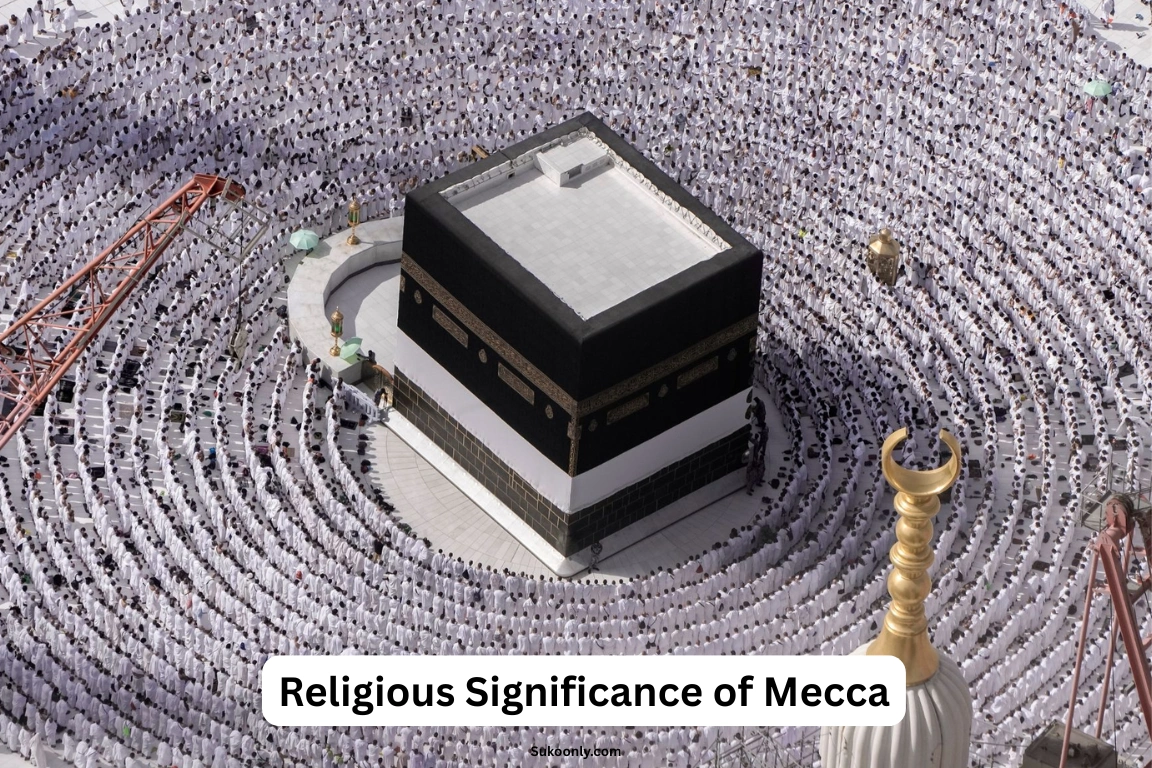
Mecca (Makkah al-Mukarramah) is the most sacred place in Islam — the spiritual heart of the Muslim world and the center of every believer’s direction in prayer. At its core stands the Kaaba, the House of Allah (Baytullah), the very first sanctuary dedicated to the worship of the One True God. Muslims everywhere face the Kaaba during their daily salah, a constant reminder of unity and devotion.
The Qur’an calls Mecca Al-Balad Al-Ameen, meaning the Secure City, and honors the story of Prophet Ibrahim (Abraham عليه السلام) and Prophet Ismail (Ishmael عليه السلام), who raised the foundations of the Kaaba together in obedience to Allah’s command.
Every year, millions of Muslims from around the world travel to Mecca to perform Hajj and Umrah — acts of worship that express equality, humility, and submission before Allah ﷻ. Beyond its physical boundaries, Mecca stands as the eternal symbol of tawheed (oneness of Allah), reflecting the shared faith and brotherhood that connect the entire ummah.
The Kaaba – Center of Islamic Worship
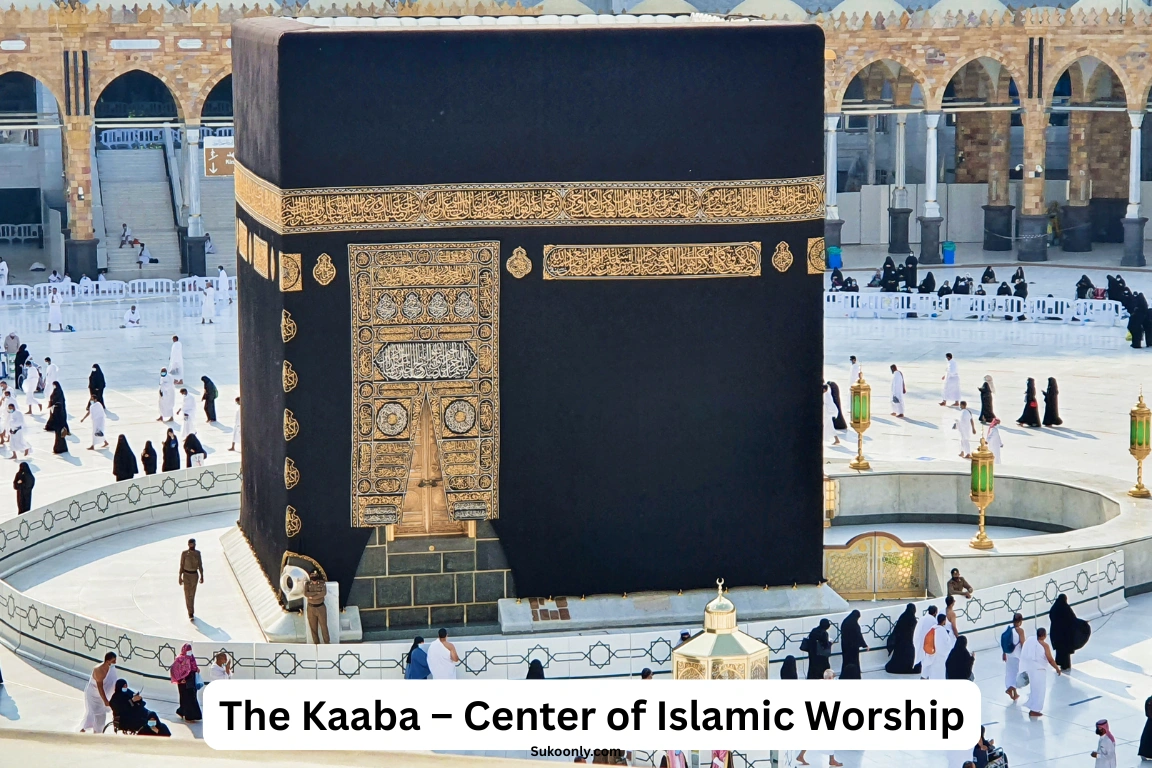
At the heart of Mecca (Makkah al-Mukarramah) stands the Kaaba (Baytullah – House of Allah) — the most sacred site in Islam and the center of every believer’s worship. Draped in its black silk and gold-embroidered Kiswah, it rests within the sacred walls of the Masjid al-Haram (Grand Mosque). Every day, Muslims across the world turn their faces toward this holy house during Salah (prayer), a single direction that unites hearts, nations, and generations in the remembrance of Allah ﷻ.
According to Islamic tradition, the Kaaba was built by Prophet Ibrahim (Abraham عليه السلام) and his son Prophet Ismail (Ishmael عليه السلام) in obedience to Allah’s command. Though it has been rebuilt at different times — during the Quraysh period, under ‘Abdullah ibn al-Zubayr, and in the Ottoman era — its foundations have remained unchanged since the time of the Prophets. The Kaaba is the heart of Hajj and Umrah, around which millions of pilgrims perform Tawaf, circling in harmony, echoing the rhythm of creation and the continuous remembrance of their Lord.
Beyond its form of stone and cloth, the Kaaba is the spiritual axis (Qutb al-Ruhani) of the Muslim world — a meeting point between divine will and human devotion. It stands as the symbol of tawheed (the oneness of Allah) and equality, reminding every believer that before Allah, all stand equal, and all hearts bow to the same truth.
Masjid al-Haram – The Grand Mosque of Mecca
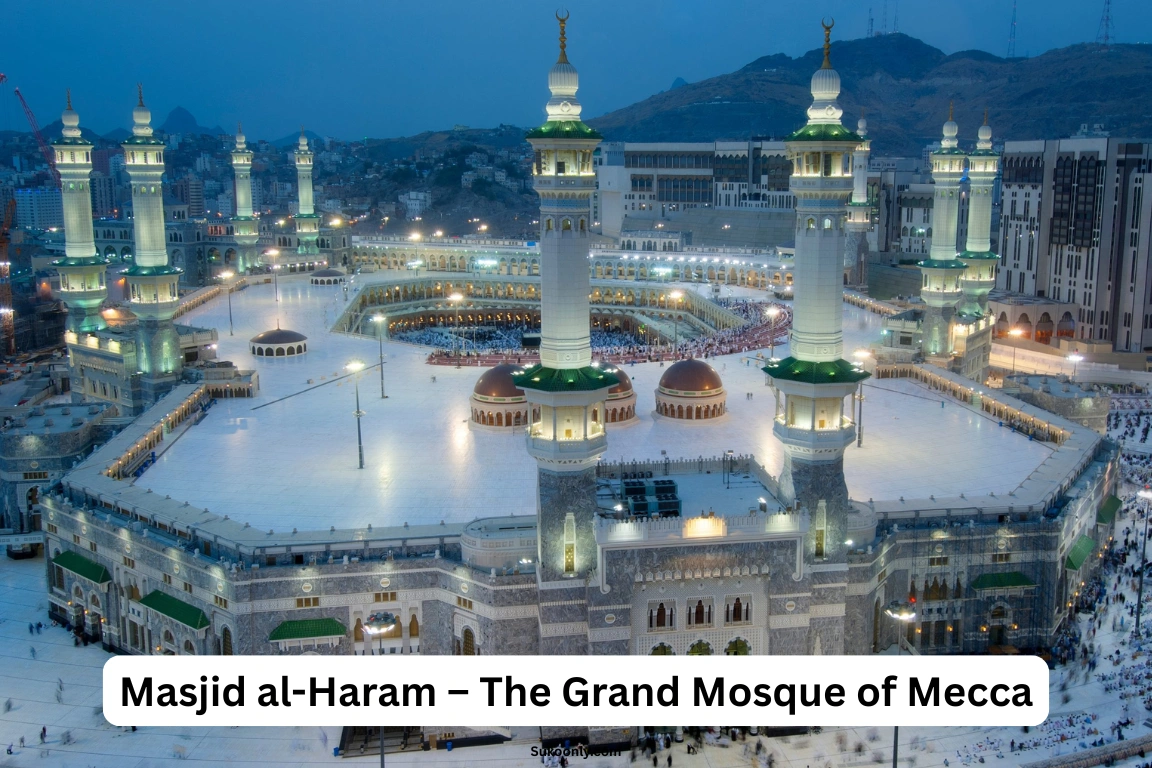
The Masjid al-Haram (المسجد الحرام) in Makkah al-Mukarramah is the holiest sanctuary in Islam — the heart toward which every Muslim turns in prayer. At its center stands the Kaaba (Baytullah), the House of Allah ﷻ, wrapped in the black Kiswah and illuminated by centuries of devotion. It is here that every act of worship finds direction, and every believer feels the nearness of their Creator.
The story of Masjid al-Haram goes back to Prophet Ibrahim (Abraham عليه السلام) and his son Prophet Ismail (Ishmael عليه السلام), who raised the foundations of the Kaaba in obedience to Allah’s command — a legacy of pure tawheed (monotheism). Over time, rulers from the Umayyad, Abbasid, Ottoman, and Saudi eras expanded and preserved this sacred space, transforming it into the world’s most awe-inspiring mosque while keeping its purpose unchanged: the remembrance of Allah alone.
Within its blessed boundaries lie the Maqam Ibrahim, where the Prophet once stood to build the Kaaba; the Zamzam Well, a miracle gifted to Hajar (Hagar عليها السلام); and the Safa and Marwah hills, where pilgrims perform Sa’i in remembrance of her faith and struggle. Around the Kaaba, the open marble space known as the Mataf welcomes millions of pilgrims who perform Tawaf, circling in harmony — hearts beating with dhikr (remembrance) and tasleem (submission) to Allah.
Yet beyond its grandeur and scale, the Masjid al-Haram is a place of profound equality. Here, the distinctions of race, wealth, and status disappear. In their simple garments of Ihram, believers stand shoulder to shoulder, united in one voice that declares: “Labbaik Allahumma Labbaik — Here I am, O Allah, here I am.” It is the earthly reflection of unity, humility, and mercy — the living soul of the Muslim ummah.
Zamzam Well – The Miracle of Water
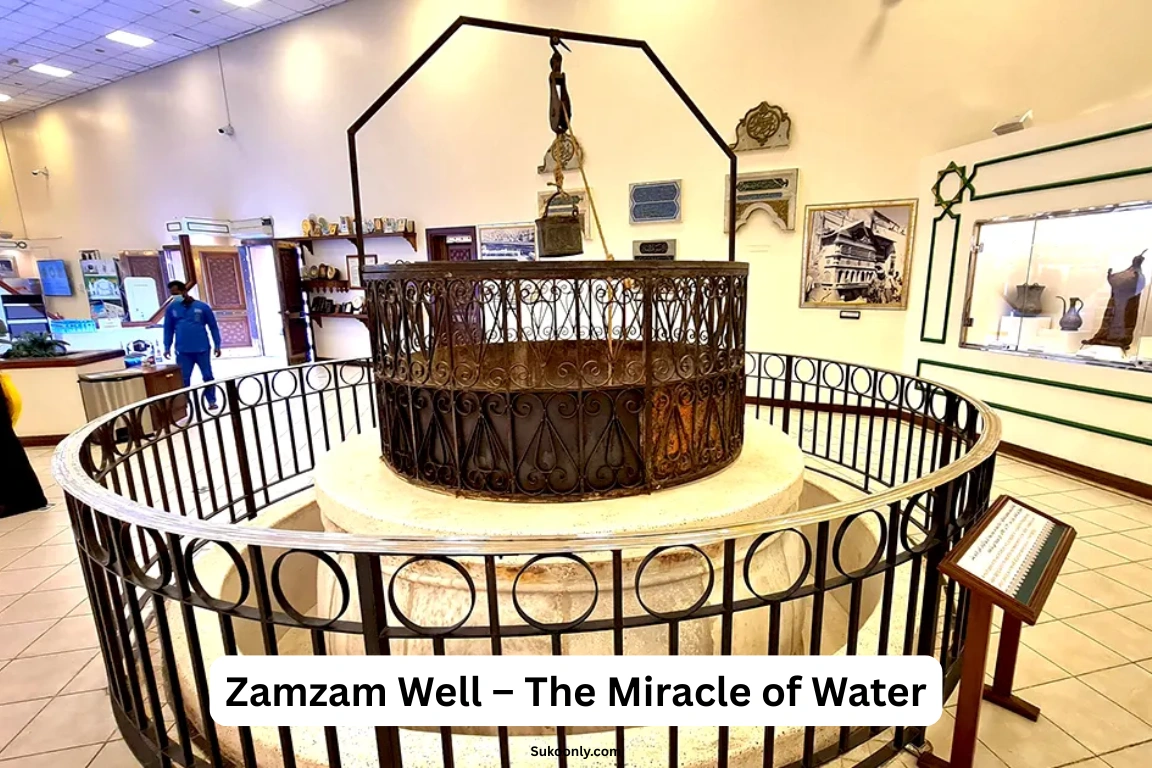
The Zamzam Well (بئر زمزم) within the Masjid al-Haram, beside the Kaaba (Baytullah), is more than a historical spring — it is a living miracle and an everlasting reminder of Allah’s mercy (rahmah). Its story is woven into the lives of Prophet Ibrahim (Abraham عليه السلام), Hajar (Hagar عليها السلام), and Prophet Ismail (Ishmael عليه السلام). When Ibrahim left his wife and infant son in the empty valley of Makkah al-Mukarramah, Hajar ran between Safa and Marwah again and again, her heart pounding with tawakkul (trust) and hope. In that moment of despair, the Angel Jibreel (Gabriel عليه السلام) struck the ground, and from the dry earth, the water of Zamzam gushed forth — a stream of divine compassion that has never stopped flowing.
For more than four thousand years, this blessed water has quenched the thirst of countless believers who come for Hajj and Umrah. Its taste is unlike any other, its purity unmatched, and its blessing felt deep within the soul.
The Prophet Muhammad ﷺ said, “The water of Zamzam is for whatever intention it is drunk for.” (Ibn Majah 3062). With every sip, pilgrims make du‘ā for health, forgiveness, or nearness to Allah, believing in the promise behind those words.
Even today, the well continues to pour its blessings. Pilgrims drink from it with gratitude, fill bottles to take home, and remember the faith of Hajar, whose patience became a lesson for all time. The Zamzam Well is not just water — it is the story of belief itself: proof that when hearts rely completely on Allah, help descends from where none could imagine.
Safa and Marwah — The Path of Perseverance (Sa’i)
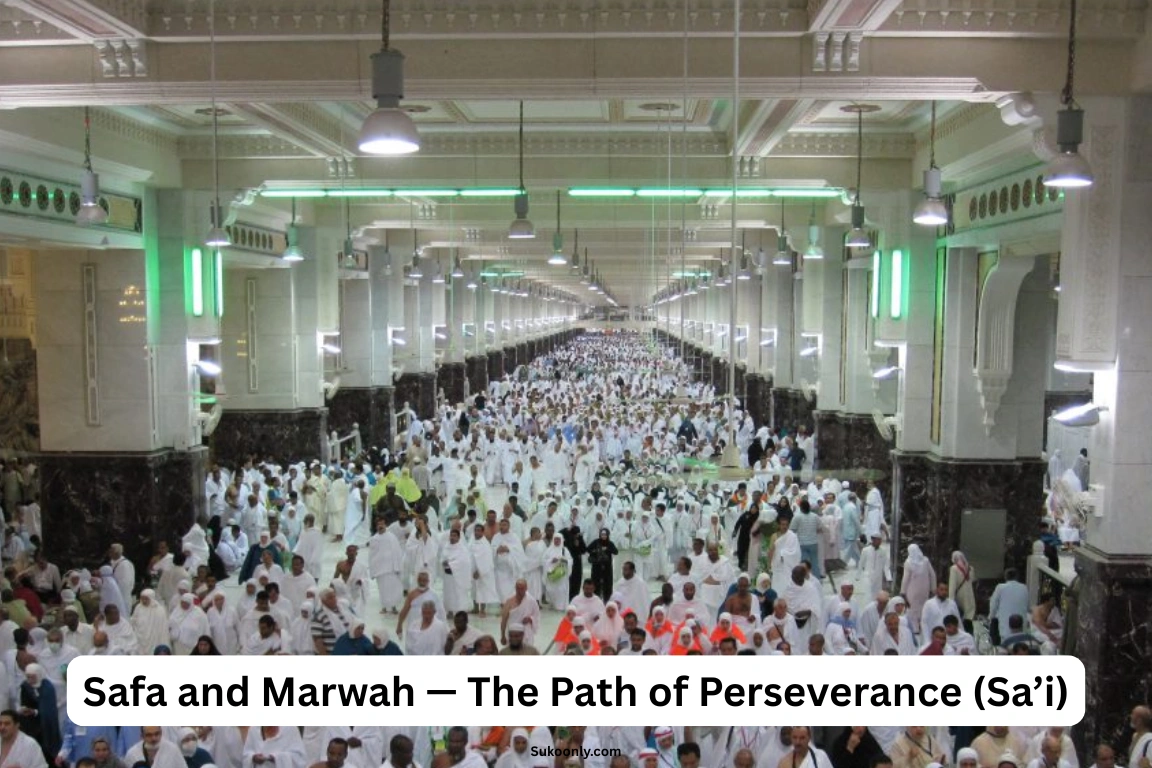
The hills of Safa (الصفا) and Marwah (المروة) inside the Masjid al-Haram in Makkah al-Mukarramah are not just landmarks — they are sacred testaments to faith, striving, and divine mercy. Their story is forever tied to Hajar (Hagar عليها السلام), the wife of Prophet Ibrahim (Abraham عليه السلام) and mother of Prophet Ismail (Ishmael عليه السلام).
When Ibrahim left his family in the empty valley of Makkah by Allah’s command, Hajar’s heart trembled but never lost trust. Her infant son cried from thirst under the blazing desert sun, and in desperation, she ran between Safa and Marwah — seven times — searching for even a drop of water. Her unwavering tawakkul (trust in Allah) and sabr (patience) were rewarded when the Zamzam Well sprang forth beside her son, a miracle that still flows today as a sign of Allah’s infinite rahmah (mercy).
Every year, millions of pilgrims retrace her steps during Hajj and Umrah, performing Sa’i (سعي) — an act that means to strive or make effort. The Qur’an reminds us:
“Indeed, Safa and Marwah are among the symbols of Allah. So whoever performs Hajj or Umrah to the House – there is no blame upon him for walking between them.” (Al-Baqarah 2:158)
The Sa’i is not merely a physical journey — it is a spiritual echo of Hajar’s faith, a call to every believer that Allah’s help reaches those who strive sincerely and never give up hope. In each step between Safa and Marwah, pilgrims relive her courage, her patience, and her unshakable certainty that Allah never abandons the faithful.
Mount Arafat — The Plain of Forgiveness
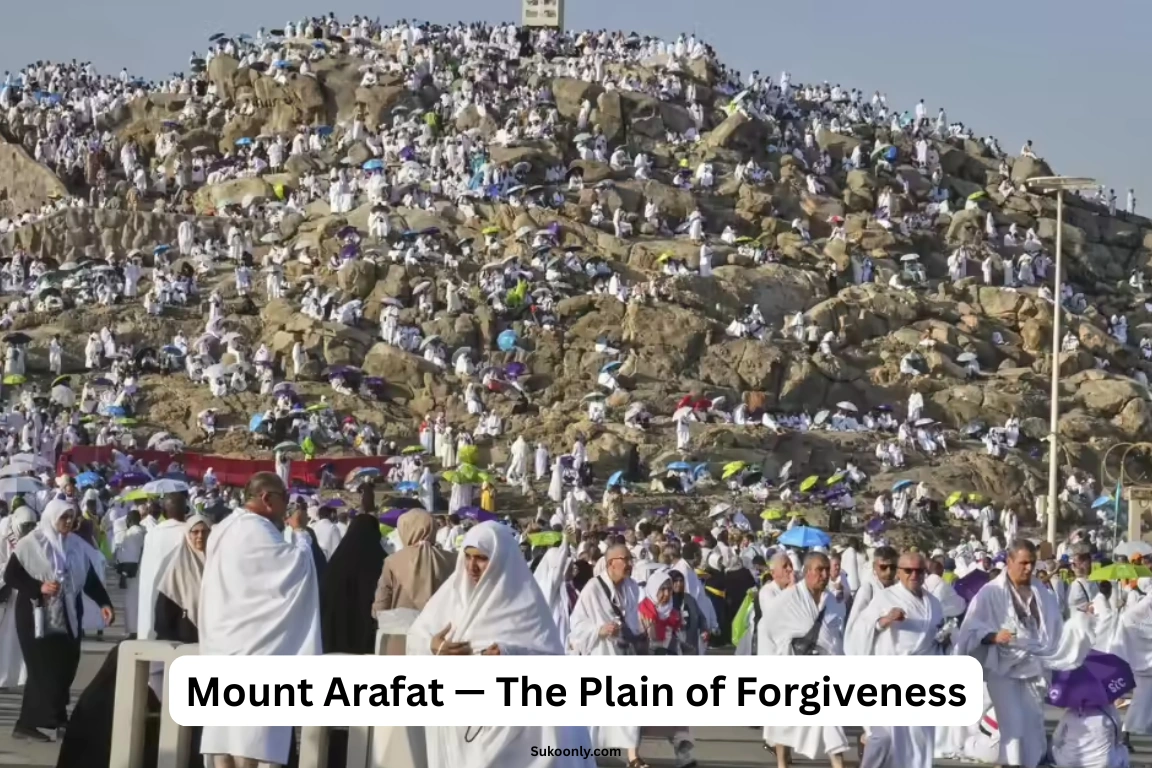
Mount Arafat (Jabal ʿArafah) is among the most sacred sites in Islam, a place where faith, forgiveness, and reflection converge. Located about 20 kilometers southeast of Mecca, this vast plain encircles a small granite hill where Prophet Muhammad ﷺ delivered his Farewell Sermon to more than 100,000 companions, reminding humanity of justice, equality, and mercy as the foundations of faith.
The Day of Arafah, observed on the 9th of Dhul Hijjah, is the climax of Hajj — a day when millions of pilgrims gather from noon until sunset in humility and prayer. This sacred ritual, known as Wuquf al-Arafah, is the heart of the pilgrimage, symbolizing repentance, unity, and submission before Allah ﷻ.
According to authentic hadiths, those who stand at Arafat with sincerity and faith are granted complete forgiveness, and their prayers are among the most accepted. For those not performing Hajj, fasting on the Day of Arafah brings immense reward, erasing the sins of the previous and coming year (Sahih Muslim).
Standing upon this blessed plain fills the believer’s heart with awe — a reminder of the Day of Judgment, when all of humanity will stand before Allah awaiting His mercy. Arafat is not just a location; it is a spiritual moment of rebirth, where the soul finds forgiveness, renewal, and peace under the vast mercy of the Almighty.
Pilgrimage to Mecca – Hajj and Umrah
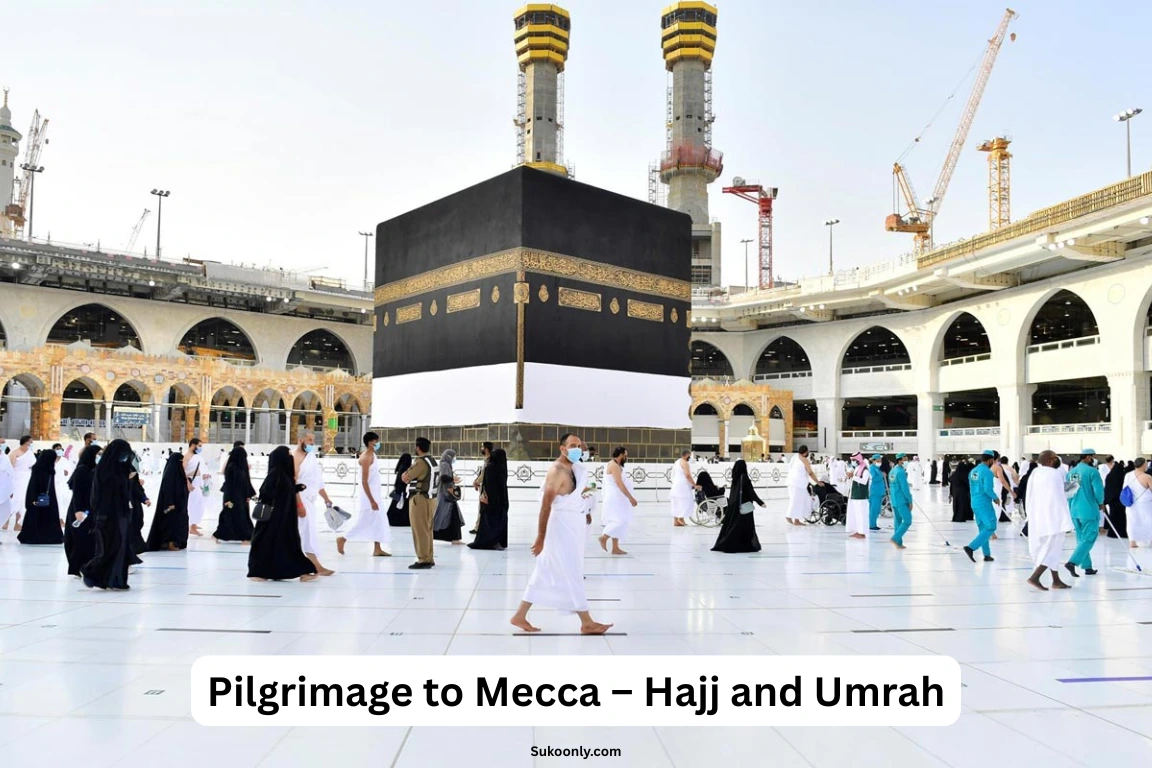
The pilgrimage to Mecca (Makkah al-Mukarramah) — through Hajj and Umrah — stands among the greatest acts of worship in Islam. Hajj, the Fifth Pillar of Islam, is a sacred duty for every Muslim who has the means and health to undertake the journey once in their lifetime. It unfolds each year in the blessed month of Dhul-Hijjah, reaching its peak on the Day of Arafah and concluding with the joyous celebration of Eid al-Adha. Umrah, often called the lesser pilgrimage, can be performed at any time of the year and holds immense barakah (blessing) and ajr (reward) for those who perform it sincerely.
Every ritual of Hajj tells a story of faith and sacrifice — reflecting the legacy of Prophet Ibrahim (Abraham عليه السلام), Hajar (Hagar عليها السلام), and Prophet Ismail (Ishmael عليه السلام). Pilgrims circumambulate the Kaaba in Tawaf, walk between Safa and Marwah in Sa’i, stand in humble prayer at Arafat, spend the night under the open sky in Muzdalifah, and cast pebbles at the pillars of temptation during Ramy al-Jamarat. They complete their journey with Qurbani, remembering Ibrahim’s obedience and submission to Allah ﷻ. Each step purifies the heart and renews faith in tawheed (the oneness of Allah).
Every year, millions of pilgrims arrive in Mecca dressed in the simple white garments of Ihram, leaving behind distinctions of wealth, race, and nationality. Together, they stand equal before Allah, their voices united in Labbaik Allahumma Labbaik — “Here I am, O Allah, here I am.” It is a moment where the entire ummah moves as one — a living expression of faith, humility, and universal brotherhood.
Prophetic Legacy – Revelation and the Birthplace of Islam
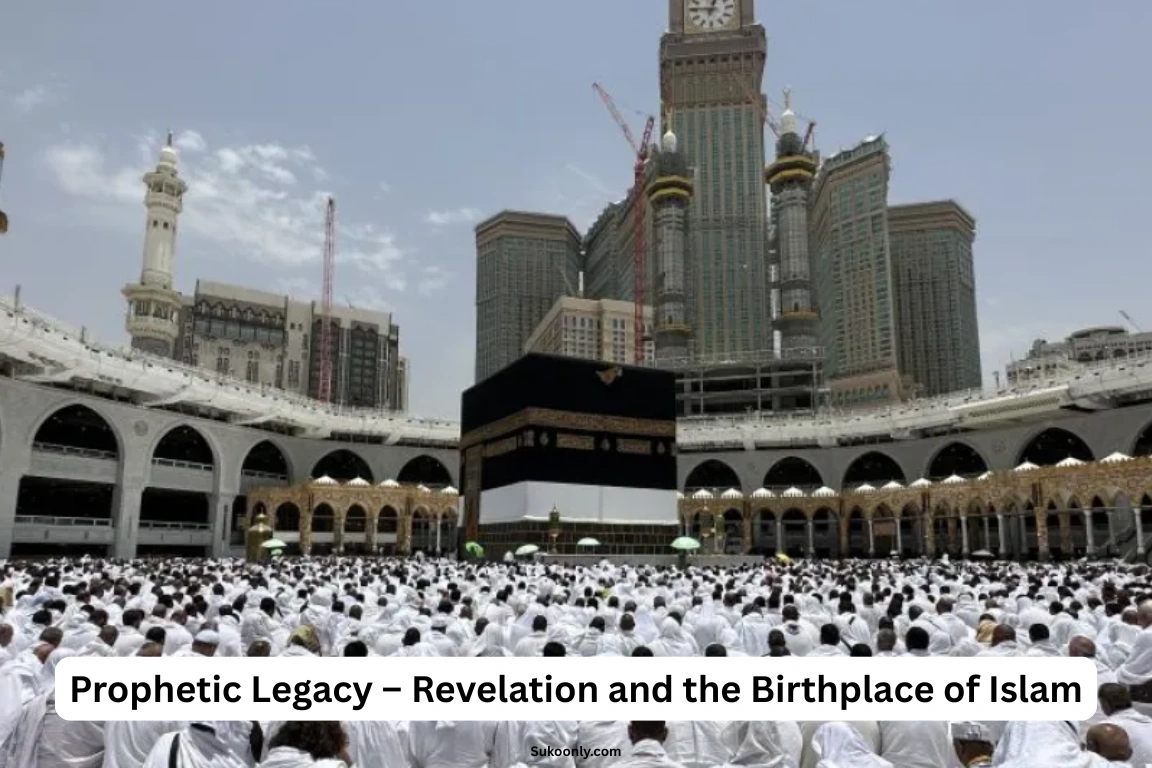
Mecca (مكة المكرمة) holds a sacred honor as the birthplace of the Prophet Muhammad ﷺ and the blessed land where Allah ﷻ first sent His divine revelation through Angel Jibreel (Gabriel عليه السلام). Within this valley, the message of tawḥīd — the oneness of Allah — first echoed across the sands, calling humanity away from darkness and toward light.
The Prophet ﷺ, born in the Year of the Elephant (570 CE) among the noble tribe of Quraysh, lived in a society overwhelmed by idol worship and social divisions. Seeking solitude and reflection, he often withdrew to the Cave of Ḥirāʾ, high upon the Mountain of Light (Jabal al-Nūr). It was there, in the stillness of the night, that Jibreel عليه السلام appeared with the divine command:
“Read in the name of your Lord who created.” (Surah Al-‘Alaq 96:1)
That moment marked the beginning of prophethood and a mission that would continue for twenty-three years — guiding hearts toward faith (īmān), justice (‘adl), and mercy (raḥmah). Despite rejection and hardship, the Prophet ﷺ stood firm with his beloved companions — Abu Bakr as-Ṣiddīq رضي الله عنه, Khadījah bint Khuwaylid رضي الله عنها, and ‘Alī ibn Abī Ṭālib رضي الله عنه — who carried the early flame of Islam with loyalty and patience.
From this holy city, the light of revelation began to spread — first through Mecca’s valleys, then across the world. The Cave of Ḥirāʾ remains a symbol of that moment when divine truth touched the heart of humanity, and Mecca became the eternal home of faith, guidance, and divine mercy.
Modern Mecca – Preservation, Expansion, and Pilgrim Experience
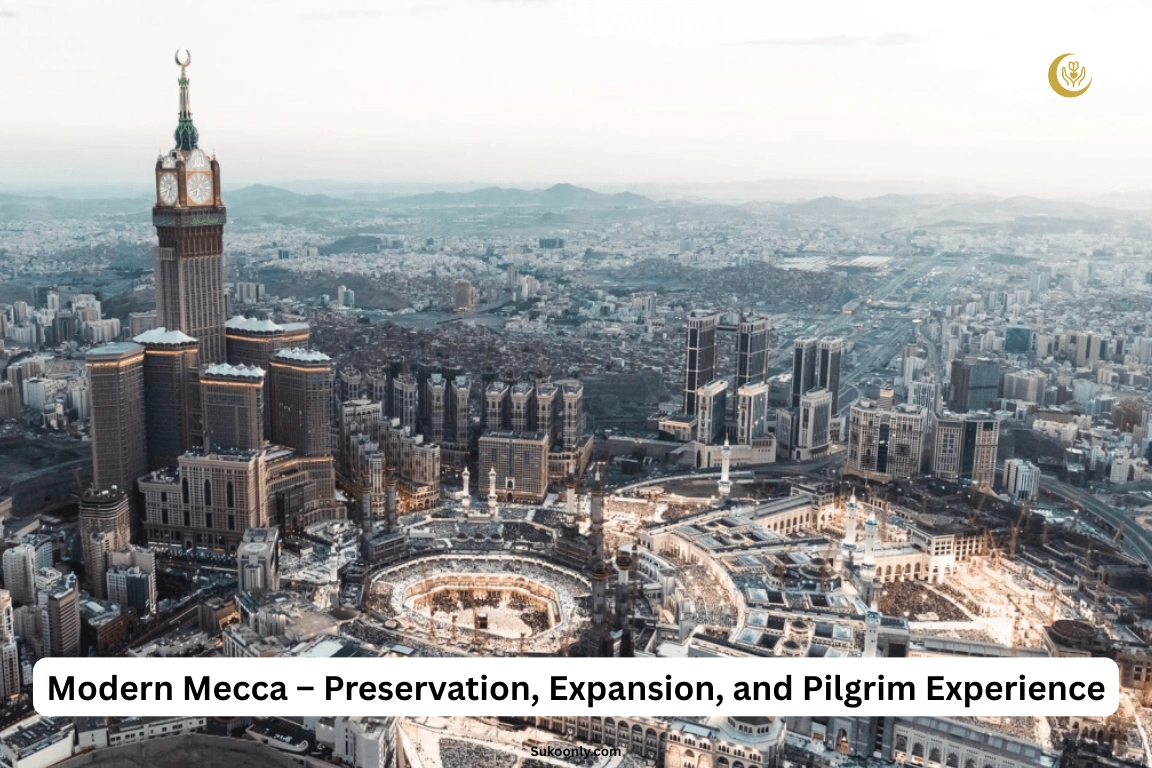
In our time, Mecca (مكة المكرمة) stands as both a city of faith and a marvel of progress. Once a quiet desert valley, it has become the heartbeat of the Muslim world, welcoming millions who arrive each year to perform Ḥajj and ‘Umrah — journeys of devotion that unite the entire Ummah.
Under the Custodianship of the Two Holy Mosques, the Kingdom of Saudi Arabia has invested immense effort to serve the pilgrims of Allah ﷻ. The Masjid al-Ḥarām, centered around the Kaʿbah, has undergone remarkable expansions under King Fahd, King Abdullah, and King Salman bin Abdulaziz. Each phase brought greater comfort — from multi-level prayer halls and cool, shaded corridors to smart systems that guide millions in safety and ease.
Beyond the sacred mosque, the skyline of Mecca has changed with projects like the Abraj al-Bait Clock Tower, the Jabal Omar Complex, and the King Abdulaziz Road Development. These are not merely architectural achievements but part of a vision — to host every pilgrim with dignity while keeping the sanctity of the Haram untouched.
The Haramain High-Speed Railway now connects Mecca, Medina, and Jeddah, turning what once took hours into a smooth, two-hour journey. Yet amid all this advancement, Mecca’s heart remains unchanged — a place of prayer, humility, and remembrance.
Today, Mecca reminds the world that progress and piety can walk together. Its shining towers and digital systems all serve a single purpose: to honor the guests of Allah and make their worship easier, safer, and filled with peace.
Conclusion – The Eternal Heart of Faith
For more than fourteen centuries, Mecca (مكة المكرمة) has remained the eternal heart of Islam — the sacred direction of the qiblah and the city that unites the Ummah in worship. Within this blessed land, Prophet Muhammad ﷺ received the first revelation (waḥy) in the quiet solitude of the Cave of Ḥirāʾ, while the Kaʿbah, built by Prophet Ibrāhīm (عليه السلام) and Ismāʿīl (عليه السلام), continues to stand as the Baytullāh, the House of Allah that anchors every believer’s prayer.
Across generations, Mecca has welcomed countless souls — prophets, scholars, and pilgrims — who come seeking the mercy of Allah ﷻ. From the humble courtyards of the Masjid al-Ḥarām to its vast expansions under the Custodianship of the Two Holy Mosques, the spirit of ‘ibādah (worship) and dhikr (remembrance) has never faded.
Though the skyline has changed and time has moved forward, Mecca’s soul is timeless. It is where duʿā (supplication) rises from millions of hearts, where tawḥīd (oneness of Allah) echoes through every adhān, and where every pilgrim finds peace in returning to their Creator.
Mecca endures as the meeting point of Heaven and Earth — a place where faith began, where hearts are purified, and where every journey finds its way back to Allah ﷻ.
Also Read:
- Hijr Ismail (Hateem) of the Kaaba
- Dua for Entering and Leaving Masjid
- Facts About Mecca
- Hajar Al-Aswad — The Black Stone from Heaven in Islam
- Farewell Tawaf (Tawaf al-Wadaʿ)
FAQs – About Mecca
The word “Makkah” (مكة) comes from the Arabic root م-ك-ك (m-k-k), which means to draw in or to gather. It beautifully describes the city’s nature — a place that attracts people from every corner of the world, calling them toward worship and unity. In the Qur’an, Makkah is also called “Bakkah” (بكة) — an older name for the same sacred valley where the Kaʿbah was built. Allah ﷻ says: “Indeed, the first House established for mankind was that at Bakkah (Mecca) — blessed and a guidance for the worlds.” (Surah Āl ʿImrān 3:96) Both Makkah and Bakkah carry the same meaning and honor — the city chosen by Allah ﷻ as the heart of tawḥīd (the oneness of Allah) and the gathering place for all believers in Ḥajj and ‘Umrah. Mecca (مكة المكرمة) is the holiest place in Islam — the city where the heart of every Muslim finds its direction. It is the birthplace of Prophet Muhammad ﷺ, the home of the Kaʿbah, and the qiblah toward which millions of believers turn in every prayer. At its center stands the Masjid al-Ḥarām, where pilgrims from every corner of the world gather to perform Ḥajj and ‘Umrah. The Ḥajj — one of the Five Pillars of Islam — is not only a physical journey but a spiritual one, calling every Muslim to humility, reflection, and renewal before Allah ﷻ. Mecca is also where the story of Islam began. The first revelation of the Qur’an descended upon Prophet Muhammad ﷺ in the Cave of Ḥirāʾ, making it both the cradle of revelation and the birthplace of faith. For Muslims, Mecca embodies tawḥīd (oneness of Allah) and unity of the Ummah. Here, rich and poor, young and old, stand together in the same simple garments — declaring with one voice: “Labbayka Allāhumma Labbayk — Here I am, O Allah, here I am.” Non-Muslims are not permitted to enter the sacred city of Mecca (Makkah al-Mukarramah). This rule is rooted in Islamic law (Shariah) and guided by the Qur’an, where Surah At-Tawbah (9:28) declares that those who do not follow the faith should not approach Al-Masjid al-Haram, the Grand Mosque. This divine command preserves Mecca as a spiritual sanctuary exclusively for believers. Mecca holds a unique place in the heart of every Muslim. It is the birthplace of Prophet Muhammad ﷺ, the center of pure monotheism (Tawheed), and the location of the Kaaba, the sacred structure toward which all Muslims turn in prayer. Restricting entry to Muslims protects the sanctity, spiritual focus, and purity of the city, especially during the sacred rites of Hajj and Umrah. Still, those outside the faith can learn about Mecca’s significance through heritage museums, virtual tours, documentaries, and cultural exhibits in nearby cities such as Jeddah and Taif. These experiences allow sincere learners to glimpse the spiritual beauty, history, and reverence that make Mecca the holiest city in Islam.
“And Hajj to the House is a duty owed to Allah by people who are able to make their way to it.”
Hajj is not just a physical journey; it is a deep spiritual transformation, where believers from every corner of the world stand together in humility, equality, and worship before Allah. It marks a renewal of faith and a reminder of the believer’s purpose and unity within the Ummah.
Beyond this mandatory pilgrimage, Muslims may also perform Umrah, often called the lesser pilgrimage, at any time of the year. Although it is not obligatory, Umrah carries immense blessings and reward, offering an opportunity for repentance, reflection, and closeness to Allah.
In summary, Hajj is required once in a lifetime for those who are capable, while Umrah can be performed as often as one wishes—each visit to Mecca serving as a moment of renewal, gratitude, and deeper spiritual connection with the Creator.

Mohammed Basheer Orsala is the founder of Sukoonly.com - an Islamic resource dedicated to verified Quranic duas and Sunnah-based supplications. A self-taught Islamic researcher, he has studied classical texts and authenticated hadith collections including the works of Imam al-Nawawi, Shaykh al-Albani, Ibn Hajar al-Asqalani, and Ibn al-Qayyim. He writes to make verified Prophetic supplications accessible to English-speaking Muslims worldwide.