

Mecca (Makkah), in the Hijaz region of western Saudi Arabia, is honored as the holiest city in Islam and the birthplace of Prophet Muhammad ﷺ. At its heart stands the Kaaba within Masjid al-Haram, the qiblah (direction of prayer) for Muslims worldwide. For anyone asking “what is Mecca in Islam”, it is the spiritual center of worship, devotion, and unity for the entire ummah.
Each year, millions of Muslims travel to Mecca Saudi Arabia for Hajj and Umrah. Facts about Hajj explain that it is a once-in-a-lifetime duty for those who are able, while Umrah is a voluntary act of devotion. Both unite the global Muslim community in obedience to Allah ﷻ and connect pilgrims to the legacy of Prophet Ibrahim (عليه السلام).
Beyond pilgrimage, Mecca facts highlight its heritage, sacred sites, and lasting cultural significance. Questions such as “how old is Mecca” or “interesting facts about Mecca” reveal its ancient roots, historical role as a center of trade, and enduring place as the spiritual heart of Islam.
In this article, we share essential facts about Mecca—its history, sacred importance, and why it continues to be the most revered city for Muslims worldwide.
What is Mecca?
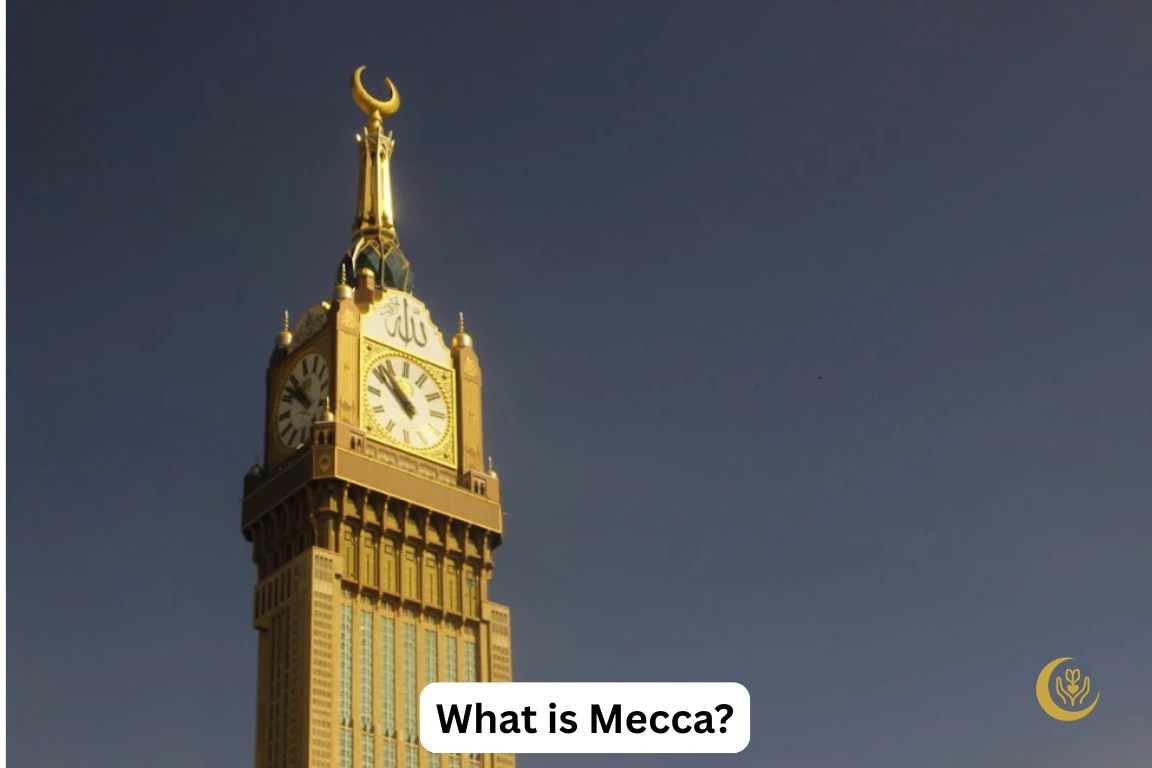
Mecca, in the Hijaz region of Saudi Arabia, is honored as the holiest city in Islam. It is the birthplace of Prophet Muhammad ﷺ and home to the Kaaba, inside Masjid al-Haram, the largest and most sacred mosque on earth. The Kaaba is the qibla—the direction Muslims face in every prayer—making Mecca the spiritual epicenter of Islam. The city is open only to Muslims and serves as the destination for Hajj and Umrah, pilgrimages that bring believers together in devotion and surrender to Allah ﷻ.
Historical Facts About Mecca
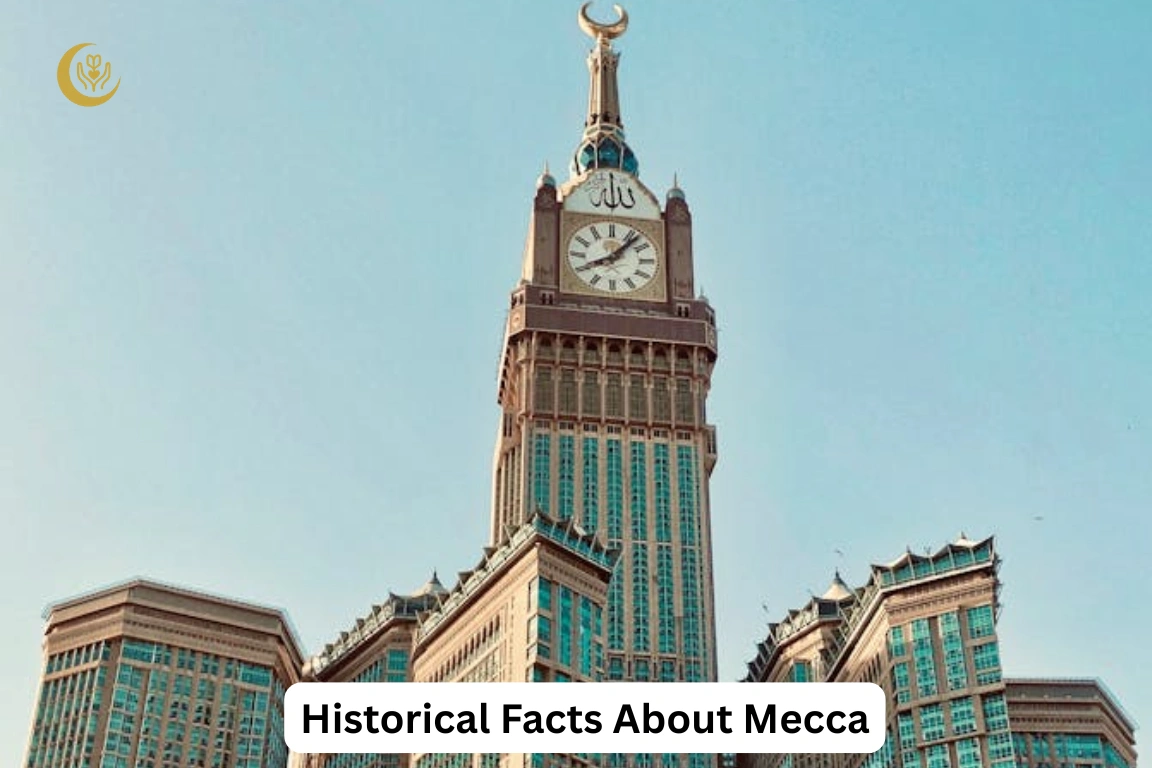
Mecca’s history goes back thousands of years. In pre-Islamic Arabia, it flourished as a caravan crossroads, connecting Yemen, Syria, and the Red Sea trade routes.
- At its center stood the Kaaba, which Muslims believe was raised by Prophet Ibrahim (عليه السلام) and his son Ismail (عليه السلام) as a sanctuary dedicated to Allah ﷻ.
- With time, idols were placed around it, and Mecca became a hub of tribal pilgrimage.
- In 610 CE, the Prophet Muhammad ﷺ received his first revelation in Mecca through Angel Jibreel (Gabriel), beginning the message of Islam.
- Two decades later, in 630 CE, during the Conquest of Mecca, the idols were cleared away, the Kaaba restored to pure monotheism, and the city established as the spiritual heart of Islam.
Religious Significance of Mecca
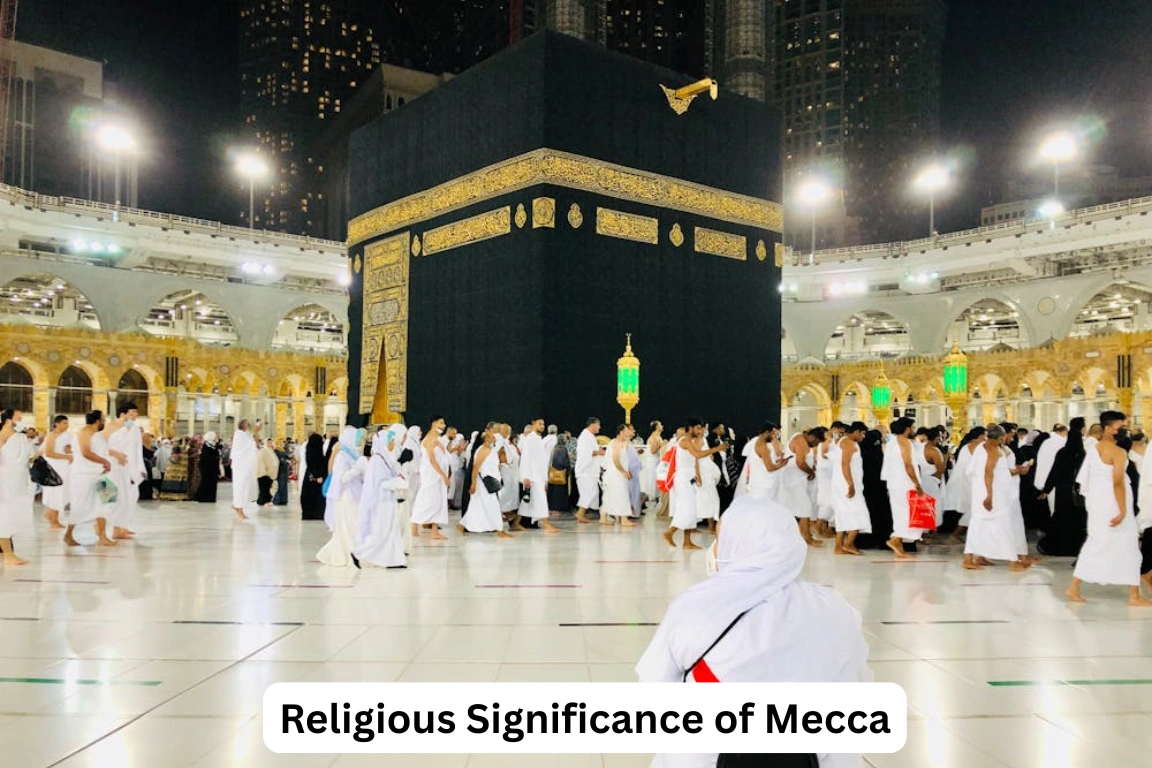
Mecca holds unmatched importance in the faith of Muslims.
- At its center is the Kaaba, the qibla—the direction every Muslim turns to in prayer. Surrounding it is Masjid al-Haram, the largest and most sacred mosque in Islam.
- Each year, millions of believers travel here to perform Hajj, a once-in-a-lifetime pillar of Islam, and Umrah, both acts of devotion that bring the ummah together in humility and worship before Allah ﷻ.
- The Qur’an describes Mecca as a blessed sanctuary (Al-Balad 90:1–2; Āl ʿImrān 3:96), affirming its place as a sign of pure monotheism since the time of Prophet Ibrahim (عليه السلام).
- For Muslims, visiting Mecca is more than an obligation—it is a transformative journey of faith that connects them to the Prophets’ legacy and strengthens their bond with Allah.
Geographical & Cultural Facts About Mecca
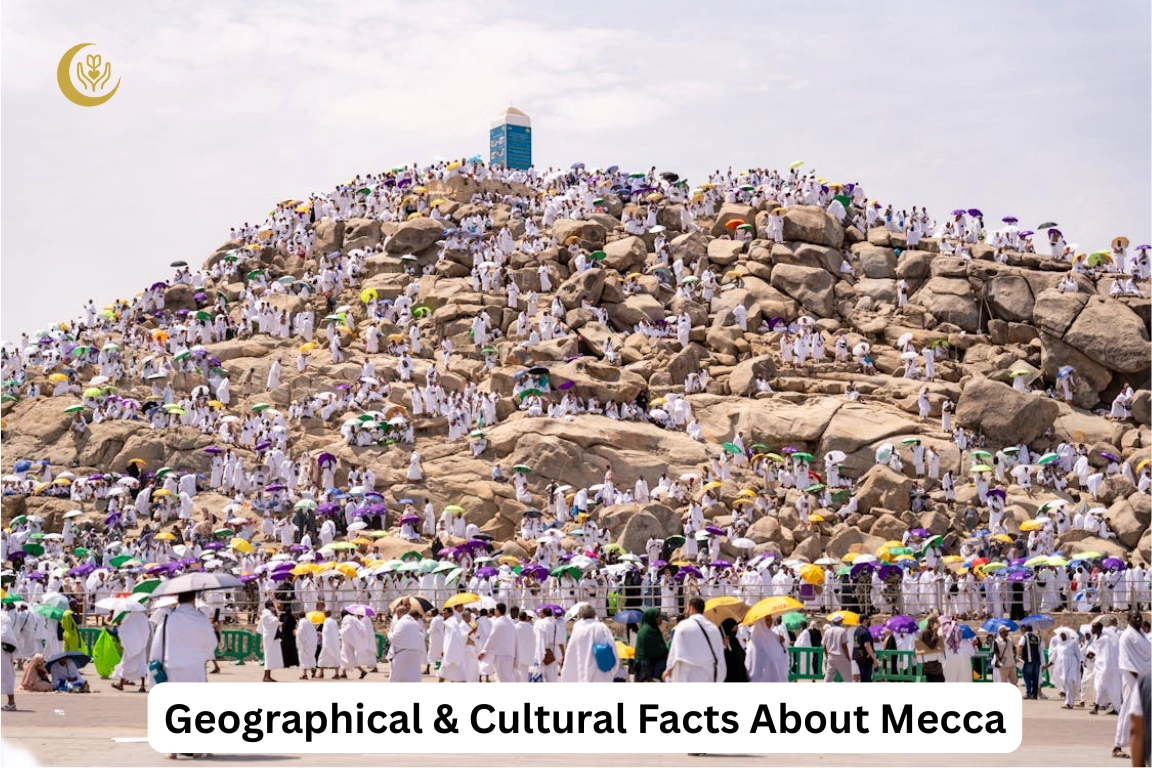
Mecca lies in the Hijaz region of western Saudi Arabia, about 70 km (43 miles) inland from the Red Sea, in a narrow valley surrounded by the Sarawat Mountains. The city sits at an elevation of 277 meters (909 feet) above sea level and is historically accessed through four mountain passes.
It has a hot desert climate (BWh, Köppen)—with searing summers, mild winters, and minimal rainfall—shaping its rugged landscape of mountains and valleys. Despite these conditions, Mecca developed into a thriving metropolis and religious hub, welcoming millions of residents and pilgrims each year during Hajj and Umrah.
Culturally, Mecca is a crossroads of Islamic civilization, where believers from across nations, languages, and traditions converge in worship. A unique feature of Mecca is its exclusive sanctity: non-Muslims are not permitted within the sacred boundaries, preserving its role as a city devoted entirely to Islamic faith and worship.
Modern-Day Mecca
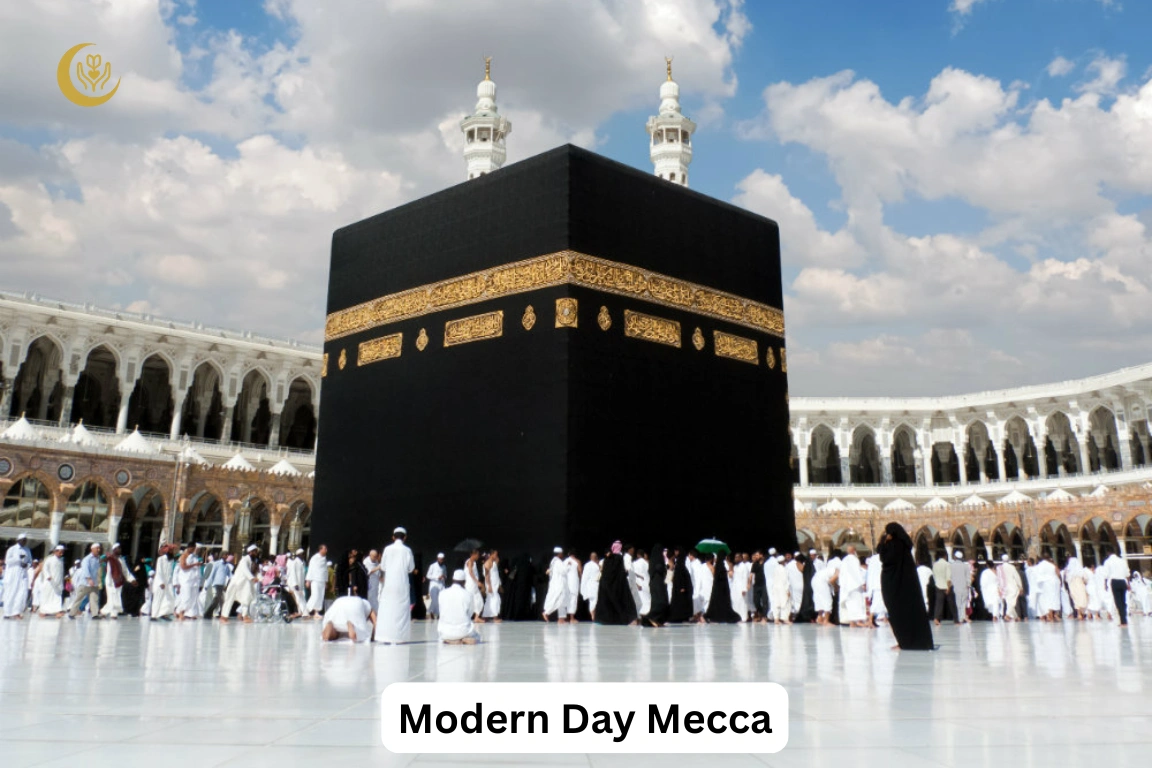
Modern-day Mecca combines its timeless spiritual heritage with rapid urban growth. The city is home to millions of people and welcomes a continual stream of pilgrims performing Hajj and Umrah.
- The Masjid al-Haram has undergone major expansions, making it the largest mosque in the world, capable of hosting several million worshippers.
- Mecca’s economy is closely tied to religious tourism, supported by a wide network of hotels, transport, and marketplaces that serve pilgrims throughout the year.
- Modern infrastructure such as the Mecca Metro, improved highways, and the nearby King Abdulaziz International Airport in Jeddah makes access easier for visitors from across the globe.
- Despite skyscrapers and commercial developments, Mecca remains the spiritual capital of Islam, with the Kaaba at its heart.
FAQs — Facts About Mecca
Mecca is revered as the birthplace of Prophet Muhammad ﷺ and as the location of the Kaaba in Masjid al-Haram, the holiest sanctuary in Islam. Muslims face the Kaaba in prayer, and every year millions travel there for Hajj and Umrah. No. Non-Muslims are not permitted to enter Mecca, as the city is reserved exclusively for Muslims to protect its sacred status as the spiritual heart of Islam. The Kaaba has a simple interior with marble walls, inscriptions, and lamps. It contains no idols, reflecting the principle of tawhid (pure monotheism) and devotion to Allah ﷻ alone. Over two million Muslims perform Hajj each year, while millions more visit throughout the year for Umrah. Together, they make Mecca the site of one of the largest gatherings of faith in the world. Yes. The Qur’an refers to Mecca as sacred: Surah Al-Balad (90:1–2) swears by the city, and Surah Āl ʿImrān (3:96) names the Kaaba in Mecca as the first house of worship for humanity.

Mohammed Basheer is the founder of Sukoonly.com, an Islamic blog focused on duas, prophetic healing, and Qur’anic wisdom. He writes with sincerity and spiritual depth for seekers around the world.