

Hajar Al-Aswad (الحجر الأسود), known as the Black Stone of Kaaba, holds a sacred and unique place in Islam. This revered Kaaba stone rests in the eastern corner of the Kaaba within Masjid al-Haram, Makkah. Pilgrims performing Hajj and Umrah strive to touch or kiss it during Tawaf, following the Sunnah of the Prophet Muhammad ﷺ. The Black Stone of Mecca, also called Hajre Aswad or Hajarul Aswad, stands as a reminder of faith, humility, and unity.
According to authentic narrations, this blessed Makkah stone descended from Jannah (Paradise) and was placed by Prophet Ibrahim (عليه السلام) and his son Ismail (عليه السلام) while rebuilding the Kaaba. The true story of the Black Stone in Mecca emphasizes its role as a covenant between believers and Allah ﷻ, making it both a historical marker and a spiritual symbol.
Muslims do not worship the stone; they honor it as part of the Kaaba’s sacred legacy. The hajr e aswad history highlights its heavenly origin and deep prophetic connection. The Prophet Muhammad ﷺ touched and kissed the Kaaba Black Stone, making it a Sunnah act of devotion that millions of believers continue to follow with reverence today.
What is Hajar Al-Aswad? — Definition, Location & Role in Tawaf
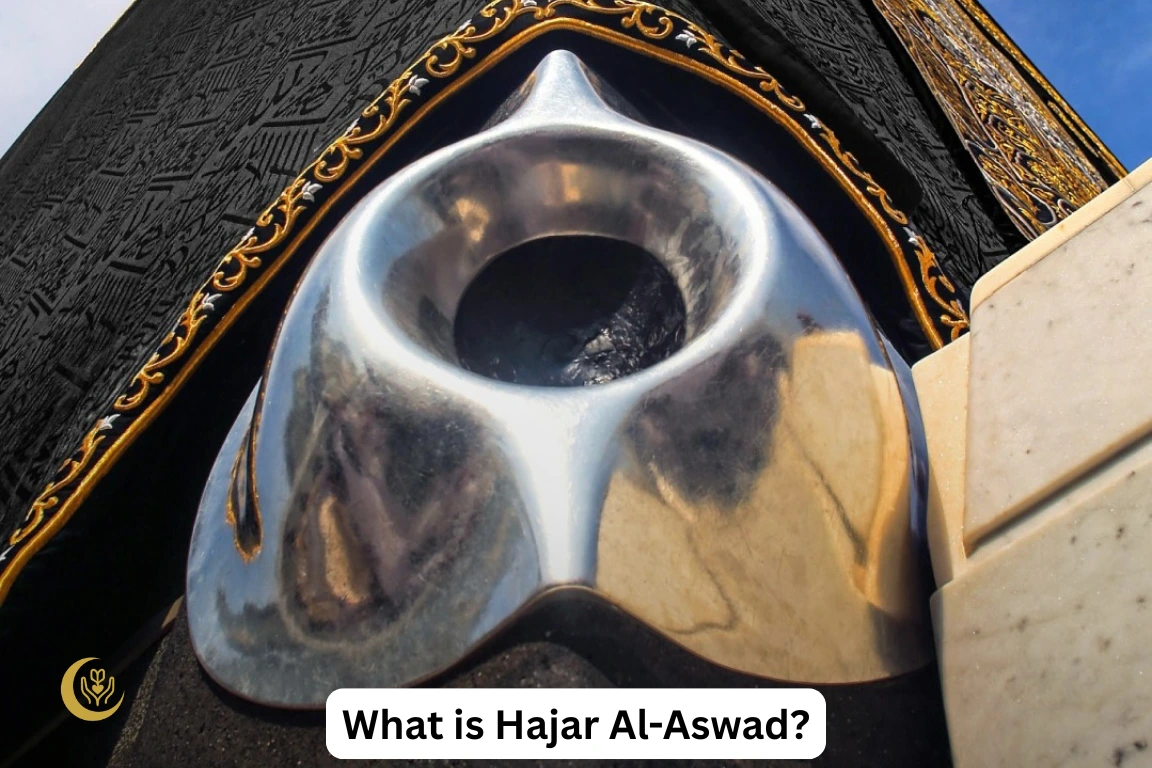
Hajar Al-Aswad (الحجر الأسود), the Black Stone, is a sacred relic placed in the eastern corner of the Kaaba inside Masjid al-Haram, Makkah.
It marks the starting and ending point of Tawaf, the circling of the Kaaba seven times during Hajj and Umrah. Islamic narrations tell us that the stone came from Jannah (Paradise) and was set in place by Prophet Ibrahim (عليه السلام) and his son Ismail (عليه السلام) when they raised the Kaaba’s foundations.
During Tawaf, the Prophet Muhammad ﷺ kissed the Black Stone, and pilgrims today follow his Sunnah by trying to kiss, touch, or signal toward it (istilam). The Black Stone is not worshipped; rather, it is honored as a reminder of the covenant with Allah ﷻ, a sign of faith, remembrance, and unity of the Muslim Ummah.
Origin of Hajar Al-Aswad — From Heaven to Earth
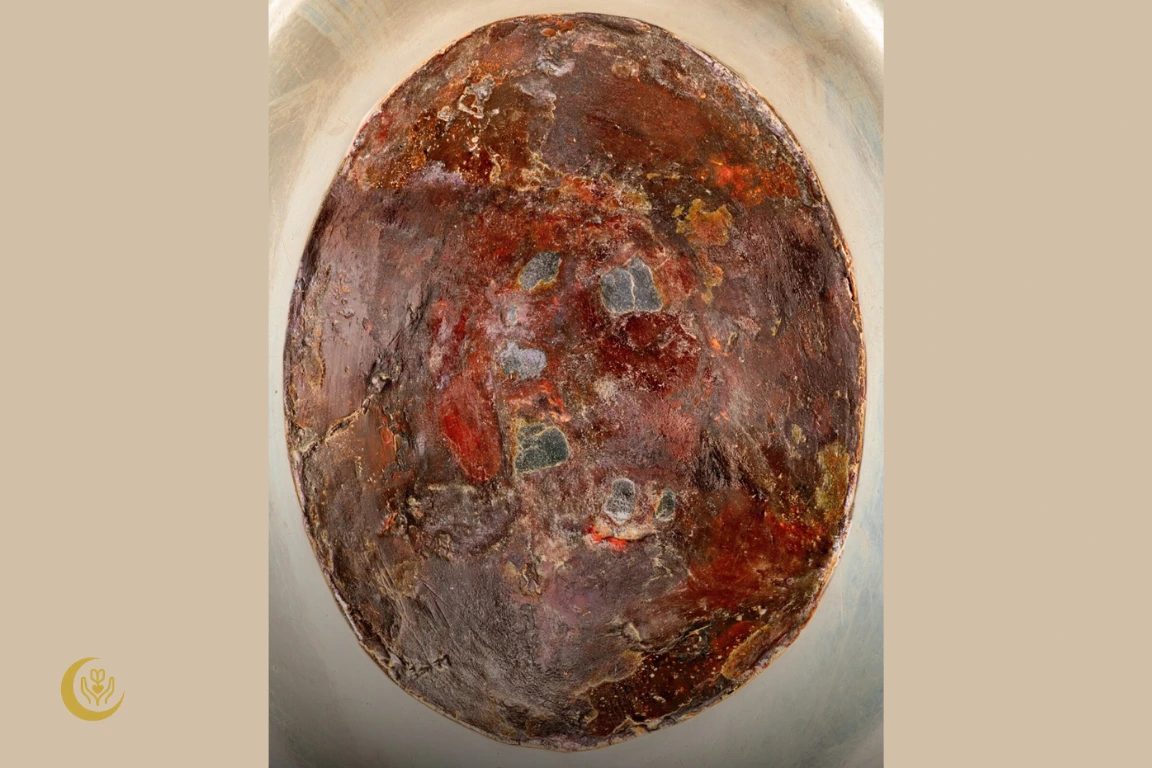
Muslims believe that Hajar Al-Aswad (الحجر الأسود), the Black Stone, was a gift sent from Jannah (Paradise). Some traditions trace it back to Adam and Hawwa (Eve), while others describe the angel Jibreel (عليه السلام) bringing it to Prophet Ibrahim (عليه السلام), who, together with his son Ismail (عليه السلام), set it in place while raising the Kaaba. When it first came down, the stone was shining white, but over time it became darkened by the sins of humanity.
Even before Islam, the stone was revered at the Kaaba, but its role was firmly established when the Prophet Muhammad ﷺ placed it back into the Kaaba in 605 CE, settling a dispute among the Quraysh. From that moment, touching or honoring the Black Stone during Tawaf became a Sunnah followed by pilgrims in Hajj and Umrah.
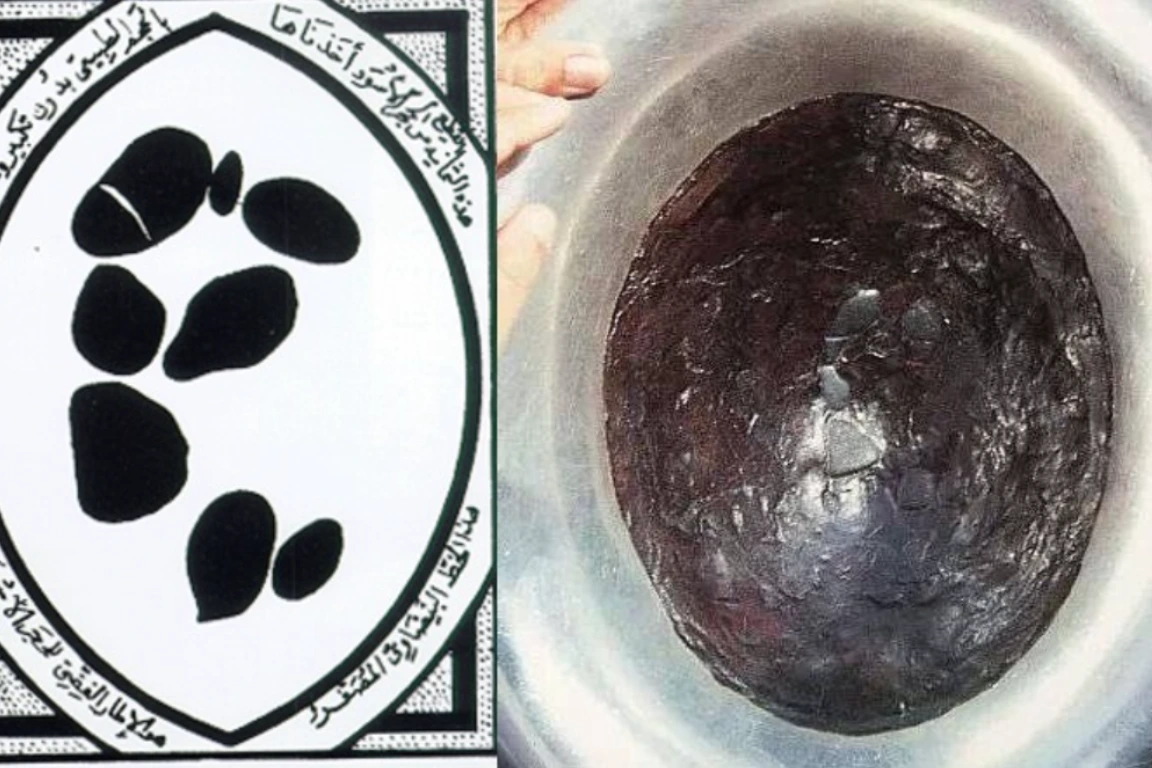
Today, the Black Stone remains in fragments, held together by a silver frame. While some have speculated about its physical origins, Muslims cherish it as a heavenly relic — a reminder that the Kaaba on earth is bound to the covenant of worship with Allah ﷻ.
Religious Significance of the Black Stone (الحجر الأسود)
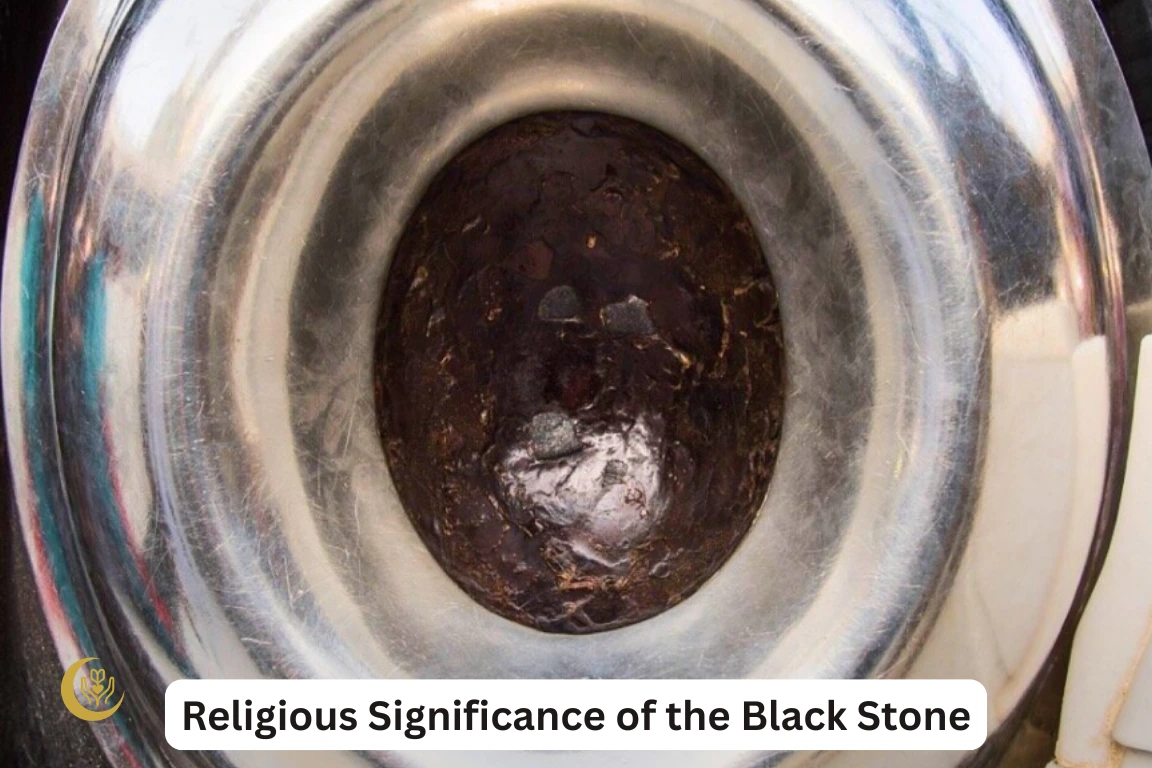
The Black Stone (Hajar Al-Aswad, الحجر الأسود) is deeply respected in Islam, not as something to be worshipped, but as a reminder of the worship of Allah ﷻ. The Prophet Muhammad ﷺ kissed the stone during Tawaf, and Muslims follow his Sunnah by kissing, touching, or pointing toward it (istilam) when they perform Hajj and Umrah. This simple act is a way of renewing one’s covenant with Allah, showing humility, obedience, and remembrance.
Islamic scholars make it clear that the stone itself cannot bring benefit or harm. Its meaning lies in being a symbol of devotion and unity, reminding believers that all acts of worship are directed only to Allah. Umar ibn al-Khattab (رضي الله عنه) showed this understanding when he said while kissing the stone: “I know you are only a stone and can neither harm nor benefit. If I had not seen the Messenger of Allah ﷺ kiss you, I would not kiss you.” His words reflect the true role of the Black Stone — a Sunnah of love for the Prophet ﷺ and respect for sacred tradition, never worship of the stone itself.
Physical Description & Preservation of the Black Stone (الحجر الأسود)
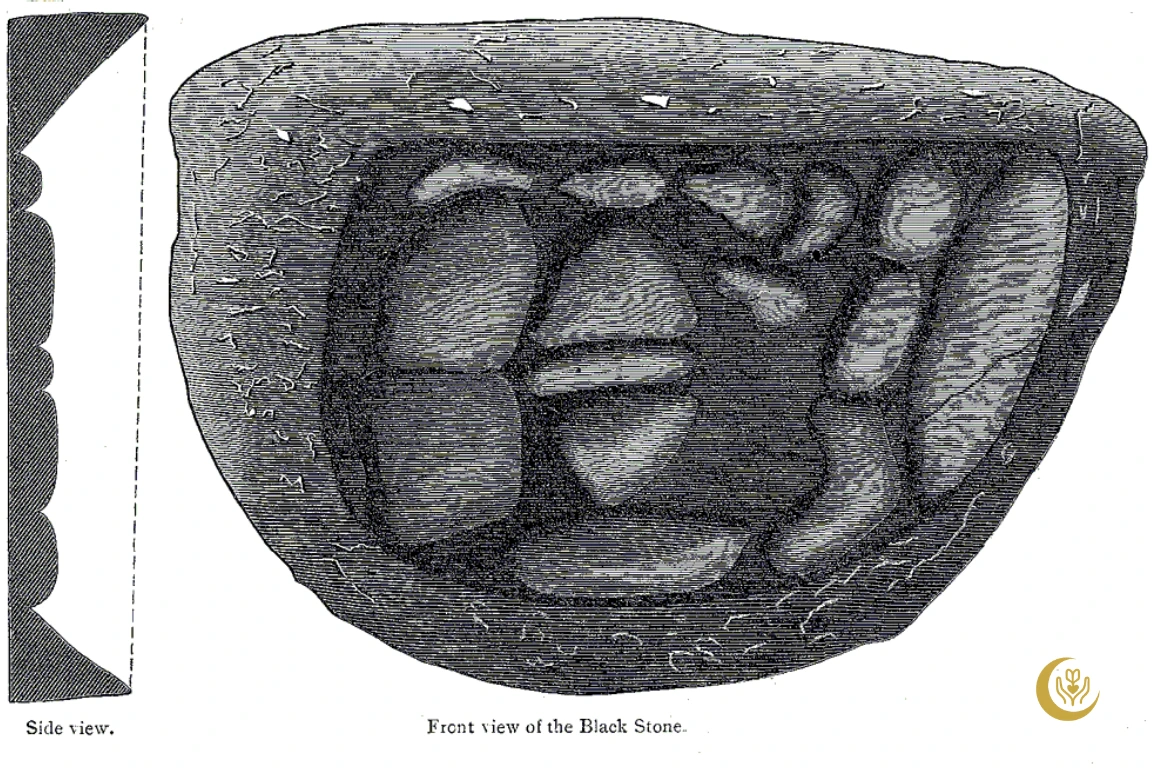
The Black Stone (Hajar Al-Aswad, الحجر الأسود) is no longer a single rock but a group of fragments. These dark pieces are held together with a cement-like substance and set within a silver frame at the eastern corner of the Kaaba, known as al-Rukn al-Aswad. The exposed face of the stone measures about 20 cm by 16 cm, though historical accounts show that it was once much larger. Over the centuries, the constant kisses and touches of pilgrims during Tawaf have left the stone smooth and polished.
Travelers and historians have described how the stone’s appearance and size changed through time. In earlier centuries it was recorded as nearly half a meter long, but damage and restoration reduced it to the smaller fragments seen today. The silver encasement, which protects the stone, has been replaced many times. During the Ottoman era, worn frames were taken to Istanbul and are still kept in Topkapı Palace as sacred relics.
Despite these changes, the Black Stone remains a powerful sign of faith and unity, preserved so that millions of Muslims may continue to honor it as part of Tawaf in Hajj and Umrah.
Misconceptions About the Black Stone (الحجر الأسود)
The Black Stone (Hajar Al-Aswad, الحجر الأسود) is revered in Islam, but its role is sometimes misunderstood. One common misconception is that Muslims worship the stone. In reality, Muslims worship only Allah ﷻ.
- The Black Stone is honored because the Prophet Muhammad ﷺ kissed it, and following his Sunnah, pilgrims do the same during Tawaf in Hajj and Umrah.
- Another misunderstanding is the belief that the Black Stone has divine power to forgive sins or grant blessings. Islamic scholars make it clear that the stone itself cannot benefit or harm anyone. Its value is symbolic — a reminder of faith, obedience, and the unity of the Ummah in worshiping Allah alone.
- Some also claim that the Black Stone is an idol carried over from pre-Islamic Arabia. While it was present in the Kaaba before Islam, its role in Islam is completely different. It represents submission to Allah ﷻ and the continuity of Prophetic tradition, not idolatry.
By dispelling these misconceptions, Muslims affirm that the Black Stone is honored for its spiritual meaning and prophetic connection, never as an object of worship or superstition.
FAQs — About The Black Stone (Hajar Al-Aswad, الحجر الأسود)
No. Muslims worship only Allah ﷻ. The Black Stone (Hajar Al-Aswad, الحجر الأسود) is honored because the Prophet Muhammad ﷺ kissed it, and pilgrims follow his Sunnah during Tawaf in Hajj and Umrah. Muslims kiss the Black Stone to follow the Sunnah of the Prophet ﷺ. This act during Tawaf is a sign of obedience, reverence, and love — not worship of the stone. No. Forgiveness comes only from Allah ﷻ. Kissing or touching the stone is a Sunnah reminder of humility, repentance, and devotion. Yes. Islamic tradition teaches that the Black Stone was sent from Jannah (Paradise). It was originally radiant white, but it turned black over time due to the sins of humanity. Today, the Black Stone exists as several fragments. To preserve it, the pieces were bound together and secured in a silver frame at the Kaaba’s eastern corner (al-Rukn al-Aswad). Yes. Pilgrims may kiss, touch, or point toward it during Tawaf. Because of the large crowds, many perform istilam (raising the hand in its direction), which is also Sunnah. Before Islam, the Kaaba contained idols and the Black Stone was present. When the Prophet Muhammad ﷺ entered Makkah, he purified the Kaaba by removing the idols. In Islam, the Black Stone became a symbol of submission to Allah ﷻ and continuity of the Prophetic tradition, not idol worship.

Fathima Kausar K is a writer at Sukoonly.com, where she focuses on sharing authentic duas, Qur’anic supplications, and spiritually uplifting content that helps readers find peace, clarity, and closeness to Allah.
Her writing is rooted in the belief that duʿāʾ is not just a set of words, but a sincere conversation with Allah — especially during moments of sadness, uncertainty, gratitude, or quiet reflection. Through her articles, she aims to make authentic Islamic supplications easier to understand, meaningful to recite, and practical for everyday life.
Fathima carefully studies classical Islamic sources, authentic narrations, and well-known scholarly explanations, and presents them in a simple, gentle, and relatable way. Her focus is always on clarity, authenticity, and emotional connection rather than complexity or technical language.
Through Sukoonly, she hopes to create a peaceful space where readers can slow down, reconnect with their faith, and find comfort through remembrance, duas, and trust in Allah.