

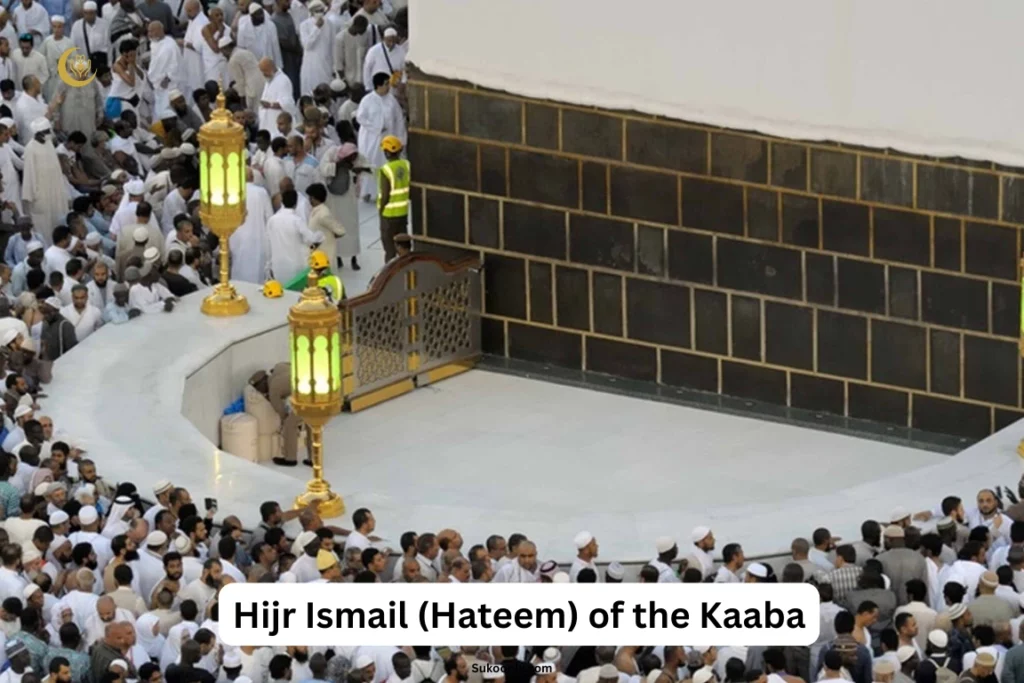
The Hijr Ismail (Arabic: حِجْر إِسْمَاعِيل), also known as the Hateem (الحطيم), is a sacred enclosure that forms an integral part of the original Kaaba structure in Masjid al-Haram, Makkah. Enclosed by a semi-circular marble wall on the northern side of the Kaaba, this revered space was built by Prophet Ibrahim (عليه السلام) and his son Prophet Ismail (عليه السلام) under the command of Allah ﷻ. When the Quraysh tribe rebuilt the Kaaba before the prophethood of Prophet Muhammad ﷺ, they excluded this section due to a lack of lawful funds — yet its sanctity as part of the Kaaba was never diminished.
Today, the Hijr Ismail holds profound spiritual and historical value. It is considered part of the Kaaba itself, and praying within it carries the same reward as praying inside the Kaaba. Pilgrims often enter to offer nafl salah, make dua, and experience a closeness to Allah rooted in the legacy of the Prophets. The space reflects the humility, sincerity, and unity of Islamic worship — echoing the devotion of Ibrahim, Ismail, and the Messenger of Allah ﷺ in every prayer performed within its boundary.
What Is Hijr Ismail (Hateem)?
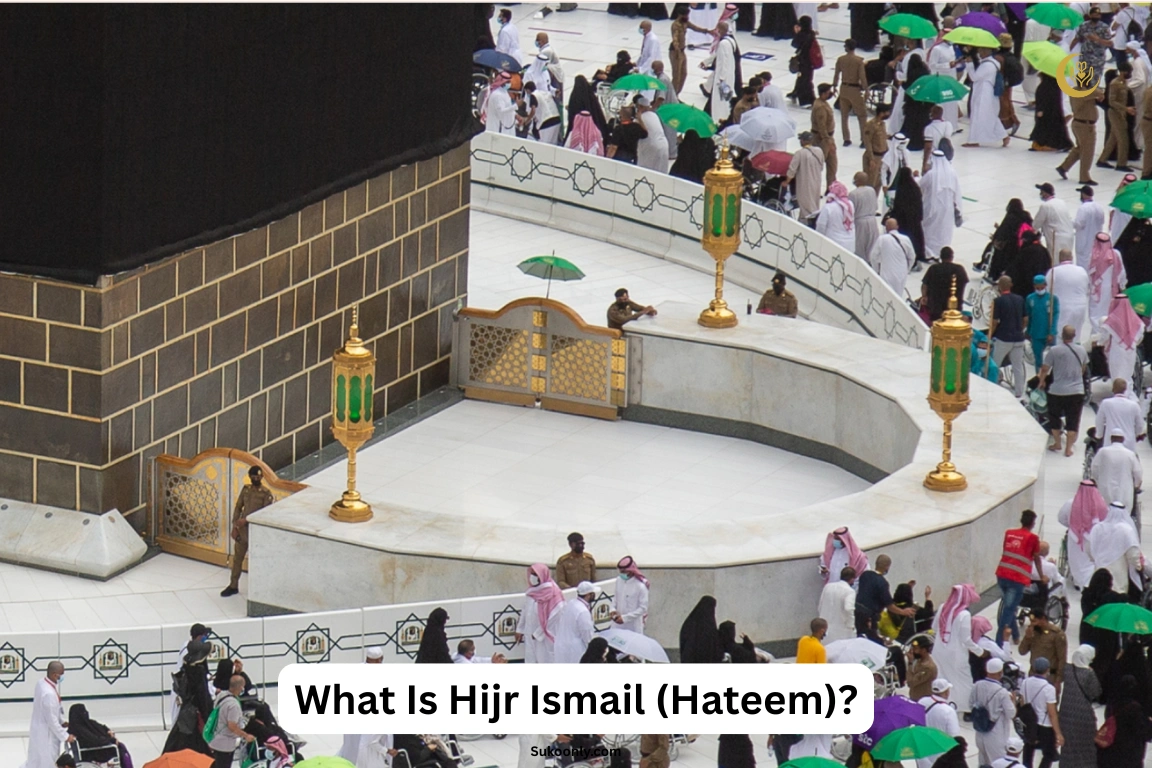
Hijr Ismail (حِجْر إِسْمَاعِيل), commonly referred to as the Hateem (الحطيم), is a semi-circular open area adjacent to the Kaaba within Masjid al-Haram in Makkah, Saudi Arabia. Bounded by a low marble wall, this sacred space originally formed part of the Kaaba’s structure as built by Prophet Ibrahim (عليه السلام) and his son Prophet Ismail (عليه السلام) under the command of Allah ﷻ.
During the reconstruction of the Kaaba by the Quraysh, prior to the prophethood of Muhammad ﷺ, the Hijr was deliberately excluded due to a shortage of lawful funds—they refused to use wealth acquired through riba (interest) and other impermissible means. Out of reverence for the sacred House, they left this section outside the main structure, yet its divine status remained fully intact.
Despite its external position, the Hijr Ismail is still considered part of the Kaaba. Entering this space to perform nafl prayers or make dua is highly recommended and holds the same merit as praying inside the Kaaba itself. For many pilgrims, standing within the Hijr is an experience of profound spiritual connection—a place where humility, sincerity, and the legacy of the Prophets come alive in worship.
Location and Structure of the Hijr
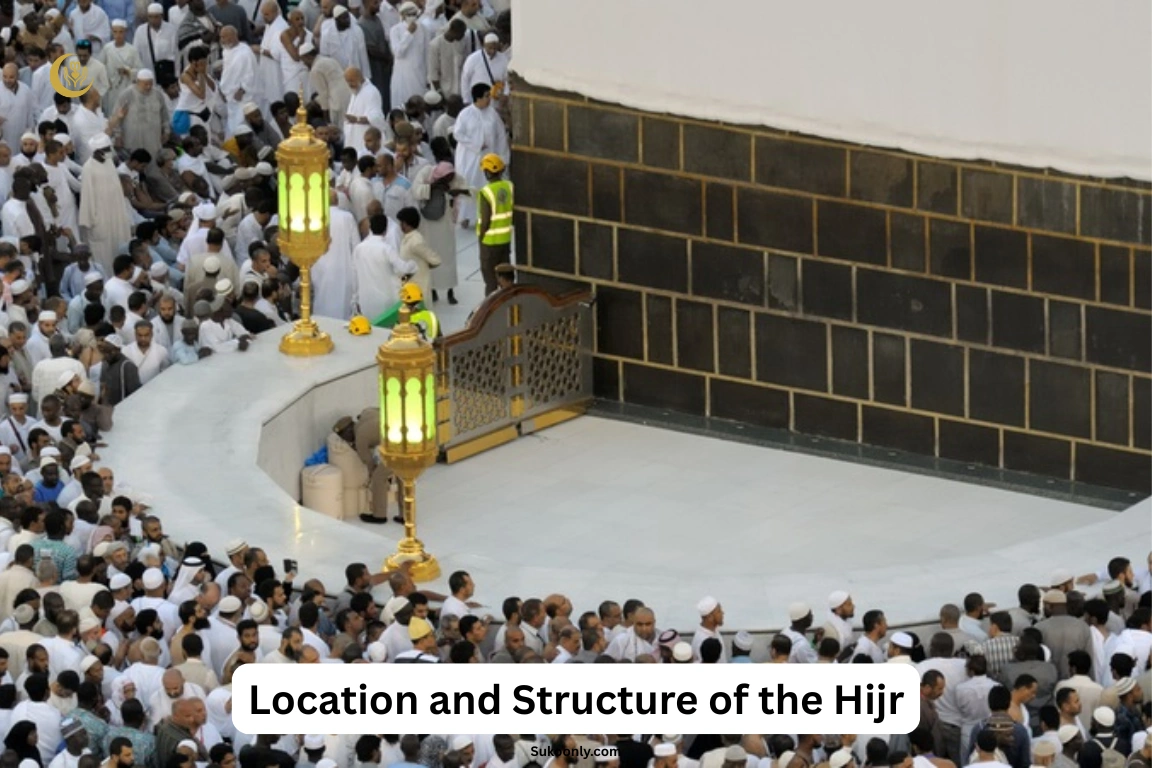
The Hijr Ismail (حِجْر إِسْمَاعِيل) is found along the northern side of the Kaaba, between the Kaaba door (Bāb al-Kaaba) and the north-western corner called Rukn al-Shāmī. A semi-circular marble wall, about 1.3 meters high, marks this blessed space — the part that once belonged to the original Kaaba built by Prophet Ibrahim (عليه السلام) and his son Prophet Ismail (عليه السلام) by Allah’s command.
Its floor of polished white marble blends beautifully with the mataf, the open courtyard where pilgrims make tawaf around the Kaaba. The Hijr has no roof or gate; it stays open to all, symbolizing humility and accessibility before Allah ﷻ. Around its curved wall, one can see engraved Qur’anic verses, gold-plated lamps, and delicate stonework that add to the peace and majesty of this sacred spot.
During Hajj and ʿUmrah, worshippers perform tawaf around the Kaaba and the Hijr together, because the Hijr Ismail is part of the Kaaba’s original boundary. Entering it while making tawaf invalidates the circuit, since that would mean walking through the Kaaba instead of around it. The Hijr Ismail thus carries a rare blend of architectural history and spiritual depth — a place where devotion meets the legacy of the Prophets.
Historical and Spiritual Significance of the Hijr
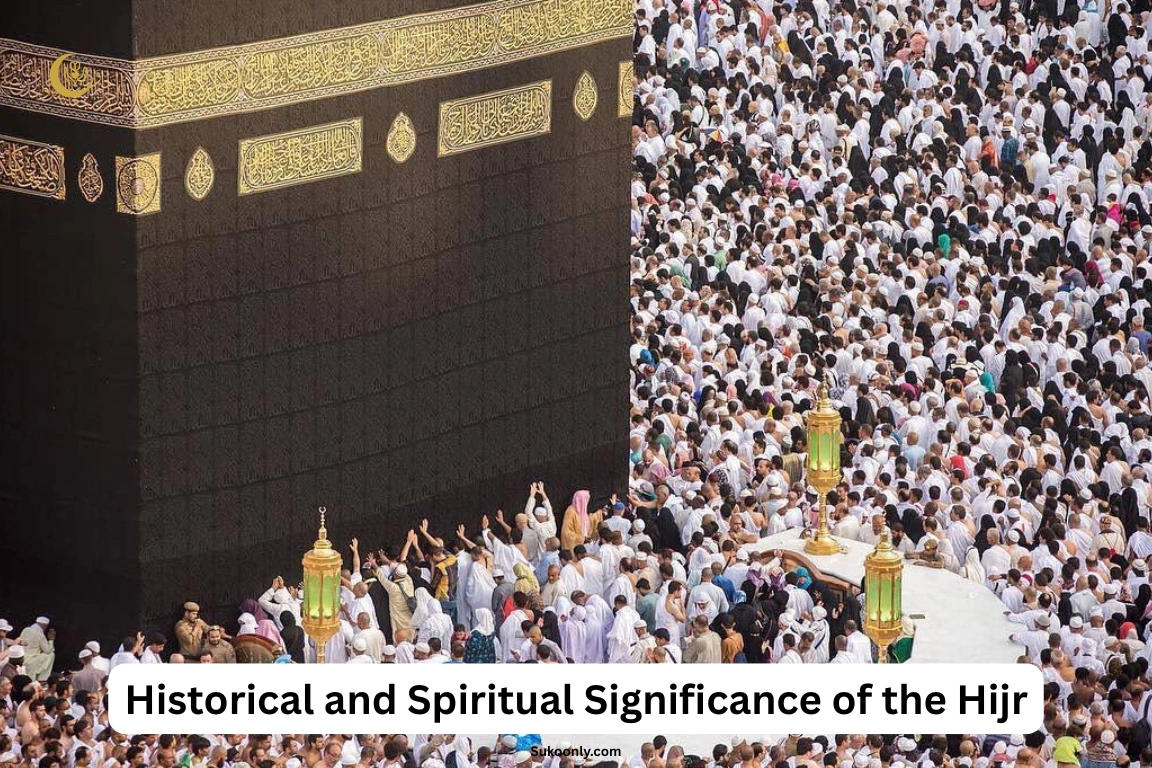
The Hijr Ismail (حِجْر إِسْمَاعِيل) holds deep historical and spiritual reverence in Islam. It is not just a structure beside the Kaaba but a sanctified part of its original foundation, linked to Prophet Ibrahim (عليه السلام) and his son Prophet Ismail (عليه السلام). Many scholars mention that Prophet Ismail and his mother Hājar (عليها السلام) are buried within this blessed space — the same family whose devotion gave rise to Zamzam and the rituals of Hajj that Muslims perform today.
Over the centuries, the Kaaba has been rebuilt many times — first by Prophet Ibrahim (عليه السلام), then by the Quraysh, and later by ʿAbdullah ibn al-Zubayr (رضي الله عنه) — yet the Hijr Ismail has remained a visible reminder of the Kaaba’s original shape and size. When the Quraysh rebuilt the Kaaba before Prophet Muhammad ﷺ received revelation, they left the Hijr outside because their lawful funds were not enough to include it. The Prophet ﷺ later confirmed, as reported in Sahih al-Bukhari and Sahih Muslim, that “the Hijr is part of the Kaaba.”
Out of wisdom, the Prophet ﷺ did not rebuild the Kaaba to include the Hijr, fearing it could cause fitnah (confusion) among the new Muslims. His decision showed prophetic insight and care for unity — choosing peace of hearts over outward form.
Spiritually, the Hijr Ismail is a place where khushuʿ (humility), taqwa (consciousness of Allah), and qurb (closeness to Him) come alive. Every prayer and dua offered here is believed to be like worship inside the Kaaba itself. Many pilgrims describe a calm, sacred stillness within its walls — as though time slows, and centuries of Prophetic devotion and divine mercy still echo softly in the air around Baytullah.
Etiquettes and Rules for Praying in Hijr Ismail
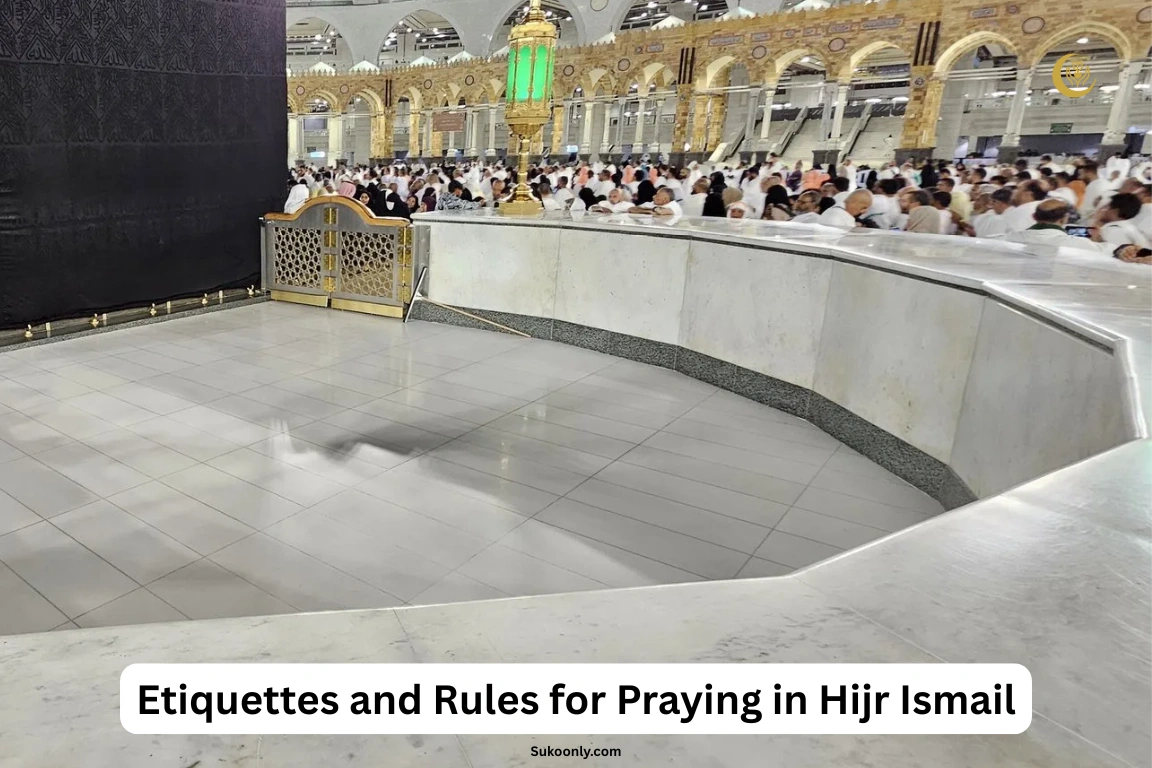
Praying or making dua inside the Hijr Ismail (حِجْر إِسْمَاعِيل) is among the most blessed acts of worship a pilgrim can experience in Masjid al-Haram. Because this area is part of the Kaaba itself, prayer within it carries the reward of praying inside the House of Allah ﷻ — an honor that fills the heart with awe and gratitude. To respect this sacred place, every believer should observe the etiquettes (adab) and rules (ahkam) taught through the Sunnah.
Enter the Hijr Ismail with humility (tawāḍuʿ), purity (ṭahārah), and sincerity (ikhlāṣ). Perform wudu (ablution) before entering, avoid rushing or pushing others, and step inside calmly and respectfully. Once inside, face the qiblah and pray two rakʿahs of nafl salah, following the example of Prophet Muhammad ﷺ, who prayed in this very spot.
While praying or making dua, keep your voice soft and your heart attentive. Engage in dhikr (remembrance of Allah), seek forgiveness (istighfar), express gratitude (shukr), and raise your hands in personal supplication. There is no specific dua for this place — what matters most is sincerity (ikhlāṣ) and khushuʿ (humble presence) before Allah ﷻ.
It is important to remember that entering the Hijr Ismail during tawaf invalidates the circumambulation, since this space lies within the Kaaba’s boundary. Pilgrims may enter only after completing tawaf, maintaining cleanliness, respect, and peaceful reflection. The Hijr Ismail is a sanctuary of mercy, where sins are forgiven, hearts are softened, and prayers ascend — a place that quietly reminds every believer of their nearness to the Lord of the Kaaba.
Common Misconceptions About the Hateem
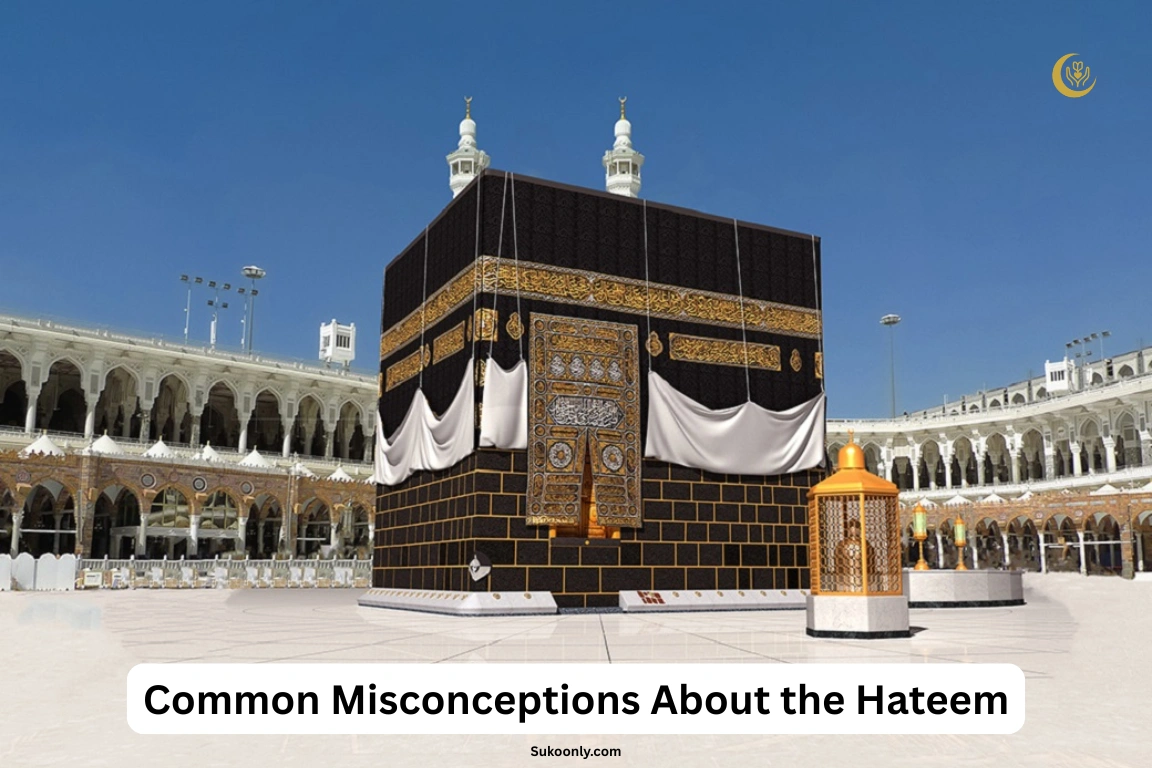
The Hijr Ismail (حِجْر إِسْمَاعِيل) — also called the Hateem (الحَطِيم) — is one of the most sacred parts of Masjid al-Haram, yet many visitors still hold a few misunderstandings about it. These often come from cultural habits or limited awareness of its true place in Islam. Learning the correct understanding helps us worship with clarity and in harmony with the Sunnah of the Prophet ﷺ.
- One common misconception is that the Hijr Ismail is separate from the Kaaba. In truth, it is an inseparable part of the Kaaba’s original foundation, built by Prophet Ibrahim (عليه السلام) and Prophet Ismail (عليه السلام) under Allah’s command. When the Quraysh rebuilt the Kaaba before Islam, they had to leave this section out because their funds were not entirely from halal earnings. The Prophet Muhammad ﷺ later confirmed in authentic hadith that “the Hijr is part of the Kaaba.”
- Another misconception is that entering the Hijr during tawaf brings extra reward or closeness to the Kaaba. In reality, doing so invalidates the tawaf, because it counts as walking through the Kaaba instead of around it. The correct way is to perform all seven circuits outside the semicircular wall, which marks the Kaaba’s true boundary.
- Some also believe there are special duas or fixed prayers for this place. Islam teaches that there are no prescribed supplications unique to the Hijr. What matters most here is ikhlāṣ (sincerity) and khushuʿ (humility) — praying with a focused heart and soft voice, expressing one’s needs to Allah in one’s own words.
- Lastly, a misconception exists that only men can enter the Hijr Ismail. In Islam, women are equally welcome to pray and make dua here, as long as they observe ḥayāʾ (modesty) and adab (respectful conduct). The Hijr Ismail belongs to every believer who seeks closeness to Allah ﷻ — a place of peace, not privilege.
By understanding these points, we honor the truth of the Prophet’s ﷺ guidance, preserve the sanctity of this sacred space, and keep our worship free from cultural errors — pure, simple, and sincere before the Lord of the Kaaba.
FAQs — About Hijr Ismail/ Hateem

Fathima Kausar K is a writer at Sukoonly.com, where she focuses on sharing authentic duas, Qur’anic supplications, and spiritually uplifting content that helps readers find peace, clarity, and closeness to Allah.
Her writing is rooted in the belief that duʿāʾ is not just a set of words, but a sincere conversation with Allah — especially during moments of sadness, uncertainty, gratitude, or quiet reflection. Through her articles, she aims to make authentic Islamic supplications easier to understand, meaningful to recite, and practical for everyday life.
Fathima carefully studies classical Islamic sources, authentic narrations, and well-known scholarly explanations, and presents them in a simple, gentle, and relatable way. Her focus is always on clarity, authenticity, and emotional connection rather than complexity or technical language.
Through Sukoonly, she hopes to create a peaceful space where readers can slow down, reconnect with their faith, and find comfort through remembrance, duas, and trust in Allah.