


You cannot pray Fajr after sunrise as an on-time prayer. Fajr time ends the moment the sun begins to rise. There is no grace period after sunrise for offering Fajr within its valid time.
However, if you wake up after sunrise and missed Fajr unintentionally, you should wait until the sun has fully risen—about 10 to 20 minutes after the listed sunrise time—because prayer is prohibited during the exact moment of sunrise. After that waiting period, you must pray Fajr as a qada (make-up) prayer.
In short:
-
Before sunrise → Fajr is on time
-
At sunrise → Prayer is prohibited
-
After sunrise (10–20 minutes later) → Pray as qada
This guide explains the ruling clearly with authentic evidence and scholarly consensus.
Can Fajr Be Prayed After Sunrise?
No, Fajr cannot be prayed after sunrise as an on-time prayer.
According to all four major Islamic schools of jurisprudence, the valid time for Fajr begins at true dawn (fajr al-sadiq) and ends precisely at sunrise. Once the sun has begun to rise, the time has expired, and the prayer is no longer accepted as ada (on-time)—it becomes a qada (make-up) prayer.
This ruling is established through authentic hadith, including the narration where the Prophet Muhammad ﷺ said:
“The time for the morning prayer is from the appearance of dawn until the sun rises.” (Source: Sahih Muslim)
When Does Fajr Time Start and End?
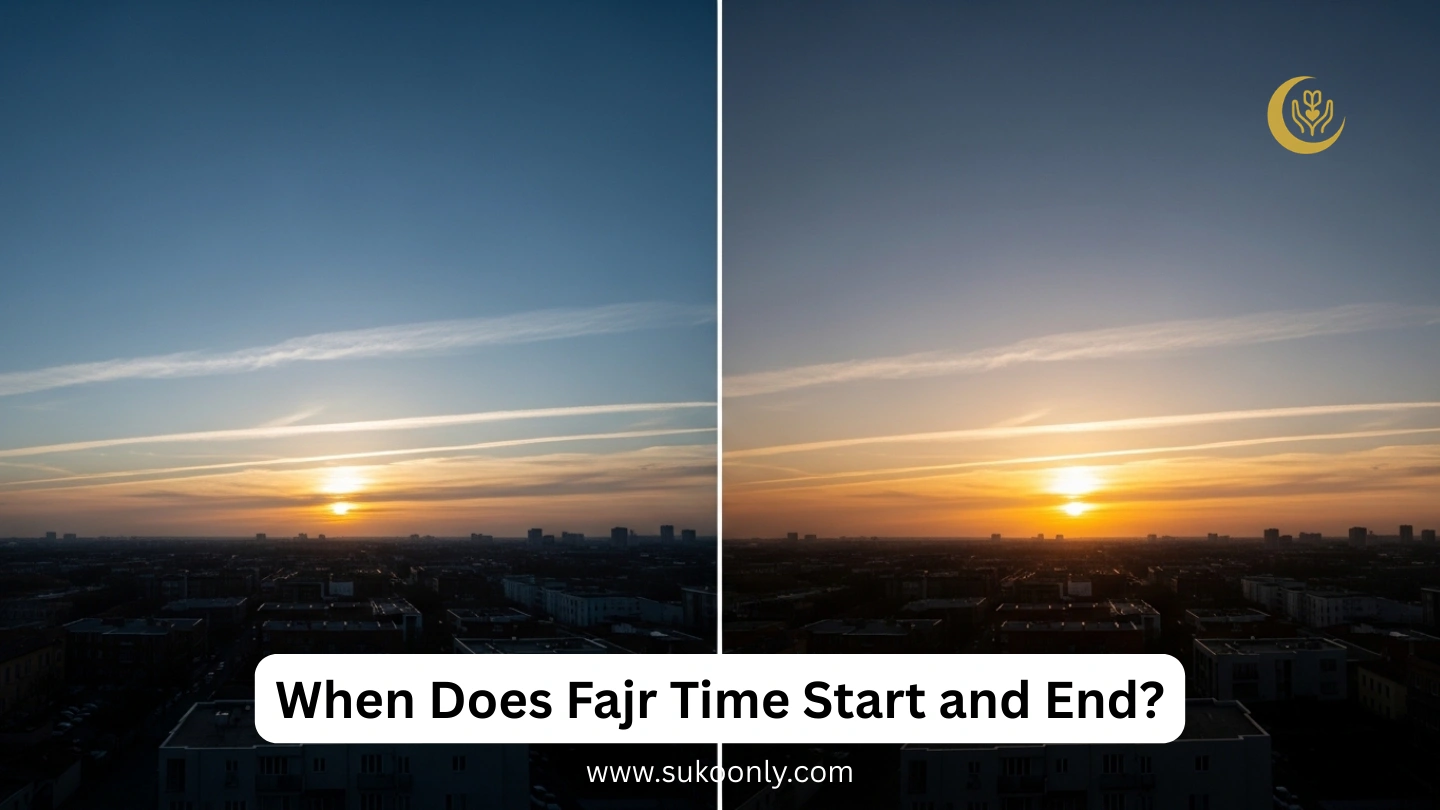
Fajr prayer starts at true dawn and ends exactly at sunrise. This is the fixed prayer window set in Islam. You must pray Fajr within this time for it to count as on-time prayer.
-
Start Time: When the first horizontal light appears in the sky at dawn (true dawn).
-
End Time: The exact moment the sun begins to rise above the horizon.
-
Validity: Fajr is valid anytime after dawn and before sunrise. If you complete even one rak‘ah before sunrise, your prayer counts as on time.
-
Local Example: In Chennai, Tamil Nadu on Feb 12, 2026, Fajr begins at 5:21 AM and sunrise is at 6:33 AM.
-
Important Tip: It is better to pray early after Fajr time starts instead of delaying close to sunrise.
Evidence From Qur’an and Hadith About Fajr Timing
The timing of Fajr prayer is not subject to personal interpretation—it is explicitly defined in both the Qur’an and authentic Hadith. These sources establish when Fajr begins, when it ends, and what counts as having performed it on time.
Allah ﷻ says: “Eat and drink until the white thread of dawn becomes distinct to you from the black thread [of night]. Then complete the fast until sunset.” — Surah Al-Baqarah (2:187) According to Tafsir scholars, the phrase “white thread of dawn” refers to true dawn (Fajr al‑Ṣādiq)—the exact moment when Fajr time begins. This verse was revealed in the context of fasting, but it also defines the natural boundary used for beginning both Fajr prayer and fasting. The Prophet Muhammad ﷺ said: “The time of Fajr is from the appearance of dawn as long as the sun has not risen.” — Sahih Muslim This hadith clearly defines Fajr’s time window: Start: With the appearance of true dawn End: When the sun begins to rise The Prophet ﷺ said: “Whoever catches one rak‘ah of Fajr before the sun rises has caught Fajr.” — Sahih al-Bukhari & Sahih Muslim This means that: If a person begins and completes at least one rak‘ah (unit) before sunrise, the prayer is considered on time (ada). If sunrise begins before completing one rak‘ah, the prayer becomes qada. Qur’anic Evidence
Hadith Evidence — Start & End Time
Hadith Evidence — Catching Fajr on Time
Prophetic Practice — Best Time to Pray
The Prophet Muhammad ﷺ consistently prayed Fajr soon after true dawn appeared, rather than delaying it closer to sunrise. This reflects the Sunnah of praying early, especially for Fajr, which carries immense spiritual reward.
Scholarly Consensus on Praying Fajr After Sunrise
Islamic scholars from all major schools of thought agree that the time for Fajr prayer ends at sunrise. This ruling is based on authentic hadith and has been consistently accepted throughout Islamic scholarship.
What If You Miss Fajr and Wake After Sunrise?
If you wake up after sunrise and realize you missed Fajr, what you should do depends on why it was missed. Islamic teachings clearly explain the ruling for each situation.
If You Overslept: There is no sin if you missed Fajr unintentionally due to sleep. The Prophet ﷺ said that whoever sleeps through a prayer should pray it when they wake up. So you should perform Fajr immediately after waking. If You Forgot: Forgetting a prayer is also excused. As soon as you remember, you should pray it right away. Delaying further is not recommended. If You Delayed Intentionally: If someone stayed awake and knowingly allowed Fajr time to pass, this is sinful. The prayer is still obligatory and must be prayed as qada, along with sincere repentance. If You Wake Minutes After Sunrise: Even if only a few minutes have passed after sunrise, the Fajr time has already ended. Pray it immediately as a make-up prayer. Correct Action: Do not skip the prayer completely. Whether missed intentionally or unintentionally, Fajr must still be prayed.
Is There Any Grace Period After Sunrise?
No, there is no grace period after sunrise for praying Fajr as an on-time prayer. In Islamic law, the time for Fajr ends exactly when the sun begins to rise. The moment sunrise starts, the prayer window closes.
Clear Rule: Fajr must be completed before sunrise begins. There is no extra buffer time after that. Common Misunderstanding: Some people think they have a few minutes after sunrise to pray Fajr on time. This is incorrect according to authentic hadith and scholarly consensus. What Happens After Sunrise: If you pray after sunrise, it still counts as a prayer, but it is considered qada (make-up), not on-time Fajr. Important Distinction: Missing the time does not cancel the obligation. You must still pray the missed Fajr as soon as possible. Practical Tip: Always check your local sunrise time and aim to finish Fajr at least a few minutes earlier to avoid missing it.
Difference Between Fajr, Sunrise, and Ishraq Prayer
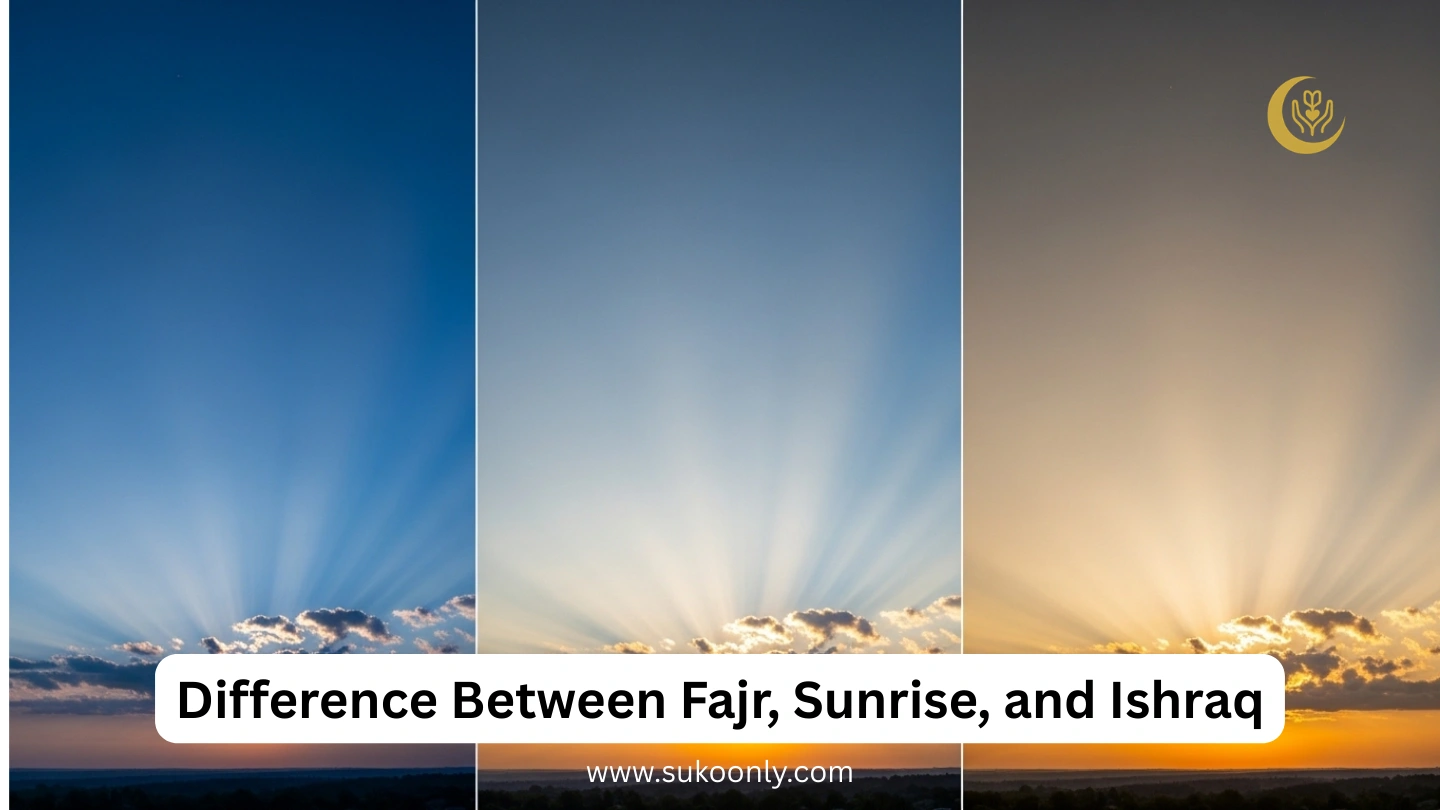
Many people confuse Fajr, sunrise, and Ishraq prayer because they occur close together in time. However, each has a different ruling and purpose in Islam.
Fajr Prayer: This is the obligatory dawn prayer. Its time starts at true dawn and ends exactly at sunrise. It must be prayed before the sun begins to rise. Sunrise (Shurūq): This is not a prayer time. It is actually a prohibited time for prayer. Muslims should not perform voluntary or obligatory prayers at the exact moment the sun is rising. Ishraq Prayer: This is an optional (nafl) prayer prayed after sunrise, usually about 15–20 minutes later, once the sun has fully risen above the horizon. It is a recommended voluntary prayer and is not a replacement for Fajr. Important Clarification: If someone misses Fajr, they cannot pray it during sunrise thinking it counts. They must wait until sunrise ends, then pray it as a make-up prayer. Simple Timeline Example: Fajr time → before sunrise Sunrise → no prayer allowed After sunrise → Ishraq prayer time begins
Prohibited Prayer Times in Islam
Islam teaches that there are certain short periods during the day when voluntary prayers should not be performed. These times were clearly explained by the Prophet ﷺ to prevent praying at moments associated with sun-worship practices in earlier cultures.
At Sunrise: From the moment the sun starts rising until it is fully above the horizon (about 10–20 minutes). No prayer should be performed during this time. At Midday (Zenith): When the sun is directly overhead before Dhuhr begins. This is a brief period when prayer is avoided. At Sunset: From when the sun begins to set until it fully disappears below the horizon. Important Note About Fajr: If you missed Fajr, do not pray it exactly during sunrise. Wait until sunrise finishes, then pray it as a make-up prayer. Reason for These Restrictions: The Prophet ﷺ instructed Muslims not to pray during these times to distinguish Islamic worship from practices of people who used to worship the sun.

Mohammed Basheer is the founder of Sukoonly.com, an Islamic blog focused on duas, prophetic healing, and Qur’anic wisdom. He writes with sincerity and spiritual depth for seekers around the world.