

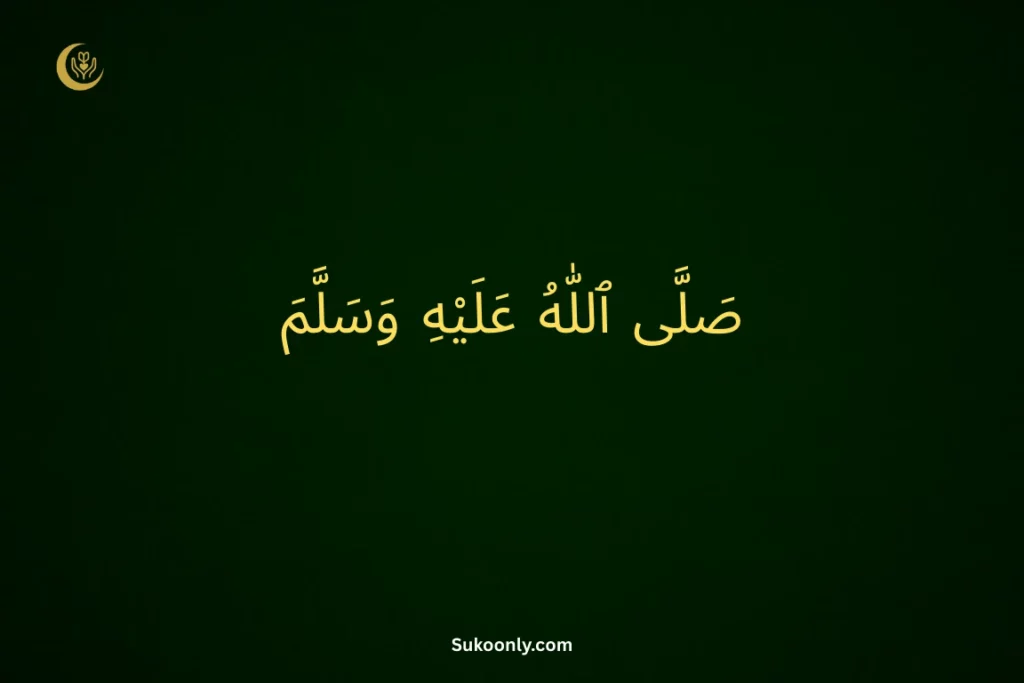
What Does “Sallallahu Alaihi Wasallam” Mean?
Sallallahu Alaihi Wasallam – Arabic, Transliteration & Pronunciation
Why Do Muslims Say Sallallahu Alaihi Wasallam?
“Indeed, Allah and His angels send blessings upon the Prophet. O you who believe, send blessings upon him and greet him with peace.”This isn’t just a recommendation—it’s an honored act of ʿibādah (worship). Saying salawat is a way of showing love, loyalty, and heartfelt respect for Prophet Muhammad ﷺ. The Prophet ﷺ said:
“Whoever sends one salat upon me, Allah will send ten upon him.” (Sahih Muslim 408)Each time we say it, we’re not just following a sunnah—we’re building a real connection. It reflects our reverence (taʿẓīm), deepens our bond with the Sunnah, and brings us closer to the Prophet ﷺ. It’s more than words—it’s a bridge between our hearts and his ﷺ.
When Should You Say Sallallahu Alaihi Wasallam?
Many scholars also recommend writing it in full, even in messages, emails, or books—because it’s a sign of taʿẓīm (veneration) for the Prophet ﷺ. Saying this sacred salutation (ṣalawāt) regularly nurtures maḥabbah (love), strengthens our bond with the Sunnah, and brings ajr (reward) with every word. It turns everyday speech into an act of dhikr, and keeps the remembrance of the Prophet ﷺ alive—both on our tongues and in our hearts.
Abbreviation & Unicode (ﷺ)
The phrase “Sallallahu Alaihi Wasallam” is often written in shorthand using the Arabic symbol ﷺ, which represents the full salutation (ṣalawāt) upon Prophet Muhammad ﷺ. You’ll often see it in Islamic books, digital articles, and even mobile apps—as a respectful way to honor the Prophet’s name while saving space. This symbol is officially recognized as U+FDFA in the Unicode system, titled “ARABIC LIGATURE SALLALLAHOU ALAYHE WASALLAM.” It can be added to websites or documents using supported Arabic fonts or the HTML entityﷺ.
Even though using the symbol is acceptable, many ʿulamāʾ (scholars) recommend writing out the full salutation—either in Arabic or transliteration—especially in Islamic texts. Doing so brings more ajr (reward), helps revive the Sunnah, and shows true taʿẓīm (veneration) for the Prophet ﷺ, both in our speech and our writing.
Related Phrases & Synonyms
- “Allahumma ṣalli ʿalā Muḥammad”
- “Allahumma ṣalli ʿalā Sayyidinā Muḥammad wa ʿalā āli Sayyidinā Muḥammad”
- The durood Ibrāhīmī, which is part of the tashahhudin daily ṣalāh
FAQs — Sallallahu Alaihi Wasallam
Reciting “Sallallahu Alaihi Wasallam” whenever the Prophet Muhammad ﷺ is mentioned is an expression of deep reverence and prophetic love. Although it is not legally obligatory on every mention, it is highly encouraged—particularly upon the first mention in any conversation or gathering. This practice is rooted in the Sunnah, draws immense spiritual reward, and strengthens the believer’s emotional and spiritual bond with the Messenger of Allah ﷺ.
It is not wajib (obligatory) to say “Sallallahu Alaihi Wasallam” every time the Prophet ﷺ is mentioned, but it is a highly emphasized sunnah (sunnah muakkadah). Scholars unanimously agree that its omission is not sinful, but saying it—especially upon the first mention—brings immense spiritual reward, deepens love for the Prophet ﷺ, and aligns the heart with prophetic etiquette. Repeating it often invites Allah’s mercy and marks one’s reverence for the Messenger of Islam ﷺ.
While many Muslims type “SAW” as a shorthand for Sallallahu Alaihi Wasallam, scholars generally discourage this practice—especially in books, blogs, or religious writing. The full phrase carries emotional depth and spiritual reward, whereas abbreviations can feel cold and mechanical. Writing it out fully is a small act of love and honor for the Prophet ﷺ. In casual messages, the intention may still be valid, but when possible, we should take the opportunity to send proper salawat in full, reflecting true reverence.
Begin by modeling the phrase “Sallallahu Alaihi Wasallam” yourself every time you mention the Prophet ﷺ. Children learn best through repetition, tone, and the emotional cues of their parents. Embed it in daily routines—bedtime stories of the Prophet’s ﷺ life, morning duas, or post-meal dhikr. Use visual aids like illustrated posters or cue cards with the Arabic script to create familiarity. Toddlers benefit from hearing the phrase in rhyming nasheeds or simple Islamic videos.
Praise children gently when they imitate the salawat. Tools like sticker rewards or cheerful reminders can reinforce this habit without pressure. As they grow, explain its meaning and reward in age-appropriate ways, nurturing love, reverence, and a personal bond with the Prophet ﷺ.
Yes, non-Muslims may say “Sallallahu Alaihi Wasallam” if done with genuine respect. In Islamic ethics, intention matters greatly. When a non-Muslim utters this phrase sincerely—as a sign of respect for the Prophet Muhammad ﷺ—it is not only permissible but also appreciated. However, mockery or casual misuse contradicts the spirit of reverence expected in Islamic etiquette. In academic or interfaith settings, respectful mentions of the Prophet ﷺ are commonly accepted and reflect mutual understanding. The key is sincerity and honoring the spiritual weight the phrase carries.
More in the Islamic Phrases Series
Hub Page
Related Pages

Mohammed Basheer Orsala is the founder of Sukoonly.com - an Islamic resource dedicated to verified Quranic duas and Sunnah-based supplications. A self-taught Islamic researcher, he has studied classical texts and authenticated hadith collections including the works of Imam al-Nawawi, Shaykh al-Albani, Ibn Hajar al-Asqalani, and Ibn al-Qayyim. He writes to make verified Prophetic supplications accessible to English-speaking Muslims worldwide.