
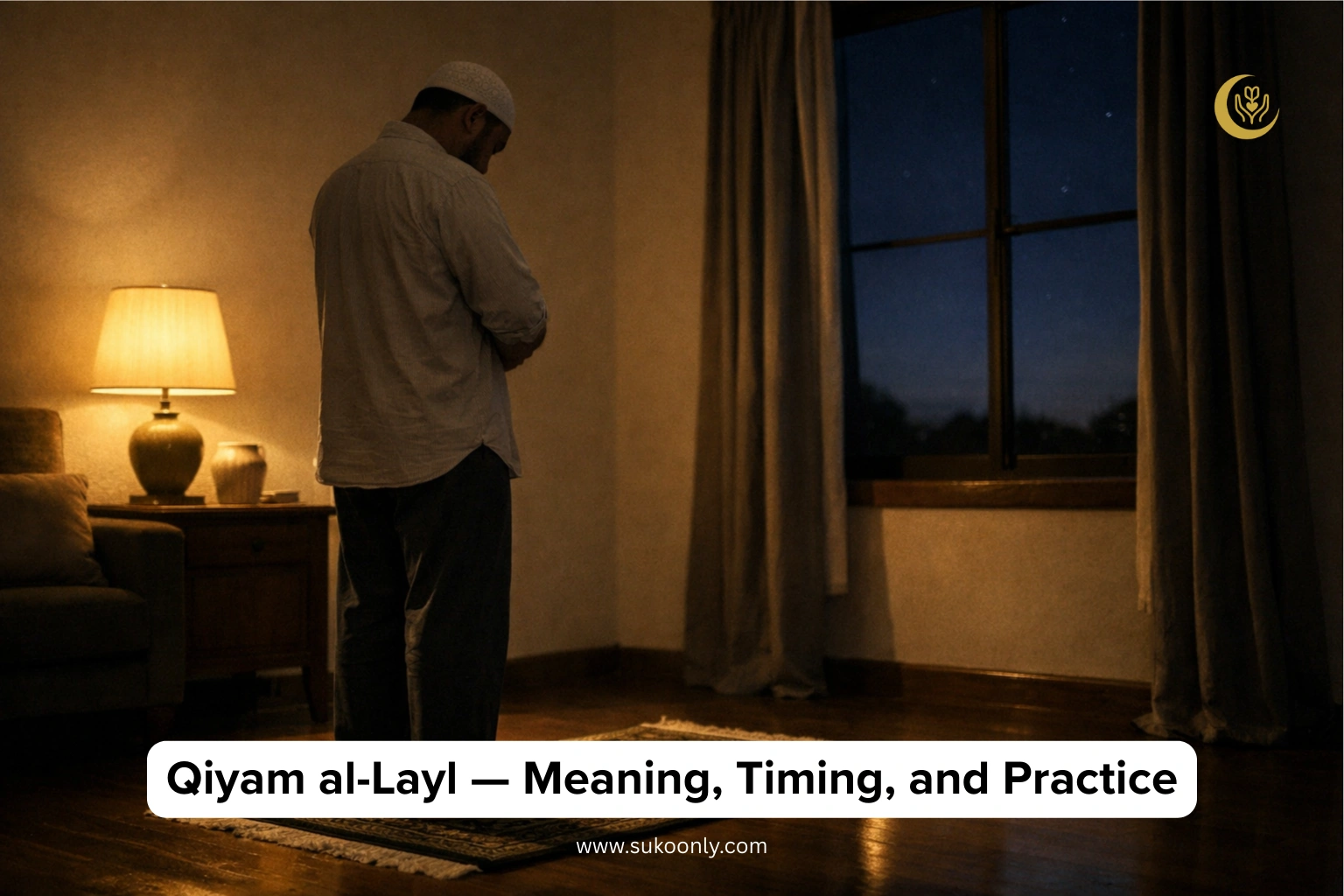
Qiyam al-Layl refers to voluntary night prayer in Islam, performed after the obligatory ‘Isha prayer and before the Fajr prayer. The term literally means “standing at night,” and it encompasses acts of worship such as prayer (salah), recitation of the Qur’an, and remembrance of Allah during the night hours.
This article explores the meaning, timing, and recommended practices of Qiyam al-Layl, drawing from authentic Islamic sources. It outlines how the prayer fits within broader spiritual routines and distinguishes it from related practices like Tahajjud.
This content is intended for individuals seeking a clear and structured understanding of Qiyam al-Layl, whether for personal worship or educational purposes.
What Is Qiyam al-Lail?

Qiyam al-Lail (Arabic: قيام الليل) refers to voluntary night prayer performed by Muslims between the ‘Isha prayer and Fajr. The phrase literally means “standing during the night,” and it includes any non-obligatory prayers offered during this time window.
In Islamic tradition, Qiyam al-Lail is a part of extra nightly worship (tahajjud being a more specific form when one wakes after sleep). It is deeply encouraged for those seeking closeness to Allah, forgiveness, and spiritual elevation.
Qiyam al-Lail:
- Is not obligatory, but highly recommended (mustahabb)
- Can be offered regularly or occasionally
- Has no fixed number of rak‘ahs
- May be performed individually or in congregation
Muslims often pray Qiyam more regularly during Ramadan, especially in the last 10 nights, when seeking Laylat al-Qadr — the Night of Decree.
When Is Qiyam al-Lail Prayed?

Qiyam al-Lail is prayed after the ‘Isha prayer and before the Fajr prayer, during any part of the night. It may be offered early in the night, late at night, or in the last third of the night—all are valid times for this voluntary worship.
While Islamic teachings highlight the last third of the night as the most spiritually rewarding period for Qiyam, it is not a condition. The prayer remains valid and meritorious at any point in the night prayer window.
There is also no requirement to sleep beforehand, unlike Tahajjud, which traditionally involves waking after sleep. Muslims may pray once or multiple times during the night, based on their energy, schedule, and spiritual goals.
How Qiyam al-Layl Is Performed?
Qiyam al-Layl is performed in units of two rak‘ahs (prayer cycles), commonly prayed in pairs throughout the night. There is no fixed limit to the number of rak‘ahs, though it is traditionally kept within a manageable count for consistency and ease.
The prayer typically concludes with Witr, a distinct odd-numbered prayer offered as the final act of worship for the night. While there is flexibility in timing and length, sincerity and focus are central to its observance.
Learn the step-by-step method of praying. Qiyam al-Layl
How Many Rak‘ahs for Qiyam al-Lail?
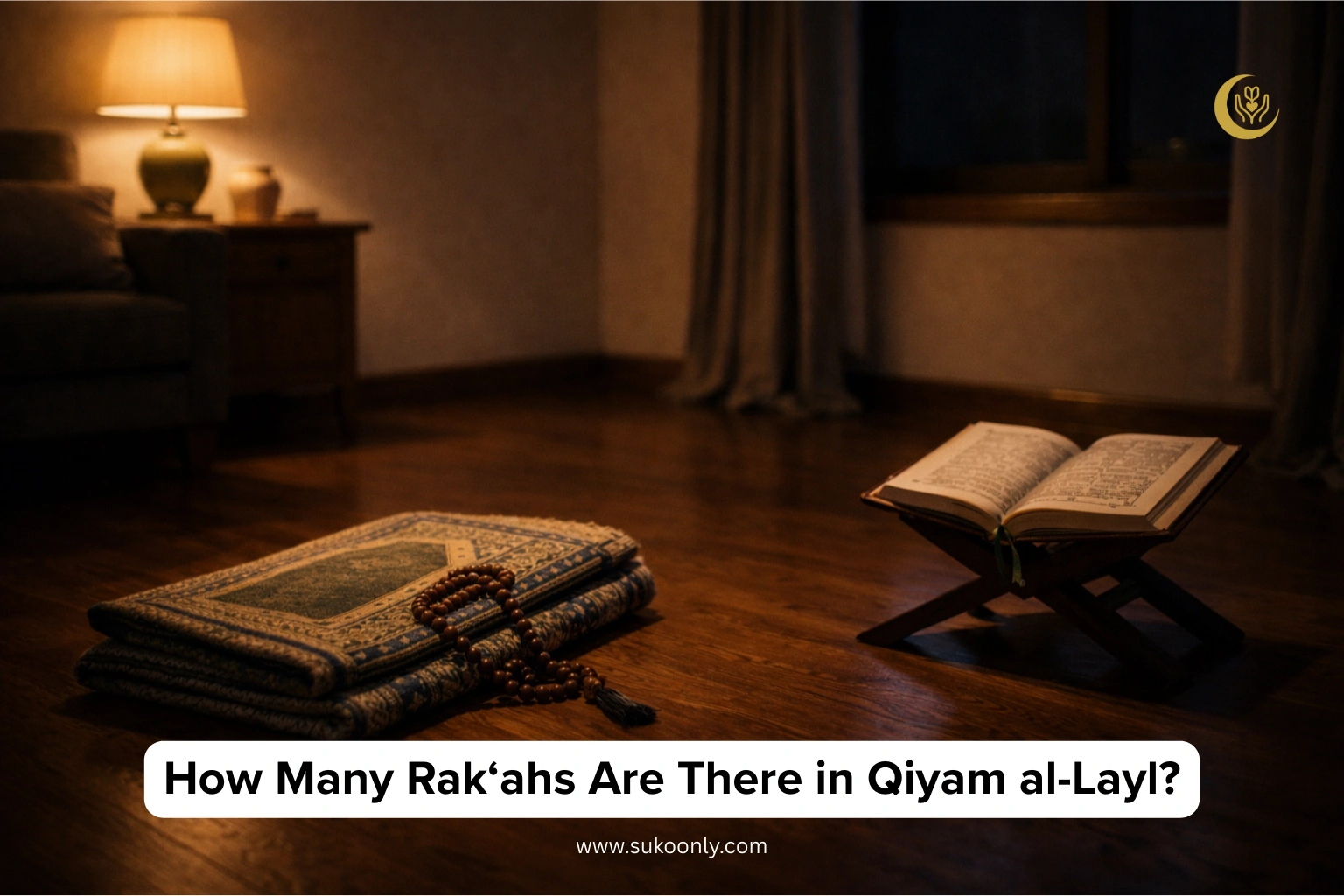
There is no fixed number of rak‘ahs (units of prayer) for Qiyam al-Lail. It is prayed in sets of two, and a person may perform as few or as many as they are able.
- Some Muslims may pray 2 rak‘ahs when time or energy is limited.
- Others may perform 8, 10, or more, especially during Ramadan.
- The night prayer traditionally ends with Witr, which is prayed in odd numbers (1, 3, 5, etc.).
The Prophet Muhammad ﷺ is authentically reported to have prayed 11 rak‘ahs in total, including Witr, on many nights (Bukhari, Muslim). However, this was his personal practice, not a requirement.
Key Principle: Flexibility is part of the mercy of Qiyam al-Lail. What matters most is sincerity, consistency, and making time for night worship—even if it’s just two short rak‘ahs.


Mohammed Basheer is the founder of Sukoonly.com, an Islamic blog focused on duas, prophetic healing, and Qur’anic wisdom. He writes with sincerity and spiritual depth for seekers around the world.