
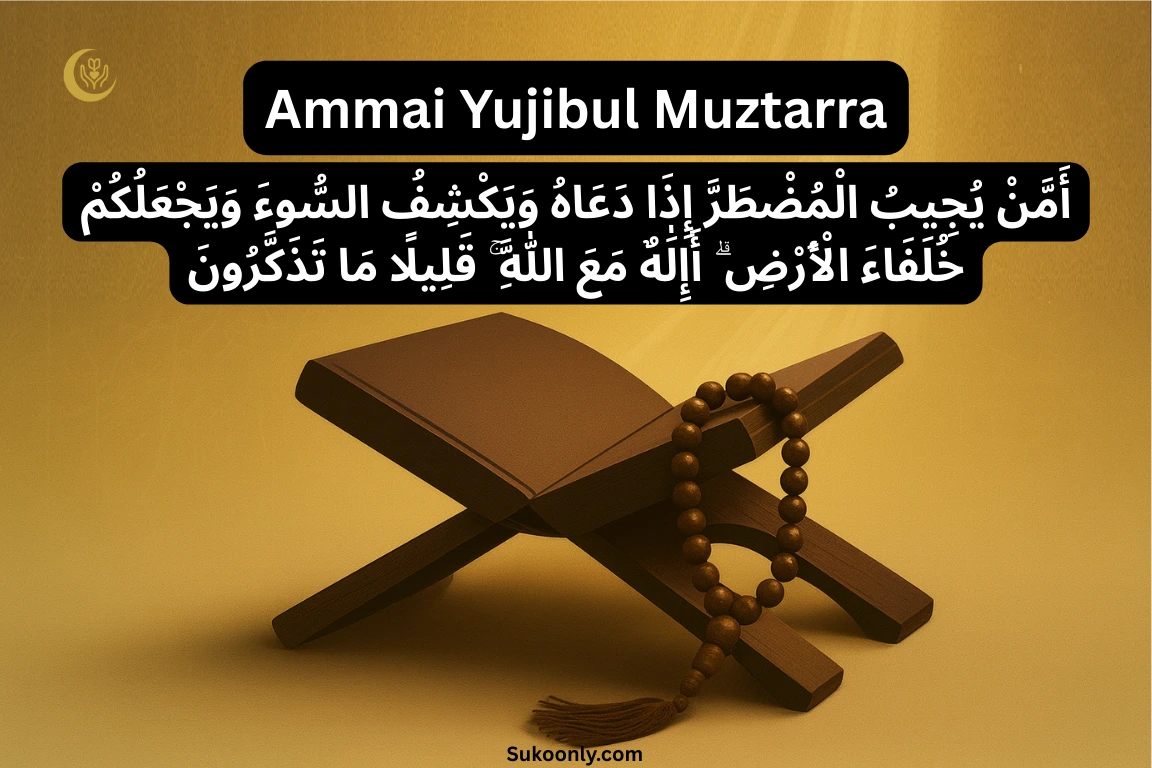
Ammai Yujibul Muztarra (أَمَّنْ يُجِيبُ الْمُضْطَرَّ) is a beautiful verse from Surah An-Naml (27:62), where Allah ﷻ asks a question that touches the heart:
“Who is it that answers the one in desperate need when he calls upon Him, and removes his hardship?”
This is no ordinary question—it’s a divine reminder. When we are overwhelmed, uncertain, or in pain, it is only Allah who hears the silent cries of our hearts. Only He has the power to remove our difficulties, no matter how deep they run. This verse pulls us gently back to tawakkul (trust in Allah), teaching us that no door is truly closed when we call upon Him with sincerity.
Many believers recite this verse during moments of distress—whether it’s illness, fear, or emotional burden—seeking relief through the words Allah Himself taught us. It becomes not just a verse, but a living du‘a, full of hope and connection.
In this blog, we’ll explore the Arabic, transliteration, translation, and the spiritual depth behind Ammai Yujibul Muztarra, so you can begin to carry it with you—in your heart, your prayers, and your moments of need.
Arabic Text of Ammai Yujibul Muztarra
The phrase Ammai Yujibul Muztarra appears in Surah An-Naml (27:62) as a reminder of Allah’s power and mercy. It teaches us that only Allah responds to the muztar—the one in desperate need—removes hardship, and grants succession on earth.
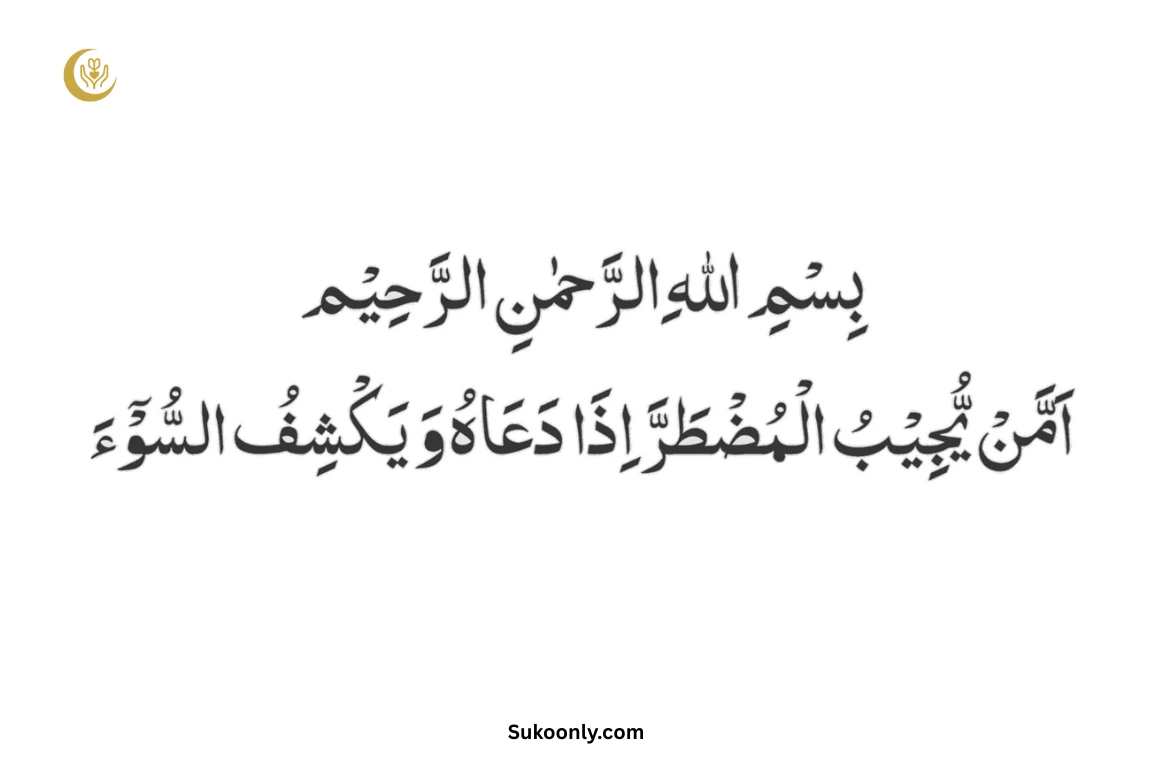
أَمَّنْ يُجِيبُ الْمُضْطَرَّ إِذَا دَعَاهُ وَيَكْشِفُ السُّوءَ وَيَجْعَلُكُمْ خُلَفَاءَ الْأَرْضِ ۗ أَإِلَٰهٌ مَعَ اللَّهِ ۚ قَلِيلًا مَا تَذَكَّرُونَ This ayah reaffirms Tawheed, reminding us that no one besides Allah can answer the call of the distressed or lift their suffering.
Related Verses: Protection and Relief
Transliteration of Ammai Yujibul Muztarra
For those who cannot read Arabic, the transliteration helps in reciting the verse with clear pronunciation. Below is the transliteration of Ammai Yujibul Muztarra from Surah An-Naml (27:62):
Amman yujeebu al-mudtarra idhaa da’aahu wa yakshifu as-soo’a wa yaj’alukum khulafaaa’al-ard; a-ilaahun ma’allaah; qaleelan maa tadhakkaroon
This makes it easier for non-Arabic speakers to include the verse in their du‘a, while observing the adab (etiquette) of Qur’anic remembrance and treating Allah’s words with respect.
Just like the duas of the prophets, this ayah becomes a living supplication.
English Translation & Meaning of Ammai Yujibul Muztarra
The verse Ammai Yujibul Muztarra in Surah An-Naml (27:62) is translated as:
“Who is it that answers the one in desperate need when he calls upon Him, and removes his hardship, and makes you inheritors of the earth? Is there any god with Allah? Little is it that you remember.”
This ayah reminds us that Allah alone responds to the call of the distressed, removes hardship, and grants people stewardship of the earth. It is a direct affirmation of Tawheed (Oneness of Allah), teaching that no one besides Him can bring relief or deliverance.
related verses for protection and relief
Context in the Qur’an (Surah An-Naml 27:62)
The verse Ammai Yujibul Muztarra is part of Surah An-Naml (Chapter 27), a Makkan surah that speaks about Allah’s signs, the mission of His Prophets, and the call to Tawheed.
In verses 59–64, Allah asks a series of questions to make people reflect: Who created the heavens and the earth? Who sends rain from the sky? Who guides you in darkness? And finally—who answers the desperate when he calls and removes hardship?
This context makes clear that Allah alone has power over creation, guidance, and mercy. The verse rejects false reliance on idols or worldly powers and directs the believer’s heart to Allah—the only One who answers du‘a, removes hardship, and grants stewardship of the earth.
When and Why to Recite Ammai Yujibul Muztarra?
Muslims turn to Ammai Yujibul Muztarra in times of tribulation—whether illness, financial struggles, fear, or grief—when every worldly means feels limited. The ayah reminds us that Allah alone answers the muztar (the one in desperate need), removes hardship, and grants relief through His mercy.
- Reciting this verse in du‘a nurtures tawakkul (trust in Allah), strengthens reliance on Him, and brings peace to the heart.
- Many find comfort in it during anxiety, sorrow, or heavy burdens, drawing strength from Allah’s assurance that He responds to those who call upon Him.
FAQs — Ammai Yujibul Muztarra
Yes. You may recite it and ask Allah ﷻ to grant relief to another person in distress. Allah’s mercy is vast, and He answers the call of every servant who turns to Him sincerely—whether for themselves or on behalf of a loved one.
Reciting it in Arabic carries the blessing of uttering Allah’s words exactly as revealed. But you can also make du‘a in your own language alongside it, pouring your heart out to Allah in the words you know best. He understands every language, every thought, and every unspoken need.
📚 For the Wazifa for distress and unanswered duas, including how Ammai Yujibul fits within the broader classification of Quranic Wazifa, see the Complete Wazifa Guide →

Mohammed Basheer is the founder of Sukoonly.com, an Islamic blog focused on duas, prophetic healing, and Qur’anic wisdom. He writes with sincerity and spiritual depth for seekers around the world.
1 thought on “Ammai Yujibul Muztarra — Arabic, Translation, and Meaning”