

Islam is traditionally dated to 610 CE, when the first revelation of the Qur’an was received by Prophet Muhammad ﷺ in the Cave of Hira. This moment marks the beginning of the final divine message in Islamic history. However, from an Islamic theological perspective, Islam is not seen as a new religion founded in the 7th century — but as the continuation of the same monotheistic faith taught by all prophets before him.
The Qur’an presents Islam as submission to Allah alone (tawḥīd), a message preached by earlier prophets such as Adam, Nuh, Ibrahim, Musa, and Isa (peace be upon them). For this reason, Muslims believe Islam began with the first human prophet, even though its final revelation was completed in the lifetime of Prophet Muhammad ﷺ.
In this article, we explore both the historical and spiritual origins of Islam — examining what happened in 610 CE, how revelation unfolded, and how the Qur’anic message connects all prophets within one continuous tradition.
Islam in the Qur’an — The Eternal Religion of Allah?
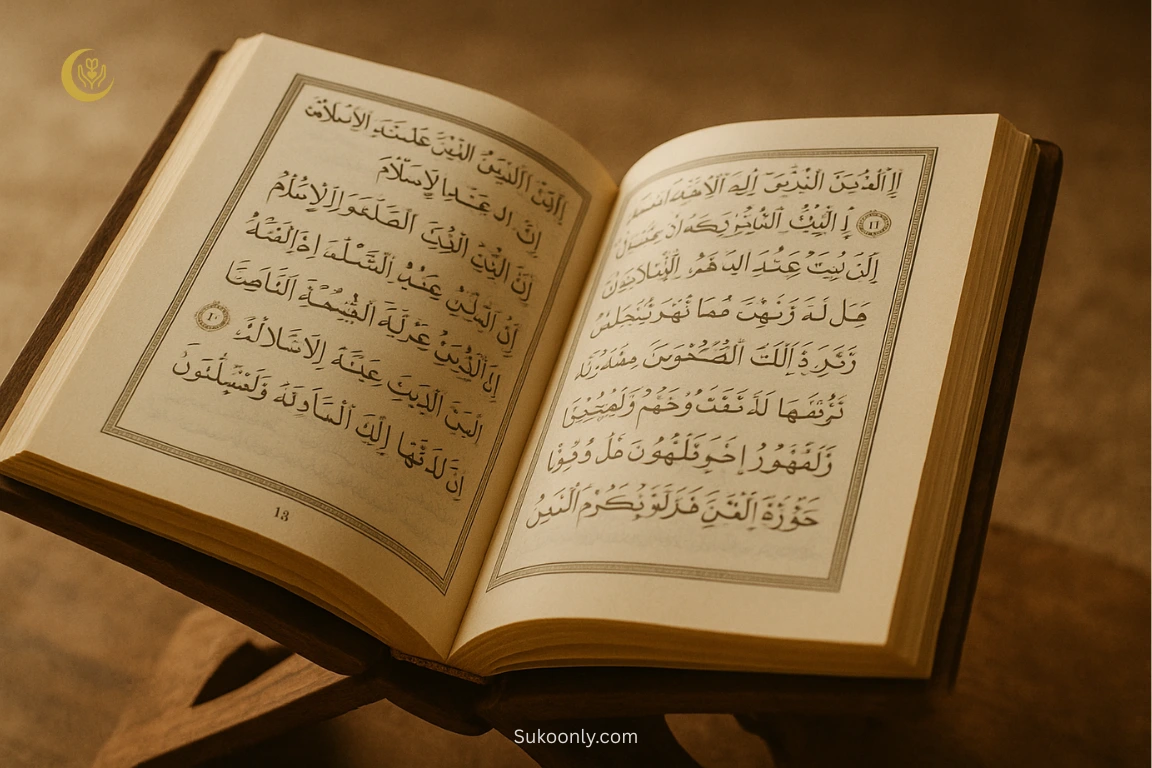
The Qur’an doesn’t speak of Islam as something new or recent. Rather, it teaches us that Islam is the original path—the way of pure devotion to Allah ﷻ that has been part of creation from the very beginning. It is the faith of Tawḥīd, calling every human being to worship Allah alone and to turn away from anything falsely worshipped alongside Him.
Every prophet, from Ādam (عليه السلام) to Muhammad ﷺ, came with this same message: to submit to Allah with sincerity, to live righteously, and to call others to the truth. This is why Allah ﷻ says in the Qur’an: “Indeed, the religion in the sight of Allah is Islam” (3:19). And when the message was completed through the final Prophet ﷺ, Allah declared: “Today I have perfected your religion for you, completed My favor upon you, and chosen Islam as your way” (5:3).
These are not just verses of history—they are reminders of a deep spiritual reality. Islam is not a new religion that began 1,400 years ago; it is the same light that guided all the prophets. What began with Ādam (عليه السلام) was completed and preserved through the Qur’an and the Sunnah of the Prophet ﷺ, offering guidance for every heart, in every time.
The Continuity of Prophets and Revelations
One of the beautiful truths Islam teaches us is that Allah ﷻ has never left humanity in darkness. From the beginning of time, He sent prophets and messengers—each one a light for their people, calling them back to the path of Tawḥīd: to worship Allah alone and live with integrity, compassion, and purpose.
The exact number of prophets is known only to Allah, but some narrations mention as many as 124,000—sent to different nations, at different times, yet all sharing the same message. The Qur’an names just a few, but each one was part of a much larger story of divine care and mercy.
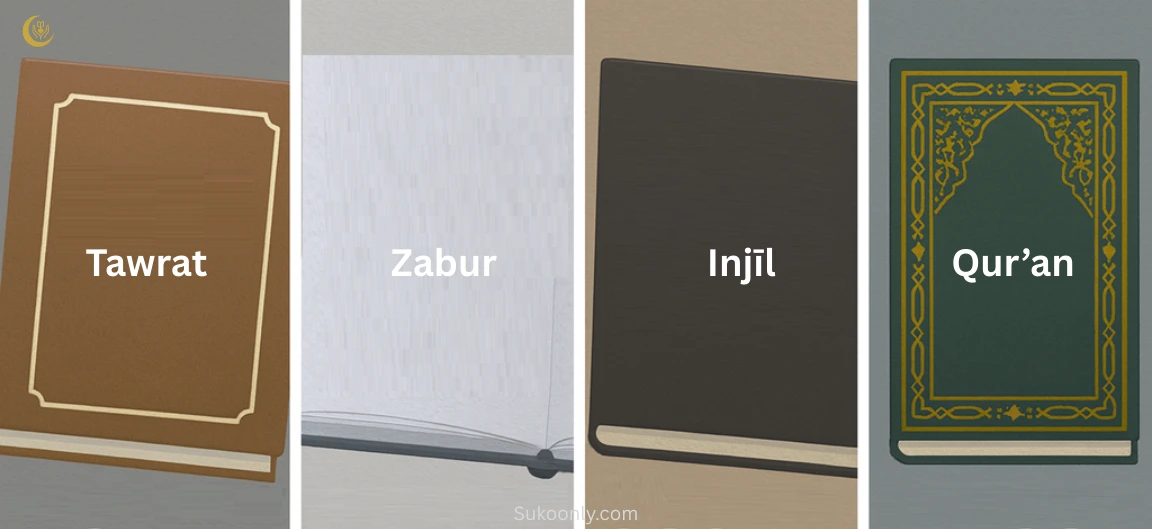
Some prophets were given revealed books to guide their communities. Allah gave the Tawrat to Mūsā (Moses عليه السلام), the Zabur to Dāwūd (David عليه السلام), the Injīl to ʿĪsā (Jesus عليه السلام), and the Qur’an to our beloved Prophet Muhammad ﷺ. Though the languages and circumstances differed, the heart of the message remained the same: turn to Allah, worship Him alone, and follow His guidance.
Over time, people drifted. The earlier scriptures were changed or forgotten, and the clarity of divine truth was lost. But Allah, out of His mercy, continued to send prophets to bring people back. That chain of guidance finally reached its completion with the Prophet Muhammad ﷺ, through whom Allah revealed the Qur’an—a message preserved in both word and meaning, unchanged and unchangeable.
Through the Qur’an, the light that first shone with Ādam (عليه السلام) continues to guide us today—pure, timeless, and full of mercy.
Why 610 CE Is Known as the Founding of Islam?

Islam is the eternal religion of Allah, but 610 CE stands out as a turning point in human history. That year, while in retreat in the Cave of Ḥirāʼ near Makkah, Prophet Muhammad ﷺ received the first verses of the Qur’an through Angel Jibrīl (Gabriel عليه السلام). The words of Surah al-ʿAlaq (96:1–5) opened with a command that would change the course of history: “Read in the name of your Lord who created.”
This was the beginning of Muhammad’s ﷺ prophethood and the final phase of revelation, safeguarded forever in the Qur’an. For the next 23 years, revelation came gradually, shaping belief, worship, ethics, and law for the growing community of believers.
In 622 CE, the Hijrah (migration) to Madinah transformed Islam from a private call into a visible Ummah (community) with its own collective identity, leadership, and social order. While Islam as guidance reaches back to Ādam (عليه السلام), the year 610 CE is remembered as the founding moment of Islam as a distinct religion and a lasting civilization.
Did Islam Exist Before Prophet Muhammad ﷺ?
Yes—it absolutely did.
Islam didn’t begin with the Prophet Muhammad ﷺ. According to the Qur’an, Islam is the timeless path of devotion to Allah ﷻ, revealed to humanity from the very beginning. It is the faith of every prophet, starting with Ādam (عليه السلام), the first human and the first prophet.
Each messenger came with the same essential call: to worship Allah alone, to reject all forms of shirk (idolatry), and to live a life of righteousness. Prophet Nūḥ (Noah عليه السلام) urged his people to abandon their idols. Prophet Ibrāhīm (Abraham عليه السلام) challenged his society’s false gods and rebuilt the Kaʿbah as a center for pure worship. Prophet Mūsā (Moses عليه السلام) led Banī Isrā’īl with the Tawrat, and Prophet ʿĪsā (Jesus عليه السلام) guided his followers with the Injīl. Though they lived in different times and places, they were united in submission to Allah—they were Muslims in the true sense.
What makes the mission of Prophet Muhammad ﷺ unique is not the message—it’s the completion of the message. He was sent as the final messenger, entrusted with the Qur’an: a revelation protected from alteration, meant not for one nation or one era, but for all people until the end of time.
Through him, Islam became a universal message—preserved, perfected, and open to every heart that seeks truth.
FAQs — When Was Islam Founded
These are some of the questions people often ask when trying to understand where and when Islam truly began:
“Read in the name of your Lord who created…” (Surah al-ʿAlaq 96:1–5).
That moment was the start of Islam as a preserved, complete way of life.

Mohammed Basheer is the founder of Sukoonly.com, an Islamic blog focused on duas, prophetic healing, and Qur’anic wisdom. He writes with sincerity and spiritual depth for seekers around the world.