

From an Islamic viewpoint, Islam is the first and original faith — revealed by Allah to Prophet Adam (عليه السلام) and passed down through a chain of prophets, such as Nuh (Noah), Ibrahim (Abraham), Musa (Moses), and Isa (Jesus), until it was completed with Prophet Muhammad ﷺ. Its message has always been the same — to worship Allah alone (tawheed) and live by His guidance — from the very beginning of humanity.
In historical studies, the term “Islam” is usually used for the religion as finalised in the 7th century CE. From this dating perspective, Hinduism (Sanātana Dharma) is seen as older, with its earliest scriptures, the Rigveda, dated by scholars to around 1500–1200 BCE.
This article looks at both sides to explain why the answer depends on the perspective you take. For a deeper understanding of when Islam was founded from both spiritual and historical perspectives, see our dedicated guide.
Historical Origins of Hinduism
From a historical perspective, Hinduism — also called Sanātana Dharma (“the eternal way”) — is one of the world’s oldest living religions. It does not have a single founder, but developed over thousands of years from Vedic traditions and Indus Valley cultural roots.
Its oldest known scriptures are the Vedas, with the Rigveda being the most ancient. Composed in Vedic Sanskrit and dated by scholars to about 1500–1200 BCE, these hymns form the religious and cosmological base of early Vedic religion.
Historical Origins of Islam
From an Islamic perspective, Islam is the first and original faith — revealed by Allah to Prophet Adam (عليه السلام) at the very start of human history. Its central belief, tawheed (worshiping Allah alone), was renewed through prophets like Nuh (Noah), Ibrahim (Abraham), Musa (Moses), Dawud (David), and Isa (Jesus), before being completed with Prophet Muhammad ﷺ.
Islam teaches that earlier revelations — the Tawrat, Zabur, and Injil — are part of the same divine religion. While these books are respected, Muslims believe the Qur’an is the final and fully preserved word of Allah. Learn more about the 25 prophets mentioned in the Quran and their roles in spreading Allah’s message throughout history.
Historical Origins of Christianity
From a Christian perspective, the roots of Christianity go back to the life, teachings, crucifixion, and resurrection of Jesus Christ (ʿĪsa عليه السلام) in 1st century CE. Christians see him as the Son of God and the promised Messiah foretold in the Old Testament.
In Islam, ʿĪsa (Jesus) عليه السلام is honored as one of the mightiest prophets and messengers of Allah, but not divine. Muslims believe the original Injil was later altered and no longer exists in its pure form.
Key Differences in Age — Hinduism vs. Islam
Whether Hinduism or Islam is older depends on the perspective you take. From a historical perspective, Hinduism has the earliest known scriptures — the Rigveda, dated to about 1500–1200 BCE. From an Islamic perspective, Islam is the first religion — revealed to Prophet Adam at the beginning of human history.
Historically dated texts place Hinduism earlier, but in Islamic belief, Islam is the world’s first and oldest faith — continuous from the creation of humanity.
Why People Often Confuse the Oldest Religion Question?
People often disagree because they use different ways to measure it. Historians look at the earliest surviving texts; from that standard, Hinduism (Sanātana Dharma) seems older. From an Islamic perspective, age is measured from the first time Allah’s guidance was revealed to humanity — beginning with the Prophets of Islam, from Adam to Muhammad ﷺ.
FAQs — Origins of Islam and Early Humanity
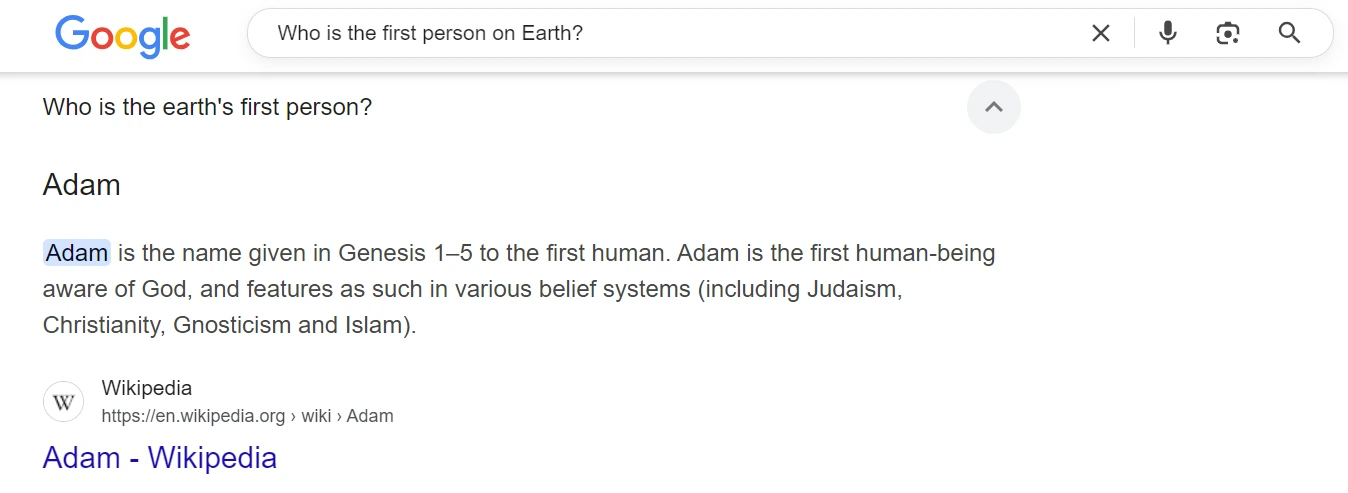
In Islamic belief, the first human was Prophet Adam (عليه السلام), created directly by Allah from clay and given life. Adam was both the first prophet and the first human being, living in submission to Allah — the essence of Islam, regarded as the original religion of humanity. From a historical–scientific perspective, the concept of a “first human” is explored through human evolution and archaeology, which do not identify a specific individual. In Islamic theology, all prophets — starting with Adam — carried the same monotheistic message (tawheed), renewed through Nuh (Noah), Ibrahim (Abraham), Musa (Moses), Dawud (David), and Isa (Jesus), and brought to completion with the Qur’an revealed to Prophet Muhammad ﷺ between 610–632 CE.

Mohammed Basheer is the founder of Sukoonly.com, an Islamic blog focused on duas, prophetic healing, and Qur’anic wisdom. He writes with sincerity and spiritual depth for seekers around the world.