


This page explains how to pray Qiyam al-Layl in a clear, step-by-step format. It covers the procedure, number of rak‘ahs, timing, and how to end with Witr. For background, timing, and distinctions, refer to the main Qiyam al-Layl guide.
When to Pray Qiyam al-Layl?

Qiyam al-Layl is prayed any time after the ‘Isha prayer and before the Fajr prayer. Any voluntary prayer offered during this period is considered part of Qiyam al-Layl.
It can be prayed in the early night, middle, or final part before dawn. There is no set hour required, and the prayer remains valid throughout the night as long as it falls within this window.
While the last third of the night is noted in Islamic teachings as a preferred time, this is not a requirement. Qiyam al-Layl does not depend on a specific time and may be performed whenever one is able between ‘Isha and Fajr.
How to Pray Qiyam al-Layl — Step by Step
Qiyam al-Lail can be performed by anyone seeking closeness to Allah, and its steps are flexible, making it accessible for all levels of worshippers.
Note: The Prophet Muhammad ﷺ commonly prayed 11 rak‘ahs in total, including Witr, during the night. He prayed them in sets of two rak‘ahs, followed by a single Witr rak‘ah at the end. This was his regular practice, but not a fixed requirement for others. (Sources: Bukhari, Muslim)
Here’s how to pray it:
Step-by-Step Guide to Qiyam al-Lail
- Make an intention (niyyah) – Mentally intend to perform Qiyam al-Lail. No verbal statement is required; sincerity in the heart is sufficient.
- Pray in sets of two rak‘ahs – Perform the prayer in units of two rak‘ahs (2 cycles). There is no set maximum — pray as much as you are able.
- Recite from the Qur’an – After Surah Al-Fatihah in each rak‘ah, recite any other surah or passage from the Qur’an. Longer recitation is encouraged but not obligatory.
- End each unit with tasleem – Conclude every two rak‘ahs by saying salām to the right and left (tasleem), completing the unit.
- Conclude with Witr prayer – End your night worship with Witr, prayed in odd numbers (e.g., 1, 3, or 5 rak‘ahs). This completes the nightly Qiyam sequence.
This structure applies whether praying alone or in congregation. You can adjust the pace, recitation length, and number of units based on your time, ability, and spiritual focus.
How Many Rak‘ahs for Qiyam al-Lail?
There is no fixed number of rak‘ahs (units of prayer) for Qiyam al-Lail. It is prayed in sets of two, and a person may perform as few or as many as they are able.
- Some Muslims may pray 2 rak‘ahs when time or energy is limited.
- Others may perform 8, 10, or more, especially during Ramadan.
- The night prayer traditionally ends with Witr, which is prayed in odd numbers (1, 3, 5, etc.).
The Prophet Muhammad ﷺ is authentically reported to have prayed 11 rak‘ahs in total, including Witr, on many nights (Bukhari, Muslim). However, this was his personal practice, not a requirement.
Key Principle: Flexibility is part of the mercy of Qiyam al-Lail. What matters most is sincerity, consistency, and making time for night worship—even if it’s just two short rak‘ahs.
What to Recite During Qiyam al-Lail?
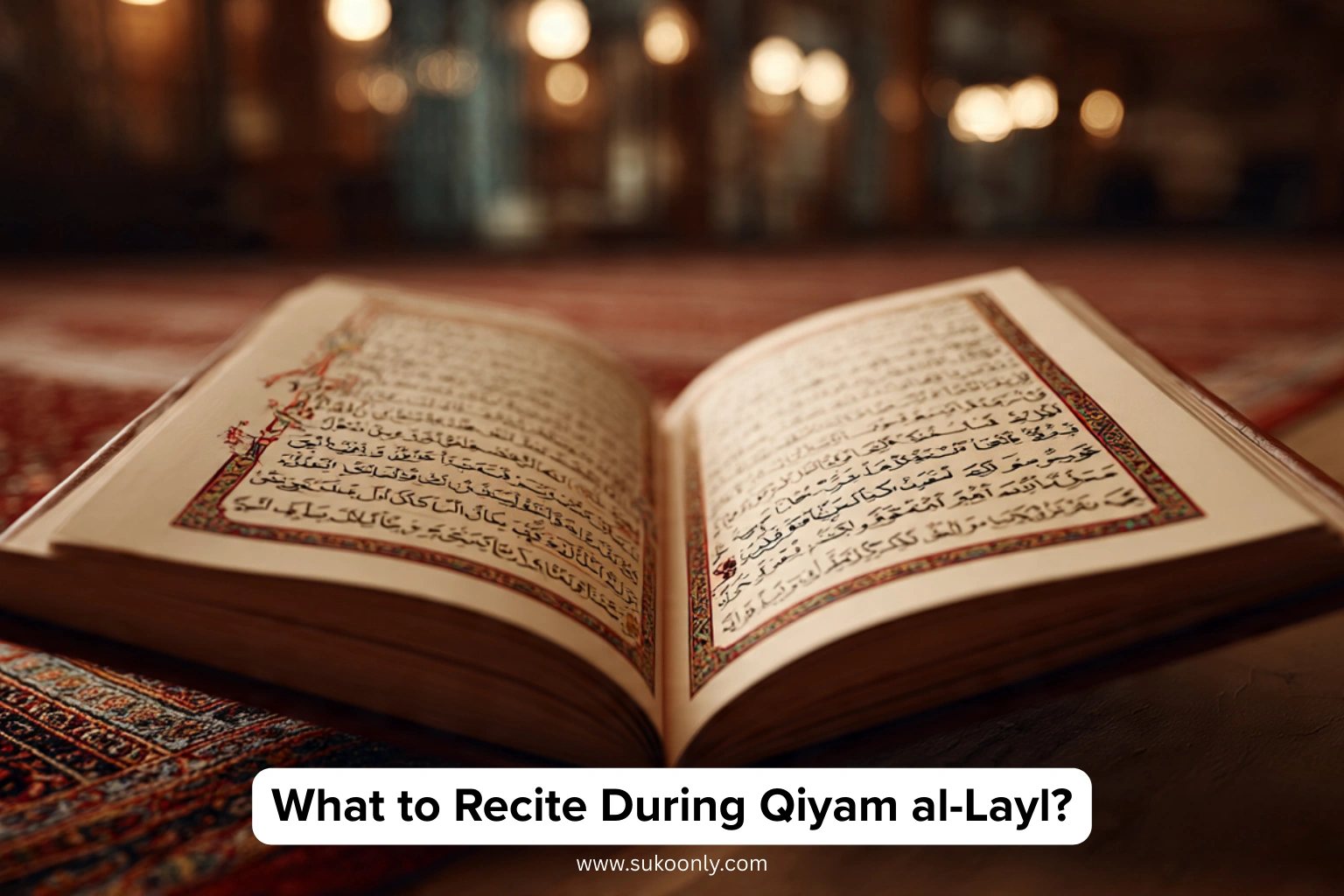
In Qiyam al-Lail, each rak‘ah begins with Surah Al-Fatihah, followed by any portion of the Qur’an. There are no specific surahs required, and recitation length depends entirely on the worshipper’s ability, comfort, and focus.
Key Recitation Guidelines
- Surah Al-Fatihah is recited in every rak‘ah.
- Follow it with any other surah or verses from the Qur’an — long or short.
- There is no fixed order or sequence required beyond the standard prayer rules.
- Clear, thoughtful, and focused recitation is preferred, even if slow or brief.
Many Muslims choose to recite longer passages during Qiyam to lengthen the standing (qiyam), while others opt for shorter verses for ease — both are valid and rewarded.
Tip: If you are unsure what to recite, select surahs you’ve memorized or follow along with a Qur’an copy. Sincerity is more important than length or fluency.
Dua During Qiyam al-Lail

Dua (supplication) is a powerful and recommended act during Qiyam al-Lail, especially in moments of deep humility such as sujood (prostration) or after completing the prayer.
When and How to Make Dua in Qiyam?
- During Sujood (prostration): This is the most recommended time. The Prophet ﷺ said, “The closest a servant comes to his Lord is while he is prostrating…” (Sahih Muslim)
- After Witr Prayer: Many Muslims use this time to raise their hands and make heartfelt personal duas.
- Any time between rak‘ahs or after prayer: Especially in the last third of the night, which is considered the best time for dua to be accepted.
FAQs — How to Pray Qiyam al-Layl
Yes. Sleeping is not required to pray Qiyam al-Layl. It can be performed at any time between ‘Isha and Fajr. Sleep is only a condition for Tahajjud, not for Qiyam al-Layl.

Mohammed Basheer is the founder of Sukoonly.com, an Islamic blog focused on duas, prophetic healing, and Qur’anic wisdom. He writes with sincerity and spiritual depth for seekers around the world.