
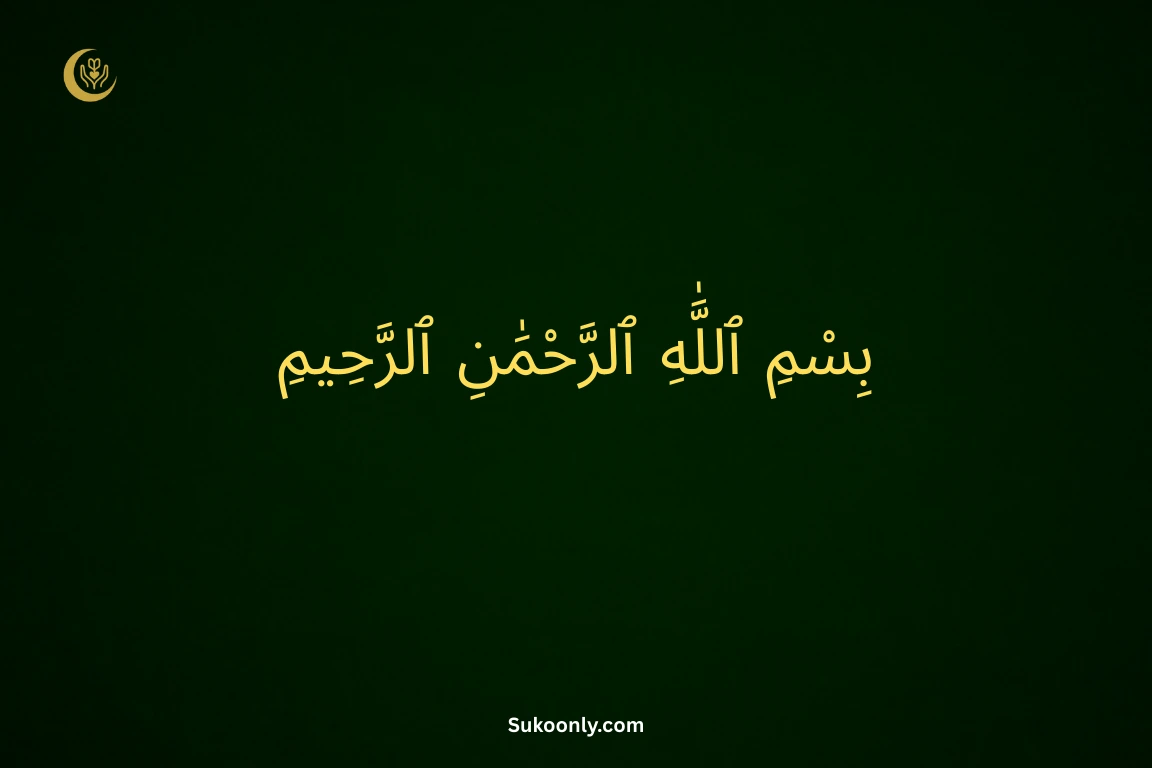
“Bismillah Hir Rahman Nir Rahim” (بِسْمِ ٱللَّٰهِ ٱلرَّحْمَٰنِ ٱلرَّحِيمِ) is one of the most sacred and frequently recited phrases in Islam. Known as the Basmala, it translates to:
“In the name of Allah, the Most Gracious, the Most Merciful.”
This phrase isn’t simply a ritual formula — it’s a divine invocation of mercy, packed with spiritual meaning, Qur’anic authority, and daily relevance. Uttering the Basmala at the start of any action transforms that deed into an act of ibadah (worship). It serves as a spiritual reset, aligning intention (niyyah) with tawheed — the firm belief in the Oneness of Allah ﷻ.
The Basmala appears at the beginning of 113 surahs in the Qur’an, underscoring its foundational role in Islamic life. From reading Qur’an to eating, writing, entering the home, or beginning a journey, Muslims are encouraged to start with “Bismillah” — drawing barakah (blessing) and seeking protection, mercy, and success.
This article will explore the Qur’anic origins, linguistic beauty, and spiritual benefits of “Bismillah Hir Rahman Nir Rahim” and how Muslims can embed it in every aspect of daily life for continuous reward.Bismillah Hir Rahman Nir Rahim — Arabic, Transliteration & Translation
“Bismillah Hir Rahman Nir Rahim”, often called the Basmalah, is one of the most recited and beloved phrases in Islam. It marks the beginning of 113 chapters in the Qur’an and is woven into nearly every aspect of a Muslim’s daily life. Whether eating, writing, traveling, or simply entering a room, saying this phrase invites the remembrance of Allah ﷻ and sets a tone of humility and blessing. In Arabic, it is written:Bismillah Hir Rahman Nir Rahim Linguistic Breakdown & Root Meaning
Spiritual Meaning & Emotional Impact of Bismillah Hir Rahman Nir Rahim
The phrase “Bismillah Hir Rahman Nir Rahim” isn’t just something we say out of habit—it’s a heartfelt reminder that every moment begins with Allah’s name, mercy, and guidance. It reflects our intention (niyyah) to act for the sake of Allah, our trust (tawakkul) in Him, and our awareness of His infinite compassion.
When we say “Bismillah,” we’re doing more than starting a task—we’re inviting barakah (blessings) into it. Whether we’re about to eat, travel, study, or open a door, this simple phrase turns daily routines into acts of worship (ibadah). It’s part of the Sunnah of the Prophet ﷺ, who began every good deed by remembering Allah ﷻ.
It also brings peace to the heart. In moments of stress, fear, or uncertainty, saying “Bismillah” centers us. By calling on Ar-Rahman and Ar-Rahim, we’re reminded of Allah’s mercy—mercy for all creation and mercy meant especially for us as believers. That reminder alone is enough to calm the soul and carry us forward.
When to Recite “Bismillah Hir Rahman Nir Rahim”?
The Prophet ﷺ taught the Ummah to start important actions with Allah’s name so that the moment carries barakah, remains protected from Shayṭān, and becomes grounded in sincere intention. Muslims recite “Bismillah” before daily tasks, acts of worship, travel, and moments that require focus or care. It is also said before reading the Qur’an, except Surah At-Tawbah, which intentionally begins without it due to its tone of divine disassociation. When to Recite It:
Bismillah Hir Rahman Nir Rahim – Common Mispronunciations & Correction Tips
Pronouncing this phrase correctly is part of adab toward Allah’s Names and helps maintain presence in dhikr. A frequent mistake is merging all the words into one continuous sound without pausing, which blurs the clarity of each Name. Words like “Ar-Rahman” and “Ar-Rahim” contain emphatic letters and shaddahs that require careful articulation. Listening to skilled qurrā’ or learning tajweed helps believers recite the phrase with beauty and correctness. Common Issues & Correction Tips:
Related Phrases & Their Contextual Differences
While “Bismillah Hir Rahman Nir Rahim” is the full and beautiful phrase that begins many surahs and daily actions, there are other powerful phrases of dhikr used in different moments—with each one carrying its own spiritual weight.
The shorter version, simply “Bismillah,” is often said before things like eating, drinking, opening a door, or starting a task. Though brief, it still holds the blessing of starting in Allah’s name, helping us stay mindful and sincere in our intention (niyyah).
For protection, the Prophet ﷺ taught us to recite:
“Bismillahilladhi la yadurru ma‘asmihi shay’un fil-ardi wa la fissamaa wa Huwas-Samee’ul Aleem”
“In the name of Allah, with whose name nothing in the heavens or earth can cause harm. He is the All-Hearing, the All-Knowing.”
This beautiful dua is meant to be said three times in the morning and evening, as found in authentic hadith, for seeking Allah’s protection from harm.
Another common phrase is “Tawakkaltu ‘ala Allah”—“I place my trust in Allah.” It’s usually said when leaving the house, facing something uncertain, or stepping into the unknown. While “Bismillah” is about beginning with Allah’s name, “Tawakkaltu” is about walking forward with trust in His plan. Both bring us closer to Allah ﷻ, but they serve different purposes—and using each one with awareness brings more meaning to our day.
FAQs — Bismillah Hir Rahman Nir Rahim
No, the shorter form “Bismillah” is accepted for daily tasks like eating, entering the home, or changing clothes. The full phrase offers more depth, invoking both Rahman (the Universally Merciful) and Rahim (the Especially Merciful)—but it’s not obligatory every time.
Yes, “Bismillah Hir Rahman Nir Rahim” is the first verse of Surah Al-Fatiha and appears at the beginning of every surah except Surah At-Tawbah. It’s also part of Prophet Sulayman’s letter in Surah An-Naml (27:30)—proving its Qur’anic origin and prophetic usage.
It unlocks barakah (blessing), protects from shaytaan’s interference, and aligns actions with pure intention (niyyah). Prophet ﷺ said, “Every important matter that does not begin with ‘Bismillah’ is cut off (from blessing).” (Ibn Hibban)
Yes. While verbalizing it softly brings more presence, silent recitation or saying it in your heart is still valid—especially in public or awkward settings. The intention matters most in the remembrance of Allah ﷻ.
Non-Muslims can say it respectfully, especially if exploring Islamic practices. However, mockery or misuse is impermissible. For Muslims, it’s a form of worship, so reverence and sincerity are key.
The absence signifies severity. Surah At-Tawbah was revealed as a disavowal of treaties with polytheists, carrying a tone of divine warning. Scholars say the merciful tone of “Bismillah” did not match the Surah’s stern message.
Definitely. Teaching kids to say “Bismillah” before meals, writing, or sleeping instills mindfulness and connects their actions with divine consciousness from a young age. Start with the short form and later introduce the full phrase gradually.
More in the Islamic Phrases Series
Hub Page
Related Pages

Mohammed Basheer Orsala is the founder of Sukoonly.com - an Islamic resource dedicated to verified Quranic duas and Sunnah-based supplications. A self-taught Islamic researcher, he has studied classical texts and authenticated hadith collections including the works of Imam al-Nawawi, Shaykh al-Albani, Ibn Hajar al-Asqalani, and Ibn al-Qayyim. He writes to make verified Prophetic supplications accessible to English-speaking Muslims worldwide.