

Umrah is more than a journey—it is a calling from Allah ﷻ that stirs the heart and draws the soul toward His sacred house in Makkah. For countless believers across generations, it has been a moment of quiet surrender, of repentance, and of spiritual rebirth.
Though not obligatory, Umrah holds a cherished place in the hearts of Muslims. It is an opportunity to step away from the noise of the world and stand in a place where countless prayers have been whispered and tears have fallen in devotion. Every step taken in this sacred land—every glance toward the Kaaba, every word of dhikr—is a step closer to the mercy of Allah.
This guide is a humble effort to walk with you through the spiritual, historical, and practical dimensions of Umrah—its purpose, its rituals, and the blessings it brings. Whether you are preparing to embark on the journey or simply seeking to understand its depth, may these words serve as a companion and a reminder of the beauty that lies in worship.
What is Umrah? — Definition & Significance in Islam
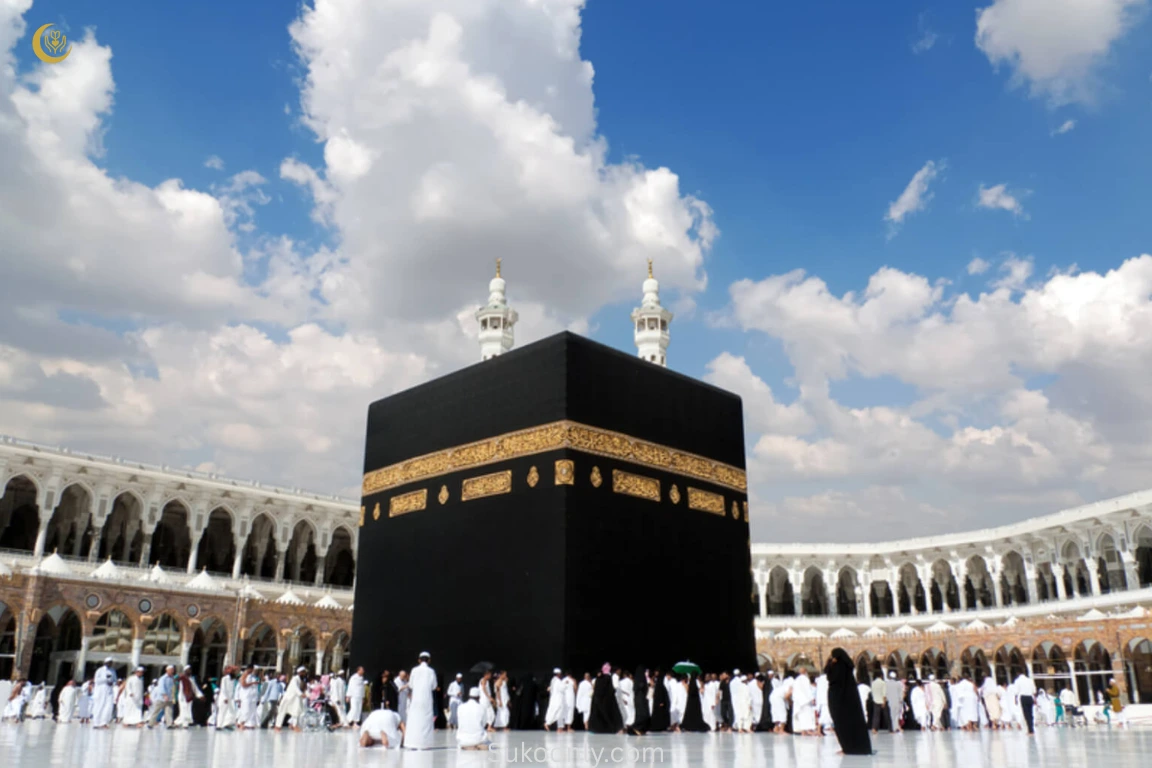
In Islamic jurisprudence (fiqh), ʿUmrah is a non-obligatory pilgrimage to Makkah al-Mukarramah, performed as an act of devotion and spiritual renewal. It consists of four core rites:
- Entering iḥrām from a miqāt
- Performing ṭawāf around the Kaaba
- Walking in saʿī between Ṣafā and Marwah
- Concluding with ḥalq (shaving) or taqṣīr (trimming)
These rituals express humility, obedience, and a yearning for closeness to Allah ﷻ.
The majority of scholars from the Hanafi, Maliki, and Shafi’i schools classify ʿUmrah as Sunnah Muʾakkadah, while the Hanbali school considers it fard once in a lifetime for those with the means.
Often called the “lesser pilgrimage” (al-ḥajj al-aṣghar), ʿUmrah differs from Hajj in both structure and timing. It omits key rites such as ʿArafah, Muzdalifah, and udhiyah, and may be performed at any time of the year.
Though not among Islam’s five pillars, ʿUmrah holds significant spiritual merit. The Prophet ﷺ performed it multiple times and described it as a means of forgiveness and divine closeness. For the sincere believer, ʿUmrah is a journey of purification and return—a renewal of the bond between servant and Lord.
For reference, recite tawaf ke 7 chakkar ki dua
Pillars (Arkan) and Obligatory Acts (Wajibat) of Umrah
The sacred rites of Umrah are divided into two essential categories: the pillars (Arkān)—without which Umrah is incomplete and invalid—and the obligatory acts (Wājibāt)—which must be fulfilled but, if missed, can be compensated through a sacrificial offering (dam). This distinction is agreed upon by scholars across all four Sunni schools of thought.
There are three pillars of Umrah, unanimously recognized:
- Entering the state of Ihrām
- Performing Ṭawāf around the Kaaba
- Completing Saʿī between Ṣafā and Marwah
The final rite, Ḥalq (shaving the head) or Taqṣīr (trimming the hair), is considered wājib. If omitted, it does not invalidate the Umrah, but must be atoned for through fidya—a reminder of the care and humility with which this journey must be carried out.
The Deeper Meaning of Each Rite
Ihrām is not merely the donning of seamless white garments—it is the beginning of a sacred transformation. With the utterance of niyyah (intention) at a designated Mīqāt, the pilgrim enters a state of spiritual sanctity. In this state, actions that are normally permissible—such as grooming, applying perfume, or raising one’s voice—become prohibited, out of reverence for the journey now begun. It is a reminder that before Allah ﷻ, we come stripped of status, ego, and distraction—clothed only in humility and hope.
Ṭawāf—circling the Kaaba seven times, beginning at the Ḥajar al-Aswad (Black Stone)—is a powerful expression of love and surrender. With every round, the believer reaffirms that Allah ﷻ is the center of their life. It is a walking dhikr, a rhythmic echo of tawḥīd, drawing the soul ever closer to its Creator.
Saʿī, the walk between Ṣafā and Marwah, commemorates the unwavering faith of Hājar (عليها السلام) as she searched for water for her son Ismāʿīl (عليه السلام). Her steps, born of desperation yet full of trust, became a rite enshrined in the pilgrimage itself. Saʿī teaches us resilience, hope, and reliance upon the mercy of Allah—especially when the path ahead feels uncertain.
Ḥalq (shaving) or Taqṣīr (trimming) marks the completion of Umrah. More than a physical act, it is a spiritual release—a symbolic letting go of pride, past mistakes, and worldly attachment. It is the outward sign of an inward renewal.
Each of these rites carries both legal weight and spiritual depth. If any pillar is omitted, the entire Umrah is invalid. If a wājib is missed, it must be rectified through expiation (dam)—underscoring the sanctity of every step taken on this sacred path. In every movement, every intention, the pilgrim is called to walk with sincerity, presence, and awe before Allah ﷻ.
Difference Between Hajj and Umrah — Complete Comparison
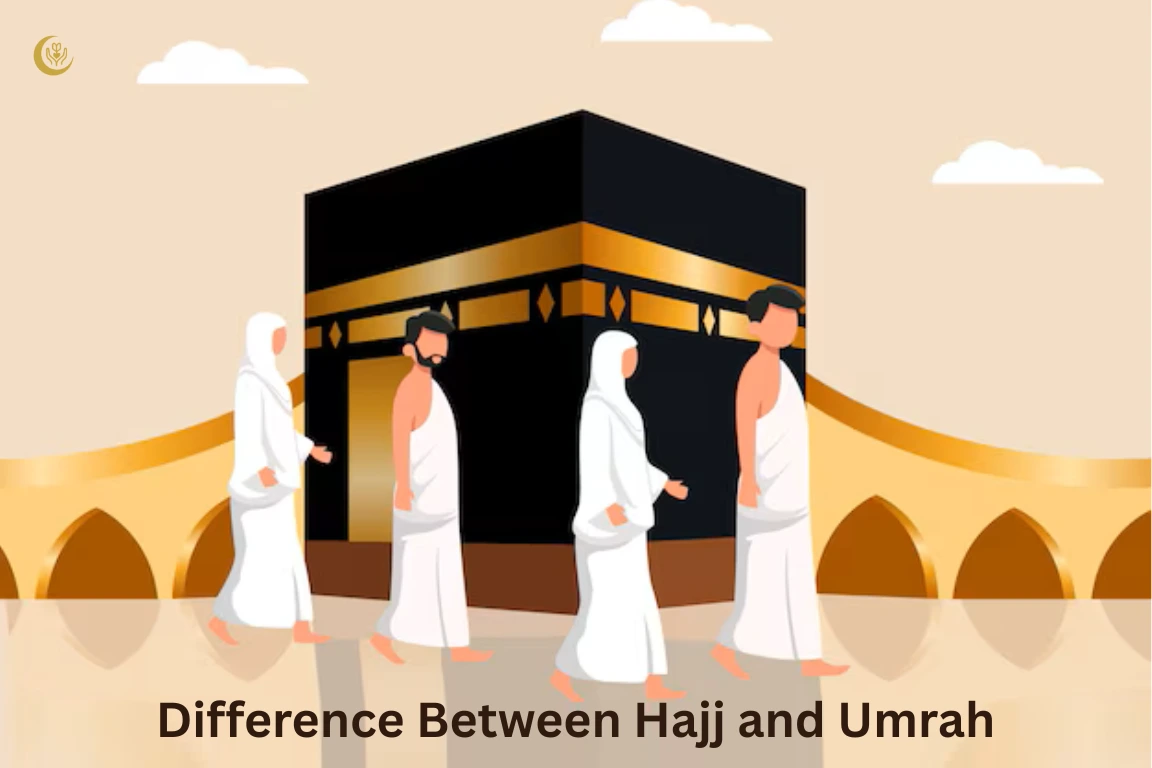
Though both Hajj and ʿUmrah are sacred acts of pilgrimage to Makkah, they differ in legal status, timing, rituals, and level of obligation.
Hajj is one of the five pillars of Islam (arkān al-Islām) and is fard ʿayn—an individual obligation upon every adult Muslim who is physically and financially able. It must be performed at least once in a lifetime. In contrast, ʿUmrah is generally considered a highly recommended Sunnah (Sunnah Muʾakkadah) by most scholars, while the Hanbali school holds it to be fard once for those capable.
Hajj is time-bound, performed exclusively between the 8th and 13th of Dhū al-Ḥijjah, while ʿUmrah may be performed at any time of the year, making it more accessible.
The rituals differ as well. Hajj includes Wuquf at ʿArafah, overnight stays in Minā and Muzdalifah, stoning of the Jamarāt, and the ritual sacrifice (hady)—none of which are part of ʿUmrah. The rites of ʿUmrah are limited to Ihrām, Ṭawāf, Saʿī, and Ḥalq or Taqṣīr.
In terms of duration and intensity, Hajj typically spans several days and is physically demanding, while ʿUmrah can often be completed in a few hours and is less strenuous.
Both carry immense spiritual reward. A Hajj Mabroor, performed sincerely and correctly, results in the forgiveness of all prior sins. ʿUmrah serves as kaffārah, expiating sins between one ʿUmrah and the next. Ultimately, both are opportunities for purification, renewal, and nearness to Allah ﷻ.
| Aspect | Hajj | Umrah |
|---|---|---|
| Obligation | Farḍ (obligatory once in a lifetime) | Sunnah mu’akkadah or obligatory once (depends on school) |
| Timing | Only between 8–13 Dhū al-Ḥijjah | Any time of the year |
| Duration | 5–6 days | A few hours |
| Core Rites (Shared) | Iḥrām, Ṭawāf, Saʿī, Ḥalq/Taqṣīr | Iḥrām, Ṭawāf, Saʿī, Ḥalq/Taqṣīr |
| Exclusive Rites | ʿArafah, Muzdalifah, Minā, Ramy al-Jamarāt, Qurbānī, Tawāf al-Ifāḍah | None: No ʿArafah, no Ramy, no Mabīt, no sacrifice |
| Sacrifice (Hady) | Required for Tamattuʿ and Qirān | Not required |
| Fiqh Opinions | Consensus: Obligatory | Hanafī/Mālikī: Sunnah; Shāfiʿī/Ḥanbalī: Obligatory |
History of ʿUmrah — From the Prophet ﷺ to Present Day
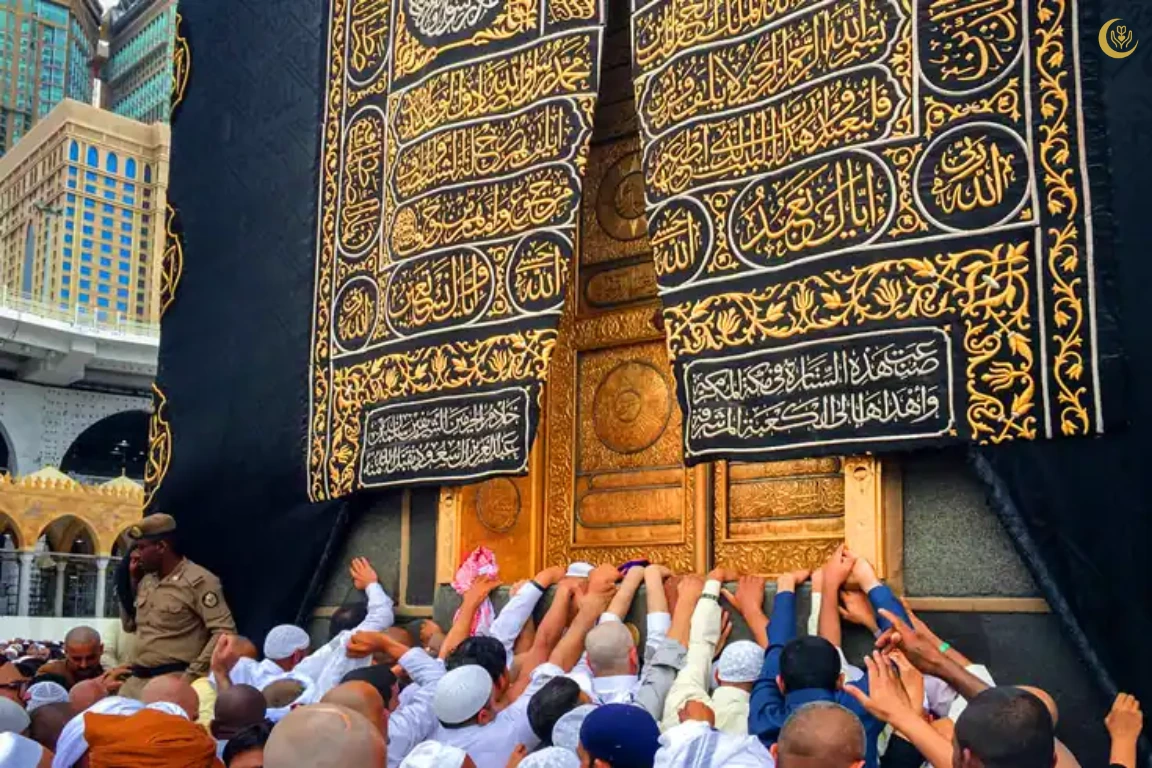
The origins of ʿUmrah reach back to pre-Islamic Arabia, when tribes such as the Quraysh honored the Kaaba as a sacred structure built by Prophet Ibrāhīm (عليه السلام) and Ismāʿīl (عليه السلام). Though venerated, the rituals surrounding it had become corrupted by idolatry and cultural distortions.
With the advent of Islam, Prophet Muhammad ﷺ restored the pilgrimage to its original monotheistic essence—purifying its rites and aligning them with tawḥīd. Among his several ʿUmrah journeys, the most notable followed the Treaty of al-Ḥudaybiyyah. Although the Muslims were prevented from entering Makkah in 6 AH, they returned the following year to perform ʿUmrat al-Qaḍāʾ, reaffirming their commitment to peaceful worship and the right to access the sacred sanctuary.
Following the Prophet’s ﷺ era, the Khulafāʾ al-Rāshidūn and successive Islamic empires—Umayyad, ʿAbbāsid, and Ottoman—invested in supporting pilgrims through the development of caravan routes, rest stations, and waqf systems. These efforts ensured safe passage for believers from across the Muslim world.
In the modern era, Saudi Arabia oversees ʿUmrah under the Ministry of Hajj and Umrah. Through advancements such as digital platforms (e.g., Nusuk), high-speed transport, and crowd management systems, access has expanded while maintaining reverence for the sacred.
Despite evolving logistics, the essence of ʿUmrah remains unchanged—a spiritual journey of humility, repentance, and nearness to Allah ﷻ, echoing the footsteps of countless believers throughout history.
Meaning of Umrah in Arabic & Urdu — Linguistic and Religious Perspectives
The term ʿUmrah (عُمرة) derives from the Arabic root ʿamara (ع-م-ر), which conveys meanings such as to visit, to enliven, and to bring life to a place. Linguistically, it reflects a reverent visitation; spiritually, it signifies approaching the Kaaba with humility, devotion, and a heart seeking nearness to Allah ﷻ.
The Qur’an establishes ʿUmrah as a distinct act of worship. Allah ﷻ says: “And complete the Hajj and the ʿUmrah for Allah.” Its spiritual merit is further affirmed in the Sunnah: “ʿUmrah to ʿUmrah is an expiation for whatever (sins) come in between them.” These texts highlight ʿUmrah as a journey of purification, renewal, and divine closeness.
(Surah Al-Baqarah, 2:196)
(Bukhari & Muslim)
In Urdu-speaking cultures, ʿUmrah also carries emotional and communal significance. The phrase “Umrah karke aaye hain” reflects not only physical return but also a sense of spiritual elevation and communal respect. It is often seen as a blessed milestone within families and communities.
While Arabic emphasizes the scriptural and linguistic roots of ʿUmrah, Urdu reflects its emotional and social reverence. Together, they offer a holistic view of ʿUmrah—as both a sacred ritual and a deeply personal spiritual journey.
When is the Best Time to Perform ʿUmrah?
The best time to perform ʿUmrah is a deeply personal decision—one shaped by spiritual intention, physical readiness, and the practical realities of life. While ʿUmrah can be performed at any time of the year, certain seasons carry greater reward and historical resonance, making them especially meaningful for many believers.
Spiritual Rewards Throughout the Year
Among the most blessed times to perform ʿUmrah is during the holy month of Ramadan. The Prophet ﷺ said:
“An ʿUmrah in Ramadan is equal [in reward] to performing Hajj with me.”
(Narrated in Bukhari and Muslim)
This powerful hadith has moved the hearts of countless pilgrims, drawing them to the Haram in pursuit of immense reward, forgiveness, and spiritual elevation. For those seeking closeness to Allah ﷻ during the month of mercy, ʿUmrah in Ramadan becomes a cherished goal.
Other sacred months—such as Rajab, Muharram, and Dhul Qaʿdah—are also seen as noble times for pilgrimage, as they carry historical importance in Islamic tradition and are marked by divine blessings.
Off-Peak vs. Ramadan ʿUmrah
While Ramadan ʿUmrah offers unmatched reward, it is also the most crowded and physically demanding period. Long waiting times, intense heat, and the sheer volume of people can be a test of patience and stamina.
For many, especially elderly pilgrims, families with young children, or those seeking a quieter atmosphere, traveling during off-peak months—such as Muharram, Safar, or the early Gregorian months—provides a more serene and spacious experience. With fewer crowds, pilgrims often find greater khushūʿ (focus and tranquility) during Tawāf and Saʿī, and more time for personal reflection in the sacred precincts.
Practical Considerations: Weather, Crowds & Cost
The climate in Makkah varies significantly throughout the year. Summer temperatures (May to September) can exceed 45°C (113°F), posing a challenge for those unaccustomed to intense heat. By contrast, the winter months (December to February) offer cooler, more manageable conditions, making physical rituals more comfortable.
From a financial standpoint, peak times—especially Ramadan, school holidays, and end-of-year vacation seasons—often come with higher travel costs, limited accommodation, and longer visa processing times. Off-peak months, on the other hand, tend to be more affordable and logistically easier to manage.
The Best Time Is When Allah Makes the Path Easy
In the end, the most blessed time to perform ʿUmrah is when your heart longs for it, and Allah ﷻ opens the way. Whether in the serenity of an off-peak morning or amid the sacred nights of Ramadan, the sincerity of your intention is what gives your journey its true weight.
When the heart is ready, and the path is clear, that moment becomes your perfect time.
Types of ʿUmrah — ʿUmrah al-Mufradah & ʿUmrah al-Tamattuʿ
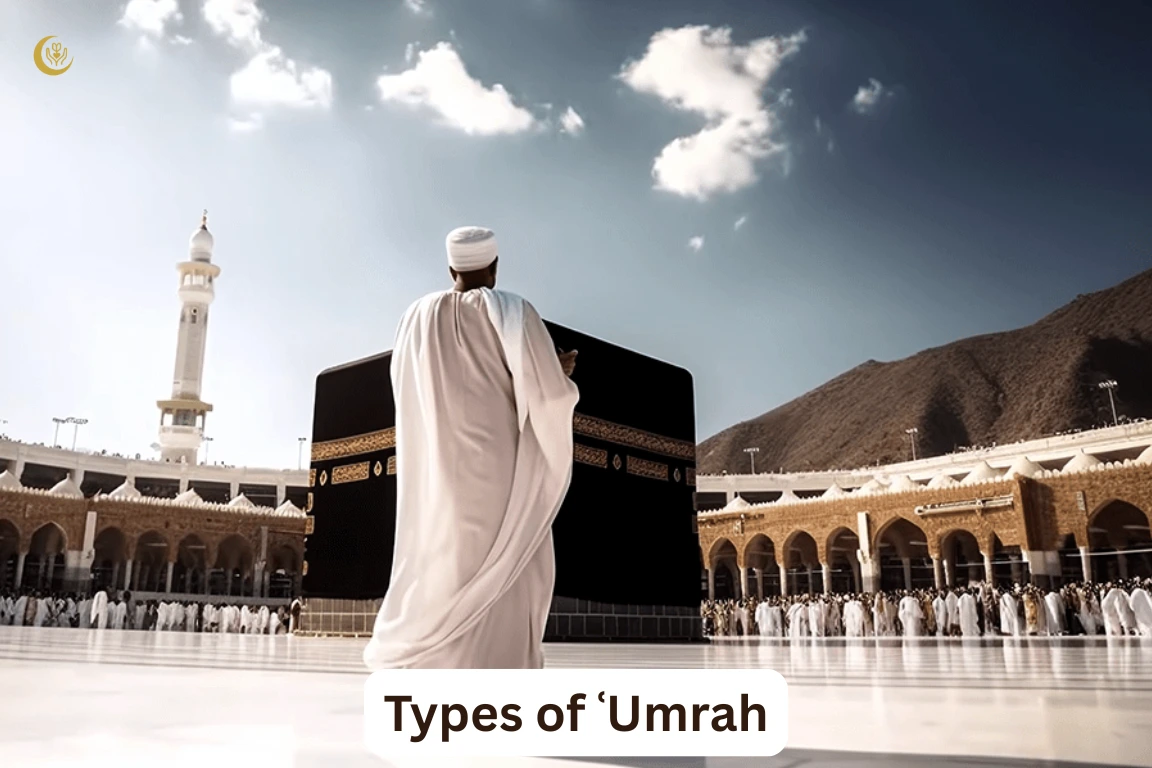
In Islamic pilgrimage, there are two main forms of ʿUmrah, each with its own timing, sequence, and purpose. Knowing the distinction helps pilgrims prepare properly and follow the Sunnah with confidence.
1. ʿUmrah al-Mufradah — Independent ʿUmrah
This type is performed on its own, separate from Hajj, and can be undertaken at any time of the year. The pilgrim enters iḥrām from the miqāt, completes ṭawāf around the Kaʿbah, performs saʿī between Ṣafā and Marwah, and ends with taḥallul—shaving or trimming the hair. Many choose this form for its flexibility and for the chance to worship in Makkah outside the intense Hajj season.
2. ʿUmrah al-Tamattuʿ — Combined with Hajj
This form is performed during the months of Hajj—Shawwāl, Dhul-Qaʿdah, and the first days of Dhul-Ḥijjah—as part of a single journey that includes both ʿUmrah and Hajj. The pilgrim first completes the rites of ʿUmrah, exits iḥrām, and later re-enters iḥrām for Hajj before the standing at ʿArafāt. It combines two acts of worship in one trip, offering great spiritual reward but requiring careful timing and preparation.
Preparation for Umrah
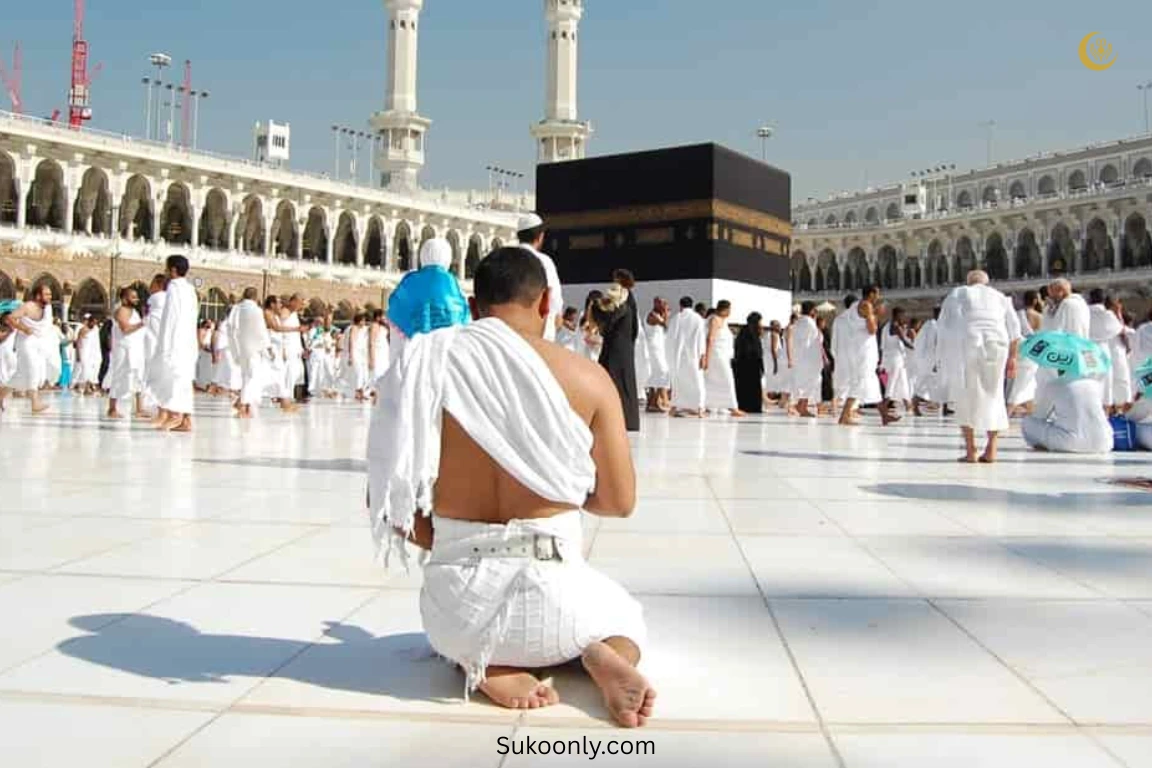
Getting ready for Umrah is part of the journey itself. It’s a time to slow down, reflect, and prepare—physically, mentally, and spiritually—for one of the most meaningful acts of worship. From gathering documents to renewing your niyyah, every small step helps pave the way for a smoother and more heartfelt pilgrimage.
Visa & Travel Documents
Start by checking your passport validity—it should be valid for at least six months from your travel date. Apply for the Umrah visa through a reliable travel agency or the official Nusuk platform. You’ll usually be asked for:
- A recent passport-size photo
- Confirmed flight and hotel bookings
- A COVID-19 vaccination certificate or any updated health requirements
It’s wise to keep both printed and digital copies of your documents. Store them somewhere safe and easy to access, especially during airport checks or when checking in to your hotel.
Health & Spiritual Readiness
Umrah can be physically demanding. You’ll walk long distances, often in crowded areas, and spend time standing in prayer. A few weeks before you go, try to:
- Walk daily or do light cardio to build stamina
- Stay hydrated and eat nutritious meals
- Visit your doctor if needed, and bring any prescribed medications
Spiritually, this is a time to center yourself. Review the steps of Umrah (manāsik), memorize or revise key duas, and renew your intention with sincerity. The more you understand the meaning behind each act, the more present and connected you’ll feel when the time comes.
What to Pack for Umrah?
Pack simply but thoughtfully. Focus on comfort, cleanliness, and items that support your worship:
- Men: At least two clean sets of iḥrām
- Women: Loose-fitting, modest clothing that meets Islamic guidelines
- Avoid: All scented products once in iḥrām
Other helpful items include:
- A tasbeeh counter or misbaha
- A pocket-sized dua book or authentic app
- Basic medications and a few pain relievers
- Electrolyte packets or hydration salts
- Comfortable sandals, a foldable prayer mat, and a refillable water bottle
- Luggage tags with your name, phone number, and hotel address
Most importantly, keep your iḥrām accessible in your carry-on, as you’ll need it before crossing the miqāt, where you’ll formally make your intention for Umrah.
FAQs — Umrah & Its Rulings

Mohammed Basheer is the founder of Sukoonly.com, an Islamic blog focused on duas, prophetic healing, and Qur’anic wisdom. He writes with sincerity and spiritual depth for seekers around the world.