
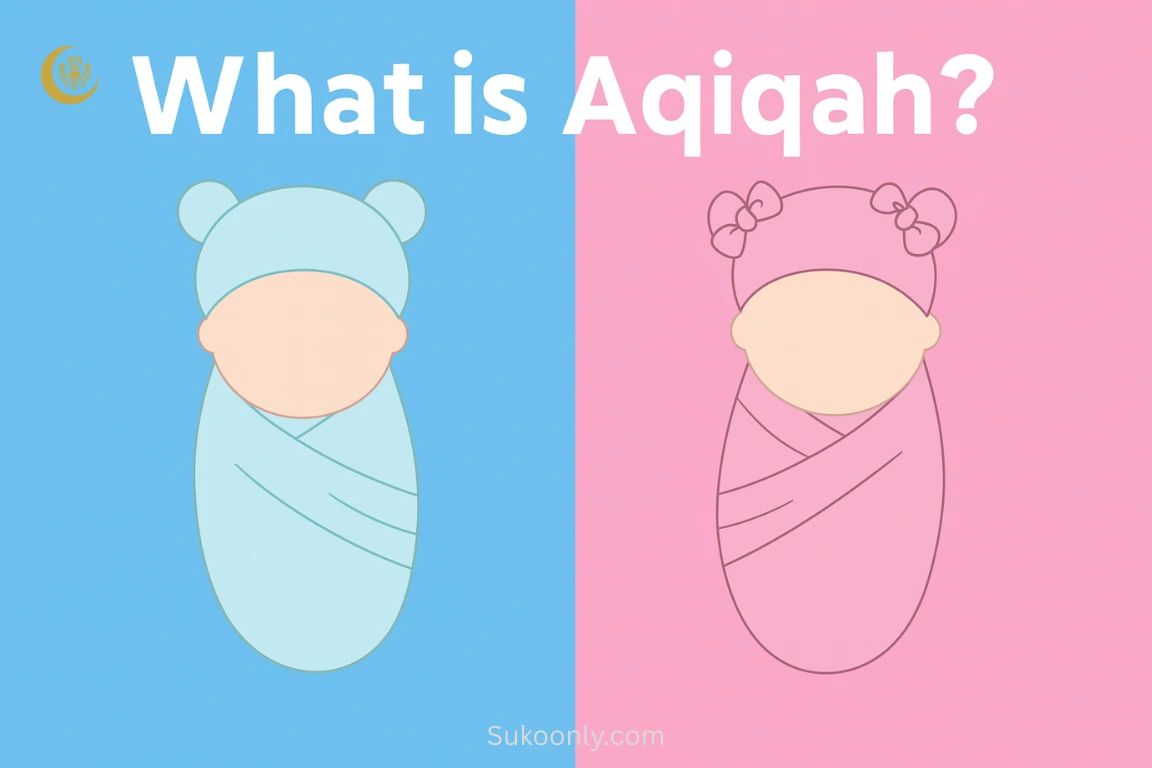
Aqiqah (Arabic: العقيقة) is a beautiful Sunnah in Islam that celebrates the blessing of a child’s birth through the sacrifice (udhiyah) of permissible livestock, most often a goat or sheep. Rooted in the practice of Prophet Muhammad ﷺ, it is an act of gratitude to Allah ﷻ, a means of seeking His protection (hifz) for the newborn, and a way of sharing joy with family, friends, and those in need.
The Prophet ﷺ recommended performing Aqiqah on the seventh day after birth, together with naming the child and shaving the baby’s head (taḥliq al-ra’s). More than just a ritual, Aqiqah is a moment of worship, charity, and unity—strengthening bonds within the community while honouring a cherished Sunnah. If you are expecting, see also our guide on Dua for Childbirth and Dua to Get Pregnant for complete spiritual preparation.
Purpose and Significance of Aqiqah
The purpose of Aqiqah in Islam is to thank Allah ﷻ for the blessing of a child and to seek His protection (hifz) over the newborn. Following the Sunnah of Prophet Muhammad ﷺ, it is a worshipful act of compassion where the sacrificial meat is shared with family, neighbors, and those in need.
This simple yet profound Sunnah builds ukhuwah (brotherhood and sisterhood), strengthens community bonds, and fulfills the Qur’anic call to charity (sadaqah). Spiritually, Aqiqah marks the child’s welcome into the ummah and reflects the parents’ heartfelt promise to nurture them in line with Islamic values and prophetic guidance.
When is Aqiqah Performed?
In Islam, the best time to perform Aqiqah is on the seventh day after a child’s birth, following the example of Prophet Muhammad ﷺ as recorded in authentic Hadith. On this day, parents also name the child and shave the infant’s head (taḥliq al-ra’s) to complete the newborn Sunnah.
If the seventh day cannot be observed, scholars—especially from the Shafi’i and Hanbali schools—recommend the fourteenth or twenty-first day, while others permit it at any later time when the family is able.
Rules and Requirements of Aqiqah
The rules of Aqiqah are rooted in the Sunnah of Prophet Muhammad ﷺ and guided by Islamic jurisprudence (fiqh). The sacrificial animal must be from permissible livestock (an’ām) and meet Shariah conditions for age, health, and being free from defects, just as in udhiyah during Eid al-Adha.
For a baby boy, the Sunnah is to sacrifice two animals; for a baby girl, one animal. The meat may be given raw or cooked but should be shared generously with relatives, neighbors, and the poor. Also see circumcision in Islam, another important Sunnah performed around birth.
Difference Between Aqiqah and Qurbani
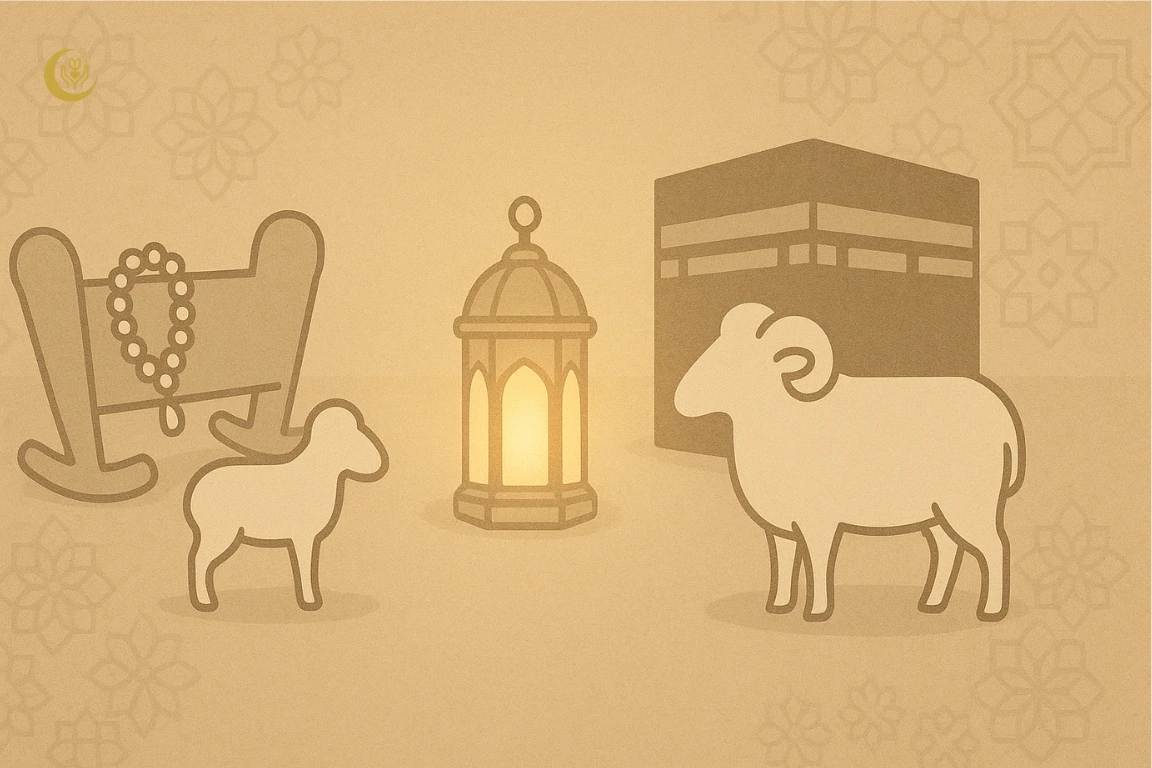
Aqiqah and Qurbani (Udhiyah) are both acts of ritual sacrifice in Islam, but they serve different purposes and take place at different times. Aqiqah is a Sunnah carried out to celebrate the blessing of a child’s birth, most often on the seventh day, following the practice of Prophet Muhammad ﷺ. Qurbani, or Udhiyah, is performed during the days of Eid al-Adha to honor the devotion of Prophet Ibrahim عليه السلام and his son Prophet Isma’il عليه السلام.
Dua for Aqiqah for Girl
When performing Aqiqah for a newborn girl, the niyyah (intention) should clearly state that the sacrifice is being offered on her behalf.
بِسْمِ اللهِ، اللهُ أَكْبَرُ، هَذِهِ عَقِيقَةُ فُلَانَةَ بِنْتِ فُلَانٍ
Transliteration: Bismillāhi, Allāhu Akbar, hādhihi ‘aqīqatu [baby’s name] bint [father’s name].
Translation: In the name of Allah, Allah is the Greatest. This is the Aqiqah of [name], daughter of [father’s name].
Dua for Aqiqah for Boy
بِسْمِ اللهِ، اللهُ أَكْبَرُ، هَذَا عَقِيقَةُ فُلَانِ بْنِ فُلَانٍ
Transliteration: Bismillāhi, Allāhu Akbar, hādhā ‘aqīqatu [baby’s name] ibn [father’s name].
Translation: In the name of Allah, Allah is the Greatest. This is the Aqiqah of [name], son of [father’s name].
Who Should Perform Aqiqah?
In Islam, the responsibility rests primarily with the parents, especially the father. If the father is absent or unable, the mother or legal guardian may arrange it.
Common Misconceptions About Aqiqah
There are a few common misunderstandings about Aqiqah:
- It is Sunnah Mu’akkadah — highly recommended, but not compulsory.
- It can be done on the 14th, 21st, or any later date if the 7th day is missed.
- The meat can be shared cooked or uncooked.
- Aqiqah does not remove “original sin” — Islam teaches every child is born upon the fitrah.
For more Islamic guidance on worship, see Duas for Every Need, What is Dhikr, and What is Dua in Islam.

Mohammed Basheer is the founder of Sukoonly.com, an Islamic blog focused on duas, prophetic healing, and Qur’anic wisdom. He writes with sincerity and spiritual depth for seekers around the world.