
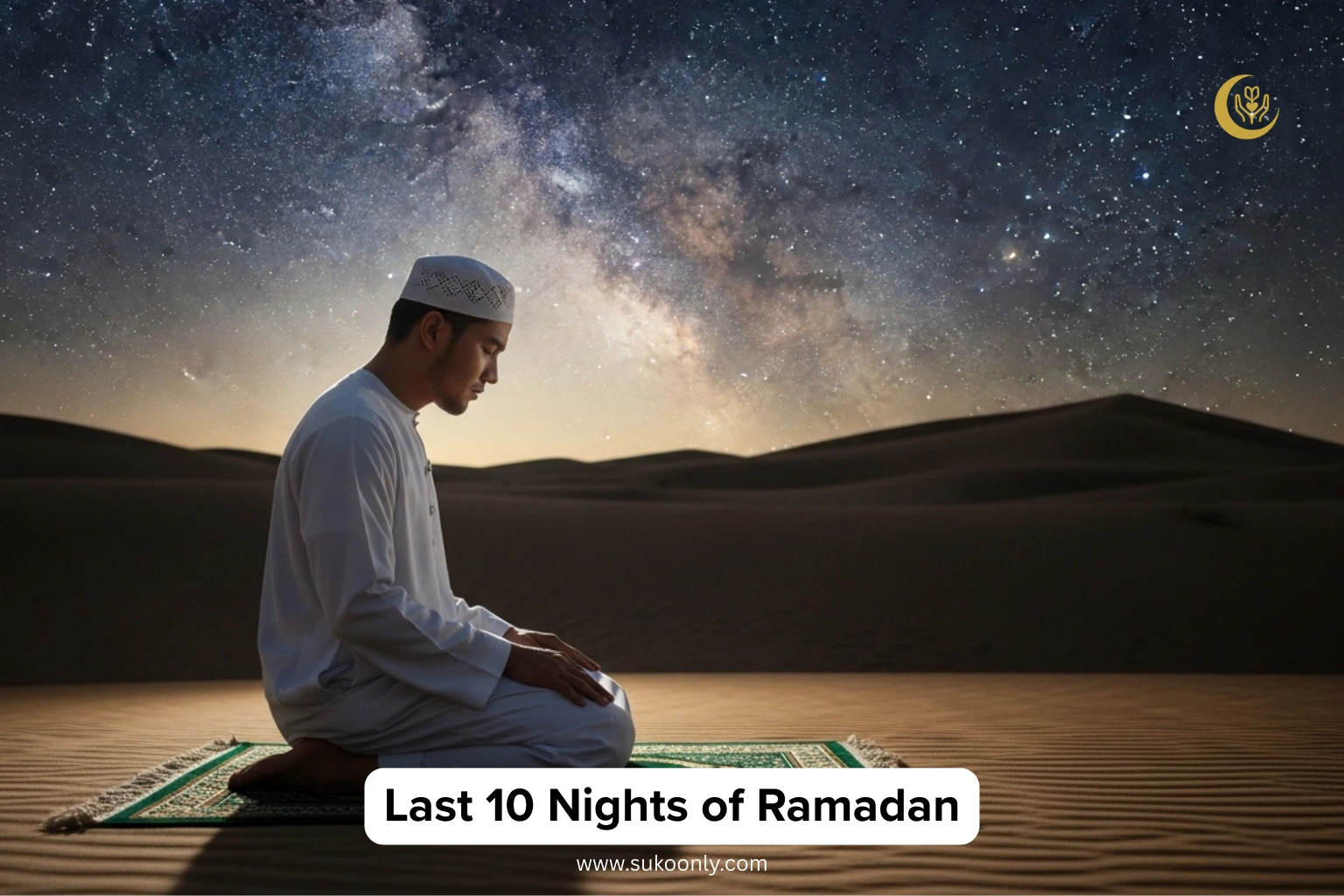

The last ten nights of Ramadan are the most sacred nights of the Islamic calendar. During these final nights of Ramadan, Muslims intensify worship in search of Laylatul Qadr (the Night of Decree), which the Qur’an describes as “better than a thousand months” (Qur’an 97:3).
Laylatul Qadr occurs in the last ten nights of Ramadan and is most commonly sought on the odd-numbered nights. Because of its immense spiritual reward, Muslims increase acts of worship during these nights, including Qiyam al-Layl (night prayer), Qur’an recitation, dhikr (remembrance of Allah), du‘a (supplication), and I‘tikaf (spiritual retreat in the mosque).
The Prophet Muhammad ﷺ would devote himself more intensely during the last ten nights of Ramadan than at any other time of the year. Following his Sunnah, these nights are an opportunity for repentance, spiritual renewal, and drawing closer to Allah through focused devotion.
This guide explains the meaning of the last ten nights of Ramadan, the significance of Laylatul Qadr, and the recommended acts of worship rooted in authentic Islamic tradition.
What are the Last 10 Nights of Ramadan?
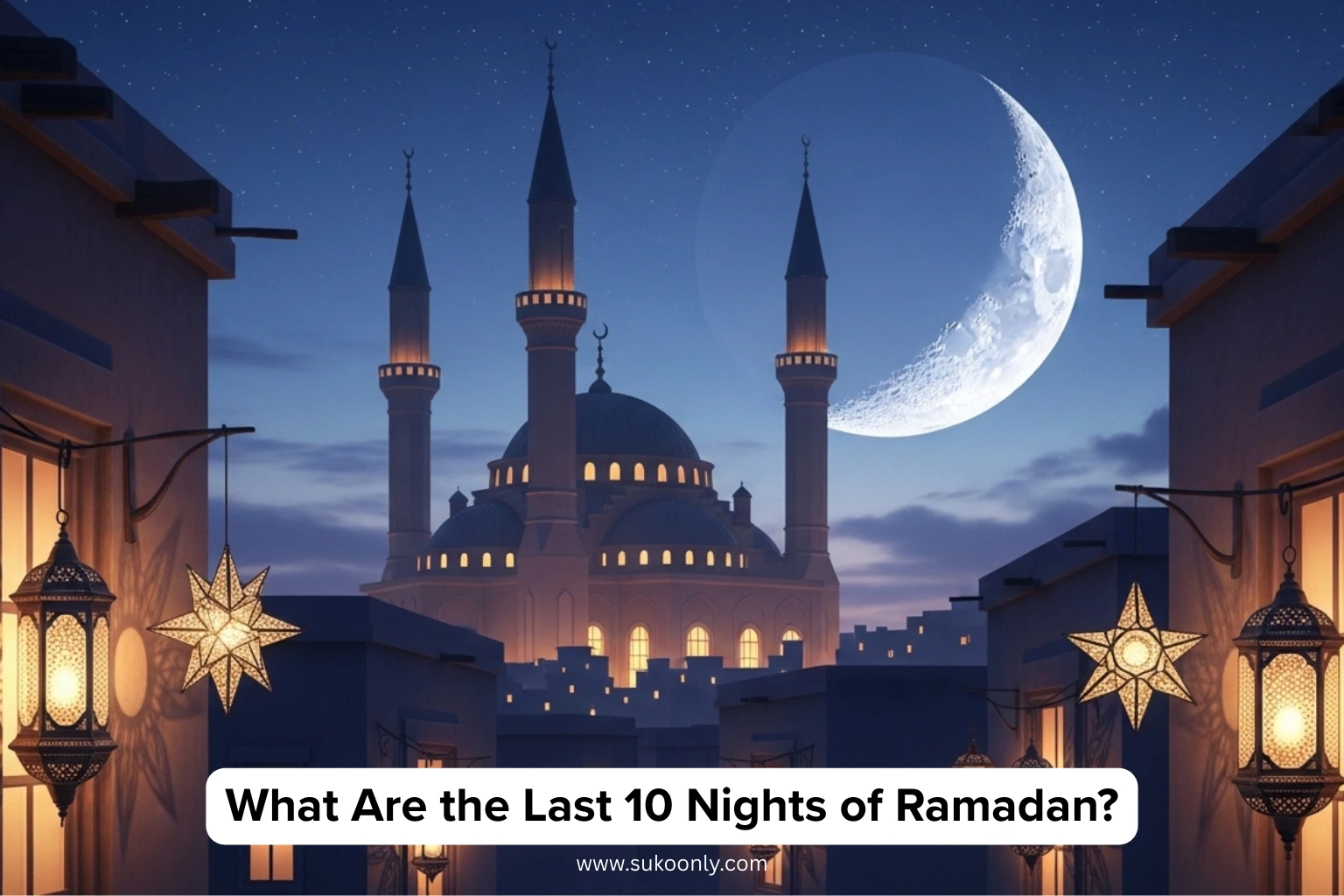
The last ten nights of Ramadan are the final and most spiritually significant nights of the Islamic month of fasting. These nights begin when there are ten nights left in Ramadan and end with the night before Eid al-Fitr. Since the Islamic calendar is lunar, the exact timing varies each year based on moon sighting.
These nights are marked by:
- Increased worship (prayer, Quran recitation, dhikr)
- Seclusion (i’tikaf) in mosques by some Muslims
- Seeking Laylatul Qadr, the Night of Power, believed to fall on one of the odd-numbered nights
According to the Quran, Laylatul Qadr is “better than a thousand months” (Surah Al-Qadr 97:3), making these nights especially important for supplication and reflection.
Why the Last 10 Nights Have Special Focus?
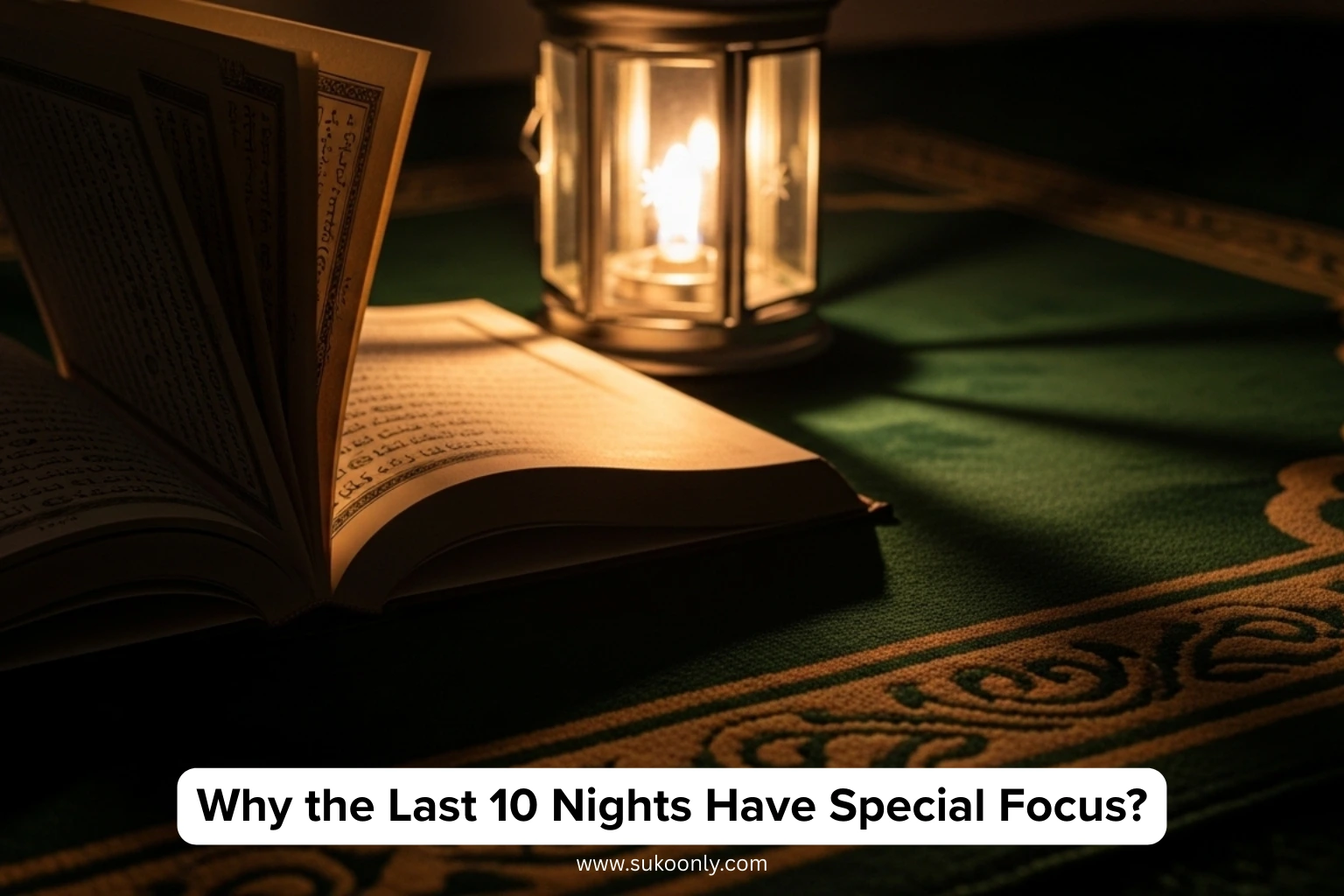
The last ten nights of Ramadan receive special focus because they are considered the most sacred part of the month. This period holds deep spiritual value in Islam for several key reasons:
1. Search for Laylatul Qadr (The Night of Power)
Laylatul Qadr, mentioned in Surah Al-Qadr, is believed to occur on one of the odd nights within the last ten—most commonly the 21st, 23rd, 25th, 27th, or 29th. Worship on this night is better than a thousand months (Qur’an 97:3), making it the most spiritually rewarding night of the year.
2. Prophetic Tradition
The Prophet Muhammad (ﷺ) would intensify his worship during the last ten nights. According to Hadith:
“When the last ten nights began, the Prophet would stay up at night, wake his family, exert himself in worship, and tighten his waist belt.” (Sahih al-Bukhari, Sahih Muslim)
3. Opportunity for Forgiveness
These nights are seen as a chance to earn complete forgiveness. Many Muslims make du’a (supplication), including the famous one:
“Allahumma innaka ‘afuwwun tuhibbul ‘afwa fa’fu ‘anni”
“O Allah, You are Most Forgiving, and You love forgiveness; so forgive me.”
4. Practice of I’tikaf
Many Muslims observe i’tikaf—a spiritual retreat in the mosque—during these nights to dedicate themselves entirely to worship, away from worldly distractions.
Core Worship Priorities in the Last 10 Nights
The last ten nights of Ramadan are a time for intensified devotion. Muslims focus on specific acts of worship to seek Allah’s mercy, forgiveness, and closeness. Here are the core worship priorities during this spiritually rich period:
1. Qiyam al-Layl (Night Prayers)
Muslims dedicate extra time to voluntary night prayers, especially Tahajjud and Taraweeh. These prayers are longer and more reflective, often involving extended Quran recitation.
2. Quran Recitation and Reflection
Reading and understanding the Quran is highly encouraged. Many aim to complete the Quran during Ramadan, especially in the final nights.
3. Dua (Supplication)
These nights are ideal for heartfelt supplication. The best dua recommended by the Prophet (ﷺ) during this time is:
Allahumma innaka ‘afuwwun tuhibbul ‘afwa fa’fu ‘anni
“O Allah, You are Most Forgiving, and You love forgiveness; so forgive me.”
4. I’tikaf (Spiritual Retreat)
This practice involves secluding oneself in a mosque for focused worship. Even if not for all ten nights, a shorter i’tikaf can still be spiritually rewarding.
5. Charity (Sadaqah)
Giving charity is especially encouraged, as deeds are multiplied in reward during these nights.
Practical Night Routine Structure
To make the most of the last 10 nights of Ramadan, a structured night routine helps maintain consistency and spiritual focus.
Here’s a balanced routine that can fit various schedules while aligning with core acts of worship:
1. Begin with Intent (Niyyah)
Set a sincere intention to seek Allah’s pleasure, forgiveness, and Laylatul Qadr. A clear mindset boosts focus and reward.
2. Perform Isha & Taraweeh (8:00 PM – 10:00 PM)
-
Join congregational Isha and Taraweeh at the mosque or pray at home.
-
Reflect during Quran recitation.
Tip: Pacing yourself helps preserve energy for late-night worship.
3. Quran Recitation & Reflection (10:00 PM – 11:00 PM)
-
Read at least one juz’ or set a manageable amount.
-
Use a translation or tafsir for deeper understanding.
4. Personal Duas (11:00 PM – 12:00 AM)
-
Prepare a dua list ahead of time.
-
Make heartfelt supplications in your own language and Arabic.
5. Short Rest (12:00 AM – 2:30 AM)
-
Brief sleep to recharge before Tahajjud.
-
Optional: power nap earlier in the day to stay energized at night.
6. Wake Up for Tahajjud & Suhoor (2:30 AM – Fajr)
-
Pray Tahajjud with sincerity and tears.
-
End with Witr prayer.
-
Eat Suhoor (pre-dawn meal) and make duas before Fajr.
7. Fajr & Dhikr (Pre-Sunrise)
-
Pray Fajr on time.
-
Remain in place for dhikr (remembrance of Allah) and short Quran recitation.
This flexible routine can be adjusted based on your capacity. Even small, consistent efforts—done with sincerity—carry immense reward during these blessed nights.
Seeking Laylatul Qadr in the Last 10 Nights
Laylatul Qadr (The Night of Power) is the most sacred night in Islam, hidden within the last ten nights of Ramadan—most likely one of the odd-numbered nights (21st, 23rd, 25th, 27th, or 29th). Worship during this night is better than 1,000 months (Surah Al-Qadr 97:3), making it a rare opportunity for immense spiritual reward.
Here’s how to intentionally seek Laylatul Qadr across the last 10 nights:
1. Increase Worship on All 10 Nights
Since the exact night is not known, the Prophet Muhammad (ﷺ) encouraged worship throughout the full final third of Ramadan.
“Search for Laylatul Qadr in the odd nights of the last ten nights of Ramadan.” (Sahih al-Bukhari)
Consistency matters more than guessing.
2. Prioritize Odd-Numbered Nights
Focus extra effort on:
- 21st night
- 23rd night
- 25th night
- 27th night (most commonly believed)
- 29th night
Some scholars say the night can shift each year, so all odd nights deserve full attention.
3. Make the Special Dua
The Prophet (ﷺ) taught Aisha (RA) this specific supplication for Laylatul Qadr:
Allahumma innaka afuwwun tuhibbul afwa fafu anni
“O Allah, You are Most Forgiving, and You love forgiveness; so forgive me.”
Say it often—before and after prayers, during quiet moments, and before Suhoor.
4. Stay Spiritually Present
- Avoid distractions (social media, unnecessary talk).
- Reflect on your life, intentions, and relationship with Allah.
- Use these nights to reset your heart.
5. Give in Charity
Automate or plan donations across all 10 nights to ensure you give on Laylatul Qadr—when rewards are multiplied over 83 years.
Seeking Laylatul Qadr is about sincerity, consistency, and hope. Even if you feel unprepared, Allah looks at your heart and effort.
Duas in the Last 10 Nights
The last 10 nights of Ramadan are not just about increased worship—they’re also a deeply emotional and spiritual journey, where duas (supplications) become a personal gateway to healing, reflection, and renewal.
This section guides you through the core themes of dua people focus on, and offers internal links to detailed pages for deeper exploration.
Dua Themes People Focus On
- Forgiveness – Seeking Allah’s pardon for past sins and mistakes.
- Guidance – Asking for clarity, direction, and steadfastness on the straight path.
- Protection – From harm, evil, and misguidance—both worldly and spiritual.
- Steadfastness – Strength to maintain faith, especially after Ramadan ends.
- Acceptance – Hoping Allah accepts your fasting, prayers, and sincere efforts.
Most Linked Dua Pages
FAQs — Last 10 Nights of Ramadan
They begin when there are 10 nights left in Ramadan, not 10 days. The count starts at sunset after the 20th day of fasting, based on the lunar calendar.
No. The Islamic calendar is lunar, so the last 10 nights shift each year on the Gregorian calendar. They are confirmed through moon sighting.
Not guaranteed—but it is most likely to occur on one of the odd-numbered nights (21st, 23rd, 25th, 27th, or 29th). That's why all 10 nights are treated as sacred.
Yes. If you’re sincere, even part of the night in worship can be meaningful. Allah sees your effort, not just the hours spent.
Absolutely. Worship from home is valid and beloved to Allah, especially when done with sincerity. The Prophet (ﷺ) himself prayed at home many nights.
No, it’s not required. Reflective recitation matters more than rushing. Even a few verses with understanding can be deeply rewarding.

Mohammed Basheer is the founder of Sukoonly.com, an Islamic blog focused on duas, prophetic healing, and Qur’anic wisdom. He writes with sincerity and spiritual depth for seekers around the world.