
Circumcision, known as khitān in Arabic, is a well-established practice in Islam, rooted in the fitrah—the natural way Allah ﷻ created mankind. The Prophet Muhammad ﷺ mentioned it in authentic hadith as part of the signs of purity and faith. It is not simply a cultural habit but an act of tahārah (ritual cleanliness), good hygiene, and obedience to Allah.
The tradition goes back to Prophet Ibrahim (عليه السلام), who was commanded by Allah and became the first to practice it as part of his covenant. In Islamic law, circumcision is seen as both a symbol of spiritual purity and a means of physical cleanliness.
Scholars differ in wording—some call it wājib (obligatory), others a strongly emphasized Sunnah mu’akkadah—yet all agree that it remains a mark of faith, health, and the prophetic way.
Religious Basis of Circumcision
In Islam, circumcision is not just a cultural practice—it has deep roots in our prophetic tradition. While the Qur’an does not mention it by name, it speaks about fitrah—the natural way Allah created us—and tahārah (purification), which circumcision is part of.
The Prophet Muhammad ﷺ taught us that there are five acts that belong to the fitrah:
- Trimming the moustache
- Clipping the nails
- Removing underarm hair
- Shaving the pubic area
- Circumcision
This is found in authentic hadith and has been understood by scholars as strong evidence of its place in our faith.
The example of Prophet Ibrahim (عليه السلام), who circumcised himself out of obedience to Allah’s command, shows us how deeply this practice is tied to the legacy of the Prophets. It is a sign of submission, purity, and continuity with the faith of Ibrahim—carried forward in Islam through the guidance of our beloved Prophet ﷺ.
Purpose and Wisdom Behind Circumcision
Circumcision (khitān) in Islam is first and foremost about tahārah—keeping the body clean and pure. It removes what can carry impurities, helping a person stay ready for ṣalāh and other acts of worship. Cleanliness is not just physical in Islam—it’s part of our īmān (faith). Through circumcision, we put this teaching into practice in a very real way.
But it’s more than hygiene. Spiritually, circumcision is an act of obedience. It follows the example of Prophet Ibrahim (عليه السلام), who performed it as part of his covenant with Allah ﷻ. For us today, it remains a sign of submission and a way to stay connected to the path of the Prophets.
It also reflects our identity as part of the ummah. Every Muslim who follows this practice is walking in the footsteps of a tradition that goes all the way back to Ibrahim (عليه السلام) and was affirmed by the Prophet Muhammad ﷺ.
On a practical level, circumcision brings health benefits too—such as reducing the risk of certain infections and supporting overall cleanliness. In this way, Islam beautifully combines care for the soul with care for the body. It shows us how faith is meant to shape every part of our lives, from our worship to our daily habits.
Circumcision in Different Schools of Thought
All four Sunni schools of thought agree that circumcision (khitān) is an important part of the Islamic way of life. While they differ slightly on how strongly it is required, they all recognize its deep roots in the Sunnah and its connection to tahārah (purity) and fitrah—the natural way Allah created us.
The Shāfiʿī and Hanbalī schools view circumcision as wājib—obligatory for men. The Mālikī school sees it as a strong Sunnah, very close to being a duty. The Hanafī school considers it Sunnah mu’akkadah—a highly encouraged practice that should not be left out, even if it’s not technically obligatory.
Despite these slight differences, the spirit is the same: circumcision is a Sunnah of the Prophet ﷺ and a sign of purification and belonging to the Muslim ummah. Scholars generally recommend it be done during childhood, but they also emphasize that it remains valuable and valid if done later in life—especially for someone who embraces Islam.
When Circumcision Is Performed?
In Islam, circumcision (khitān) is usually done during childhood—either soon after birth or in the early years—so that a boy grows up already living this Sunnah. Some families choose to do it within the first few days of life, while others wait until the child is a bit older. There’s room for personal choice, as long as it’s done with care and good intention.
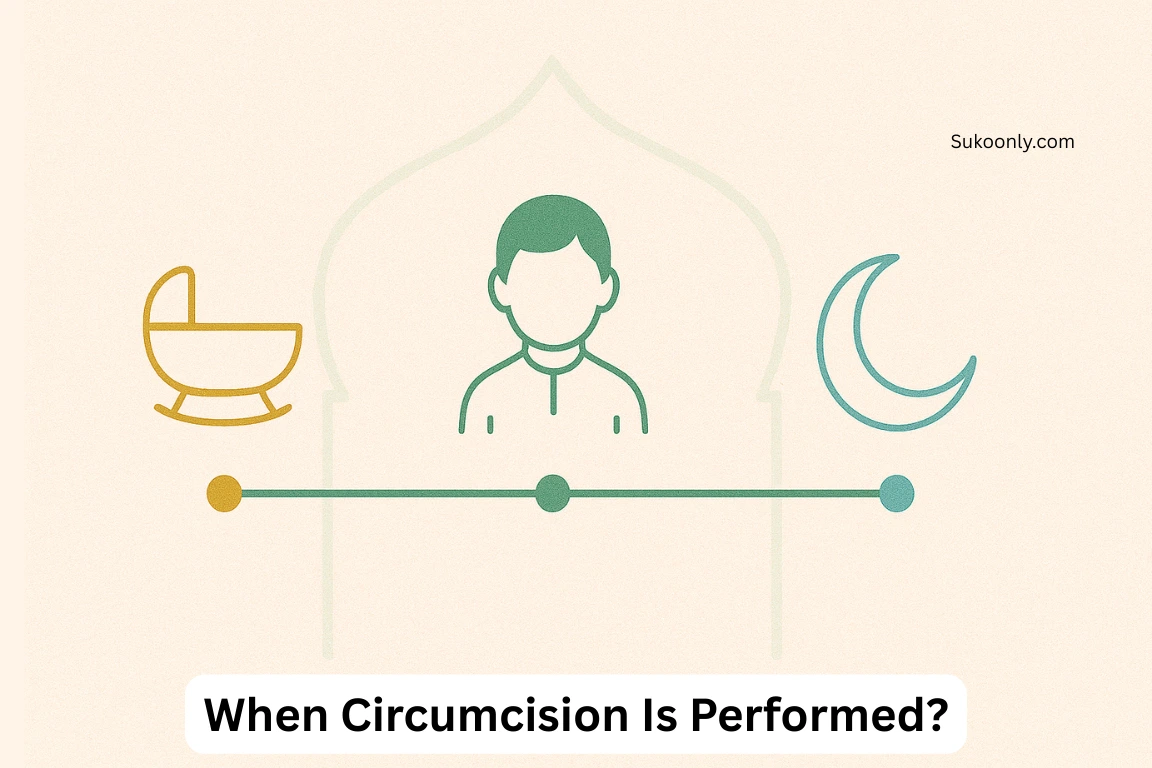
Scholars recommend that it be completed before a boy reaches puberty. This is because tahārah (ritual purity) becomes essential once he is mukallaf—meaning he’s now accountable before Allah for ṣalāh and other acts of worship.
Still, Islam is a religion of mercy and ease. Circumcision remains valid and valuable at any age. For someone who embraces Islam later in life, it’s a noble step—an act of sincerity that aligns him with the fitrah and connects him to the way of the Prophets. Whether done early or later, it carries reward and spiritual meaning.
FAQs — Circumcision in Islam
Islam never obligates what causes harm. If circumcision puts someone at risk, the duty is lifted. This follows the principle of lā ḍarar wa lā ḍirār (“no harm and no reciprocating harm”) and the objectives of maqāṣid al-sharīʿah, which put the preservation of life and health above ritual duties.
Yes. Circumcision can be done at any age. For a new Muslim (revert) or someone who missed it in childhood, it is still a commendable Sunnah. It helps a believer align with the fitrah and follow the way of Prophet Ibrahim (عليه السلام).

Mohammed Basheer is the founder of Sukoonly.com, an Islamic blog focused on duas, prophetic healing, and Qur’anic wisdom. He writes with sincerity and spiritual depth for seekers around the world.