

“Adhan vs. Iqama” refers to the key differences between the two Islamic prayer calls that structure the five daily prayers. While both announcements are part of the salah routine, they serve distinct purposes and occur at different stages of the prayer process.
The Adhan (Athan) is the public call to prayer that announces the time for salah and invites the community to gather. It is proclaimed at the beginning of the prayer time. The Iqamah, on the other hand, is a shorter second call recited immediately before the prayer begins, signaling that the congregation is about to stand in rows and start salah.
Understanding the difference between Adhan and Iqamah helps ensure correct timing, orderly congregation, and proper observance of Islamic prayer.
In this guide, you will find a clear explanation of the meaning, timing, wording structure, and functional differences between Adhan and Iqamah—presented in a simple, non-sectarian format for accurate understanding.
What Is Athan?
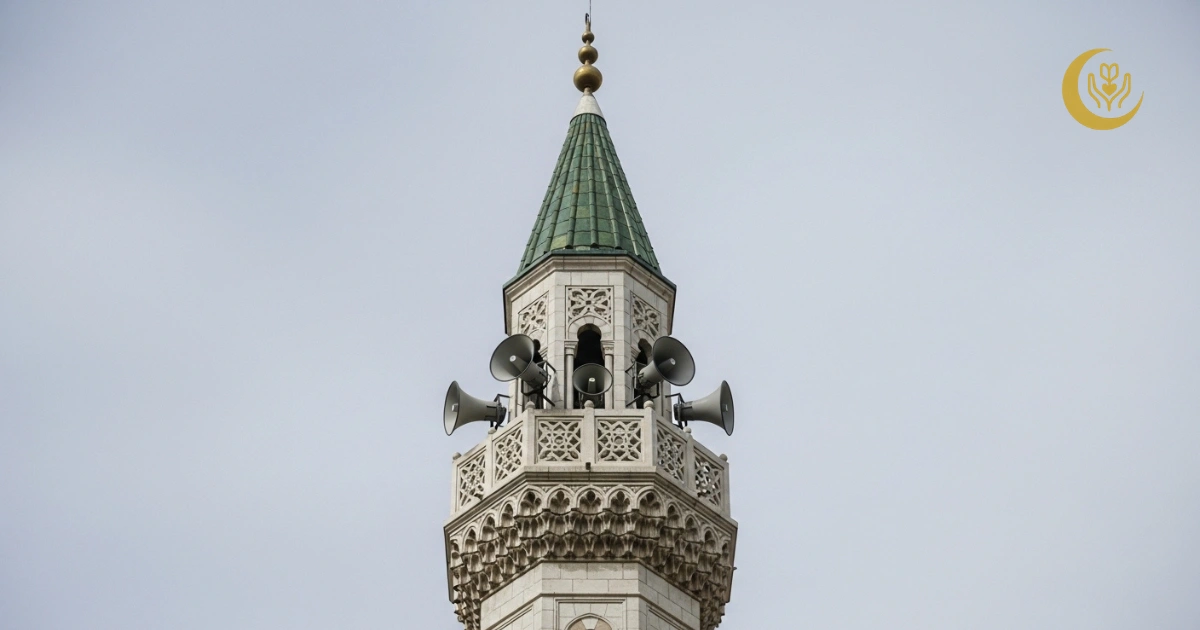
Athan is more than a vocal announcement—it is an essential component of Islamic practice that signals the start of each prescribed prayer time. As both a spiritual reminder and a communal declaration, Athan carries deep religious and social significance.
To understand Athan as an Islamic entity, we must explore three interconnected dimensions:
- Its linguistic meaning,
- Its ritual purpose, and
- The person responsible for delivering it.
Each of these aspects reveals how Athan functions within daily worship and the wider rhythm of Muslim life.
Meaning of Athan
Athan (Arabic: أذان) comes from the Arabic root ʾaḏina (أَذِنَ), meaning “to listen,” “to hear,” or “to announce.”
In Islamic practice, Athan is the formal call to prayer (adhan al-salah) that marks the arrival of one of the five daily obligatory prayers (salah). It is a vocal proclamation that invites Muslims to prepare for worship, signaling the spiritual rhythm of the day.
Purpose of Athan
The primary purpose of Athan is to notify the community that the time for prayer has begun. Recited aloud, it reminds Muslims nearby to pause worldly activities and ready themselves for salah. Athan also serves as a symbol of Islamic identity, publicly affirming the presence of faith and anchoring spiritual practice within the daily routine of life.
Who Recites the Athan?
Athan is traditionally recited by a Mu’adhin (also spelled Muezzin) — the person appointed at a mosque to call the faithful to prayer. In modern settings, it is often broadcast via loudspeakers from minarets. In homes and workplaces, Muslims may hear Athan through mobile apps, Islamic websites, or automated alerts, especially in areas without a nearby mosque.
What Is Iqamah?
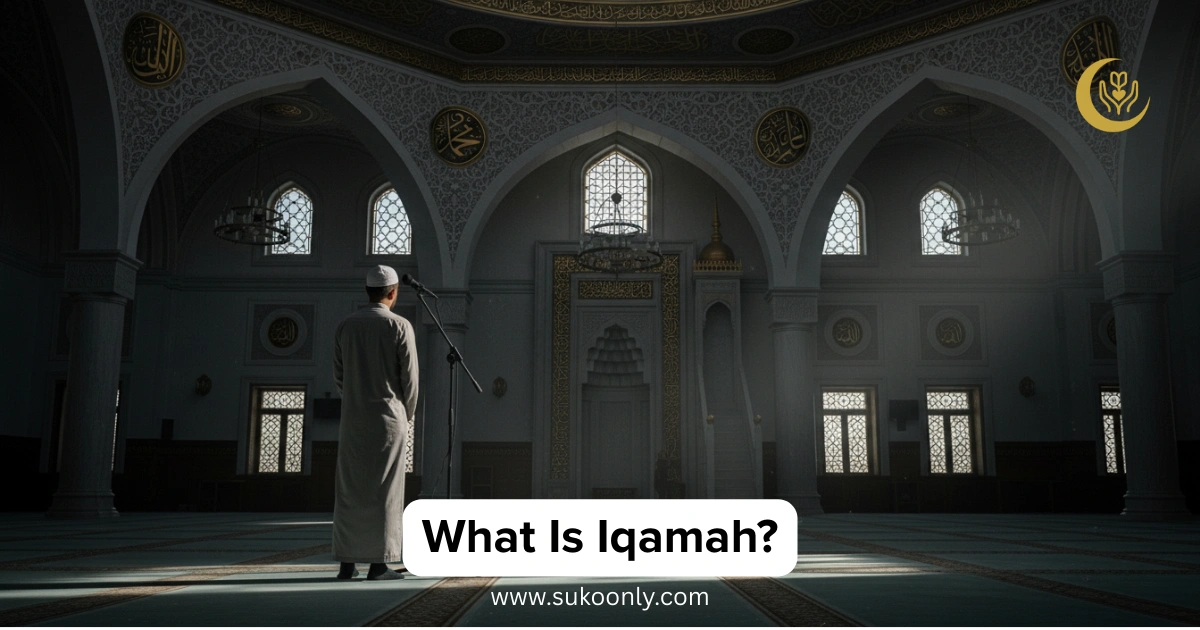
Iqamah functions as the final call to prayer—signaling that the congregation is about to begin Salah. While Athan invites preparation, Iqamah prompts immediate readiness and physical alignment for worship.
To define Iqamah as an Islamic entity, it’s important to look at:
- Its root meaning in Arabic,
- Its purpose as a pre-prayer directive, and
- The specific moment in the prayer sequence when it is recited.
Together, these elements clarify how Iqamah transitions intention into action within Islamic worship.
Meaning of Iqamah
Iqamah (Arabic: إقامة) comes from the Arabic root ʾaqāma (أقام), meaning “to establish” or “to set upright.” In the context of Islamic prayer, Iqamah is the second verbal announcement that directly precedes the start of a congregational salah. Unlike Athan, which announces the arrival of prayer time, Iqamah signals that the prayer is about to begin and the congregation must stand and align.
Purpose of Iqamah
The primary function of Iqamah is to formally initiate the prayer. It is recited shortly before the Imam begins leading the congregation. Iqamah serves as a final cue for worshippers to complete their wudu (ablution), stand in rows, straighten their lines, and direct full attention toward the prayer. It transitions the environment from preparation to action.
When Is Iqamah Said?
Iqamah is recited just before the prayer begins in a group setting—such as a mosque, prayer room, or community gathering. It is not typically used for individual prayer. There is usually a brief pause between Athan and Iqamah to allow worshippers time to gather, perform sunnah prayers, or make dua. Once Iqamah is called, the congregational prayer starts without delay.
Athan vs Iqamah — Key Differences
Although both Athan and Iqamah are formal calls associated with Salah, they differ in purpose, timing, wording, and functional role within congregational prayer. Athan serves as a public announcement that the prescribed prayer time has begun, while Iqamah signals the immediate commencement of the prayer itself. To understand their differences, examine how, when, who, and how they are recited in daily Islamic worship.
| Aspect | Athan | Iqamah |
|---|---|---|
| Timing | Recited at the start of prayer time as a public alert. | Recited just before the prayer begins, after Athan. |
| Verbal Structure | Longer; includes repeated phrases like “Hayya ‘ala-l-falah” (Come to success). Ends with “La ilaha illallah”. |
Shorter; includes “Qad qāmatiṣ-ṣalāh” (The prayer has been established), which is unique to Iqamah. |
| Function | Serves as a public call to let Muslims know it’s time for salah. | Acts as an internal cue for the congregation to begin the prayer. |
| Usage Context | Heard through loudspeakers, mosques, apps, or adhan clocks. | Recited only in group prayer settings (mosques, homes, gatherings). |
| Who Recites It | Mu’adhin (caller to prayer). | Usually the same Mu’adhin, or another designated person before the Imam starts. |
Audio & Etiquette of Listening
Both the Athan and Iqamah are recited aloud, but the manner of listening to each and the etiquette associated with them differ based on their purpose and context. Islamic guidance outlines specific responses, levels of attentiveness, and behavioral expectations when hearing Athan versus Iqamah. These differences become clear when examining how Muslims are instructed to respond, when silence is required, and how auditory conduct supports order and reverence in congregational prayer.
What to Say When Hearing the Athan?
When Muslims hear the Athan, the recommended etiquette is to repeat each phrase quietly after the Mu’adhin, line by line.
However, for the two phrases:
- “Ḥayya ‘alaṣ-ṣalāh” (Come to prayer)
- “Ḥayya ‘alal-falāḥ” (Come to success)
The listener instead replies:
“Lā ḥawla wa lā quwwata illā billāh”
“There is no power and no strength except with Allah.”
After the Athan is completed, it is sunnah (recommended) to recite a short supplication asking Allah to bless the Prophet Muhammad ﷺ and to grant him the honored station (al-Wasilah).
What to Say When Hearing the Iqamah?
When hearing the Iqamah, there is no requirement to repeat its phrases aloud. The proper etiquette is to:
- Stand attentively
- Ensure rows are aligned
- Mentally prepare for prayer
Some schools of thought recommend quietly repeating the phrase “Qad qāmatiṣ-ṣalāh” (The prayer has been established), but this is not obligatory and may vary depending on cultural or scholarly opinion.
Unlike Athan, no specific supplication follows the Iqamah. The focus moves directly to the establishment of the salah with the Imam or as a group.
When Is Iqamah Not Used?
Iqamah is primarily associated with congregational prayer and is not required in every prayer context. Islamic jurisprudence outlines specific situations in which Iqamah may be omitted, particularly when prayers are performed individually, privately, or outside formal congregational settings. These cases become clearer when examining personal prayers, women’s private prayers, and prayers offered to make up missed obligations (Qadha).
In Personal or Individual Prayers
Iqamah is not required for individual salah. When a Muslim prays alone—at home, at work, or while traveling—there is no obligation to recite the Iqamah. The prayer may begin directly after forming the intention (niyyah) and saying the opening takbir (Allahu Akbar). This applies to both obligatory and voluntary (nafl) prayers performed individually.
In Women’s Personal Prayers
For women praying individually, Iqamah is not part of the standard practice. While some scholarly opinions permit it optionally, the majority view is that Iqamah is not required nor expected when women pray alone. It is generally omitted in personal routines and does not affect the validity of the prayer.
In Informal or Missed (Qadha) Prayers
If someone performs a missed prayer (Qadha) alone, Iqamah is also not necessary. However, if a group of people make up a missed prayer together, they may optionally recite the Iqamah to maintain a congregational structure. This is a matter of preference and not a strict requirement.
Spiritual Reflection — The Role of Athan and Iqamah

Beyond their functional role in signaling prayer times, Athan and Iqamah serve as spiritual anchors in a Muslim’s day. Together, they create a rhythm that blends remembrance, intention, and action.
- Athan is a gentle call to awareness—a reminder that invites the believer to pause, reflect, and realign with divine purpose. It marks moments of spiritual return across the day.
- Iqamah, in contrast, is a call to rise. It transitions the believer from internal readiness to physical participation in salah. While Athan nurtures mindfulness, Iqamah summons presence—a cue that it’s time to act, not just intend.
Viewed together, they offer more than structure—they offer discipline, presence, and purpose. These two calls create spiritual continuity, guiding the heart and body toward Allah five times a day.
The Role of Athan in a Muslim’s Day
Athan shapes the spiritual rhythm of a Muslim’s daily life. More than a call to prayer, it is a reminder to pause, reflect, and re-center one’s priorities around Allah. It interrupts worldly distractions with a divine reminder, gently pulling the believer’s attention back to what matters most.
Even when not heard aloud—due to distance, time zone, or technology—many Muslims still plan their day around Athan timings, using prayer apps or calendars. This ritual creates a habit of discipline, presence, and spiritual awareness that transcends routine and location.
Iqamah as the Call to Stand
Iqamah, in contrast, is a call not to prepare but to begin. It carries urgency and intention. While Athan opens the door to worship, Iqamah steps through it. It marks the moment where worship transforms from internal readiness to external action.
Iqamah is not a public invitation—it’s a direct signal to those present: “The prayer has been established.” In this way, it encourages alignment—both physical (straight rows) and spiritual (focused hearts). It turns intention into practice and reminds worshippers that the time for action is now.
Common Questions — Athan & Iqamah FAQs
Yes. In most cases—especially in smaller mosques or home congregations—the same individual can recite both the Athan and the Iqamah.
No. Iqamah is recommended for congregational prayers but not required for individual or private salah.
Women praying alone do not need to recite Iqamah. In group prayers among women, some traditions permit it, but practices vary by region and school of thought.
Yes. Athan is a reminder, not a condition for valid prayer. As long as the prayer time has entered, you may pray even if you didn’t hear the Athan.
The core content is universal, but accents, tones, and vocal styles can differ by culture and region.
There are minor variations between schools (e.g., number of repetitions), but the overall structure and purpose of Iqamah remain consistent.
If praying in congregation, Iqamah is recommended. If each person is praying individually, Iqamah is not necessary.
Yes, but it is voluntary, not obligatory. Some people choose to recite both out of devotion, especially for missed (qadha) or make-up prayers.
Because Iqamah is a practical cue to begin the prayer immediately. It omits repetitions and includes the line “Qad qāmatiṣ-ṣalāh” to indicate the prayer is being established.

Mohammed Basheer Orsala is the founder of Sukoonly.com - an Islamic resource dedicated to verified Quranic duas and Sunnah-based supplications. A self-taught Islamic researcher, he has studied classical texts and authenticated hadith collections including the works of Imam al-Nawawi, Shaykh al-Albani, Ibn Hajar al-Asqalani, and Ibn al-Qayyim. He writes to make verified Prophetic supplications accessible to English-speaking Muslims worldwide.