


Ramadan Fasting Rules explain what makes a fast valid or invalid during the month of Ramadan. Fasting (sawm) is one of the Five Pillars of Islam and requires abstaining from food, drink, and marital relations from dawn (Fajr) until sunset (Maghrib), along with maintaining proper intention (niyyah).
Beyond physical abstinence, Islamic law also outlines specific actions that break the fast, actions that are discouraged but do not invalidate it, and categories of people who are exempt from fasting. Understanding these rulings ensures that your fast is both legally sound and spiritually meaningful.
These guidelines are derived from the Qur’an, the Sunnah of Prophet Muhammad ﷺ, and the consensus of classical scholars.
In this guide, you will find a clear explanation of what breaks the fast, what does not break the fast, who is excused from fasting, and how to observe Ramadan correctly and confidently.
What Breaks the Fast? (Invalidators of Sawm)

Islamic scholars agree that certain actions break the fast (sawm) only when they are done intentionally and knowingly during fasting hours. These rulings are established through authentic hadith and juristic consensus.
When any of the following actions are committed deliberately, the fast becomes invalid and must be made up later (qada). In specific cases, expiation (kaffarah) is also required.
Consuming anything edible or drinkable through the mouth or nose intentionally breaks the fast. This includes: If a person eats or drinks by mistake or forgetfulness, the fast remains valid, as confirmed by the hadith: “Whoever forgets he is fasting and eats or drinks, let him complete his fast, for it is Allah who has fed him and given him drink.” (Sahih al-Bukhari 6669, Sahih Muslim 1155) Engaging in sexual intercourse during fasting hours breaks the fast completely and is considered one of the most serious violations. It requires: This ruling is based on the well-known hadith where the Prophet ﷺ prescribed expiation for this act. If a person deliberately causes ejaculation through physical desire—such as: …the fast is broken and Qada is required. Kaffarah is not required unless sexual intercourse occurs. If ejaculation happens involuntarily, such as during a wet dream, the fast remains valid. If menstruation (hayd) or postnatal bleeding (nifas) begins, the fast becomes invalid immediately—even if it starts moments before sunset. The missed fasts must be made up later. This is established by the statement of the Prophet ﷺ regarding menstruation and fasting. “Is it not true that when she menstruates, she does not pray or fast?” (Sahih al-Bukhari 304, Sahih Muslim 79) If a person forces themselves to vomit, the fast is broken and must be made up later. But if vomiting occurs naturally or involuntarily, the fast is still valid. This ruling is based on the hadith: “Whoever is overcome by vomiting does not have to make up the fast, but whoever vomits deliberately must make it up.” (Sunan Abu Dawood 2380; classified as hasan by Al-Albani) If a person renounces Islam (riddah), the fast becomes invalid. Faith is a condition for the validity of fasting and all acts of worship, as agreed upon by all four major schools of Islamic jurisprudence.Eating or Drinking Intentionally
Sexual Intercourse
Ejaculation Due to Desire
Menstruation or Postnatal Bleeding
Deliberate Vomiting
Apostasy (Leaving Islam)
What Does NOT Break the Fast? (Permissible Acts While Fasting)

Many people become overly cautious during Ramadan, avoiding certain actions out of fear they might break the fast. However, Islamic teachings make it clear that some acts are permissible while fasting, and do not invalidate the fast — as long as they are not done with excess or bad intention.
Below are the most common acts that do not nullify your fast:
If a person eats or drinks forgetfully, the fast remains valid. This is based on the hadith of the Prophet ﷺ: “Whoever forgets he is fasting and eats or drinks, let him complete his fast, for it was Allah who fed him and gave him drink.” (Sahih al-Bukhari 6669, Sahih Muslim 1155) If a person wakes up in Janabah (e.g., due to a wet dream or sexual activity before Fajr), their fast remains valid. Ghusl (full-body ritual purification) should be performed before or after Fajr, but the fast is not affected. This ruling is supported by the actions of the Prophet ﷺ as narrated by Aisha (RA): “The Prophet would wake up in the morning in a state of Janabah, not from a dream, and would fast. (Sahih Muslim 1109) Eating or Drinking by Mistake
Using Miswak, Toothbrush, or Mouthwash
Taking a Bath or Shower
Eye Drops or Ear Drops
Medical Injections (Non-Nutritional)
Waking Up in Janabah (State of Major Impurity)
What’s Disliked While Fasting? (Makruh Acts)

Some actions do not break the fast, but are considered Makruh (discouraged) in Islamic law. Engaging in these acts may reduce the spiritual reward of fasting or contradict its purpose. A mindful Muslim avoids these behaviors to protect the integrity and reward of their Ramadan fast.
While rinsing the mouth and nose is part of wudu (ablution), doing so excessively while fasting is discouraged. There’s a risk of water entering the throat, which would break the fast. The Prophet ﷺ instructed: “Exaggerate in rinsing the nose unless you are fasting.” (Sunan Abu Dawood 142, graded sahih) Tasting food without necessity — especially if there’s a chance it may reach the throat — is Makruh. If required (e.g., tasting salt or spice for a child’s meal), it should be: Even when permissible, this should be avoided unless truly needed. Verbal disputes, foul language, and losing one’s temper go against the spiritual goals of fasting. The Prophet ﷺ said: “If someone insults him or fights him, let him say: I am fasting.” (Sahih al-Bukhari 1894, Sahih Muslim 1151) Maintaining emotional control and avoiding conflict preserves the essence of fasting. Fasting is not just abstaining from food but a time for active worship — including salah (prayer), dhikr (remembrance), and Qur’an recitation. Smoking breaks the fast and is haram during fasting hours. This includes: Some people mistakenly think vaping or smoking in secret is allowed — but all forms of inhaled smoking are considered to invalidate the fast by scholarly consensus. Excessive Mouth Rinsing or Nose Cleaning
Tasting Food Without Need
Uncontrolled Anger, Arguing, or Swearing
Laziness or Oversleeping All Day
Smoking
Who Is Exempted from Fasting?
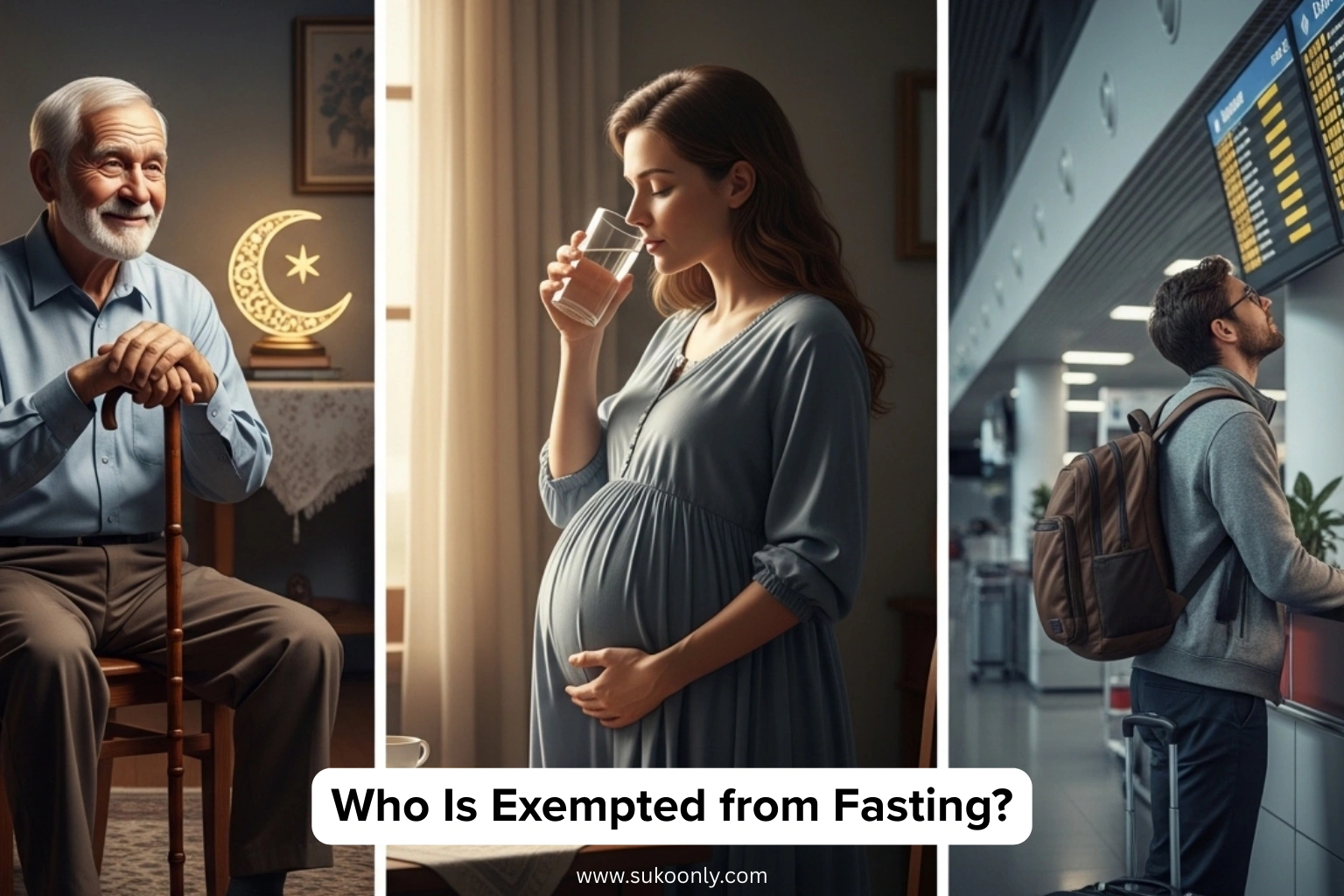
Fasting in Ramadan is a mandatory obligation for every adult, sane, and healthy Muslim. However, Islam is a religion of mercy and ease, and it grants valid exemptions for those with legitimate difficulties. Those excused from fasting do not sin, but depending on their situation, they may be required to either:
-
Make up the missed fasts (Qada), or Pay fidya (feed one poor person per day)
The following are categories of people who are exempted:
Fasting is not obligatory for children who have not yet reached puberty. Elderly people who are physically unable to fast due to: …are exempt and do not need to make up missed fasts. This is based on the Qur’anic verse: “…And upon those who are able [to fast, but with hardship]—a ransom [as substitute] of feeding a poor person.” (Surah Al-Baqarah 2:184) People with permanent or long-term illnesses that make fasting harmful are exempt. Examples include: Someone with a temporary illness (fever, infection, flu, etc.) may: This is supported by the verse: “But if any of you is ill or on a journey, the same number [should be made up] from other days.” (Surah Al-Baqarah 2:184) If a woman fears harm to herself or her child, she may: Some scholars also permit fidya in recurring or long-term cases (e.g., back-to-back pregnancies), but the majority view is that Qada is required. Fasting during menstruation (hayd) and postnatal bleeding (nifas) is not valid. This is based on the hadith in which the Prophet ﷺ said: “Is it not the case that when she menstruates, she does not pray or fast?” (Sahih al-Bukhari 304, Sahih Muslim 79) A Muslim who is traveling during Ramadan may choose not to fast and make it up later. The Prophet ﷺ himself fasted and broke his fast while traveling, showing that both are allowed depending on the situation. (Sahih Muslim 1114) Children (Below Puberty)
Elderly Who Cannot Fast
Chronically Ill Individuals
Sick or Temporarily Ill
Pregnant and Breastfeeding Women
Menstruating and Postnatal Women
Travelers
FAQs — Ramadan Fasting Rules
These are concise, evidence-based answers to common questions about Ramadan fasting. Each response is grounded in authentic sources, including the Qur’an, Sunnah, and juristic consensus.
Proof: “Whoever is overcome by vomiting does not have to make up the fast, but whoever vomits deliberately must make it up.” (Sunan Abu Dawood 2380 – Graded Hasan by Al-Albani) This is based on the principle that nourishment via any route breaks the fast. No, these actions do not break the fast on their own. However, if they lead to ejaculation, the fast is broken and Qada is required. Scholars recommend avoiding these acts during fasting hours if they arouse desire. Proof: “Is it not the case that when she menstruates, she does not pray or fast?” (Sahih al-Bukhari 304, Sahih Muslim 79) Yes, eye drops do not break the fast. They do not reach the stomach through a valid internal passage. This is the majority view among scholars, including the Hanafi, Maliki, and Shafi’i schools. Yes, but fasting is optional during travel. If the travel meets the shar’i distance (approx. 78–82 km), it is allowed to break the fast and make it up later without sin. Proof: “But if any of you is ill or on a journey, the same number [should be made up] from other days.” Yes, missing Suhoor (pre-dawn meal) does not invalidate the fast. Suhoor is highly recommended (Sunnah) but not obligatory. All major scholars and fatwa councils agree on this ruling. If someone eats or drinks forgetfully, the fast remains valid. Proof: “Whoever forgets he is fasting and eats or drinks, let him complete his fast, for it is Allah who fed him and gave him drink.” (Sahih al-Bukhari 6669, Sahih Muslim 1155)
(Surah Al-Baqarah 2:184)

Mohammed Basheer is the founder of Sukoonly.com, an Islamic blog focused on duas, prophetic healing, and Qur’anic wisdom. He writes with sincerity and spiritual depth for seekers around the world.